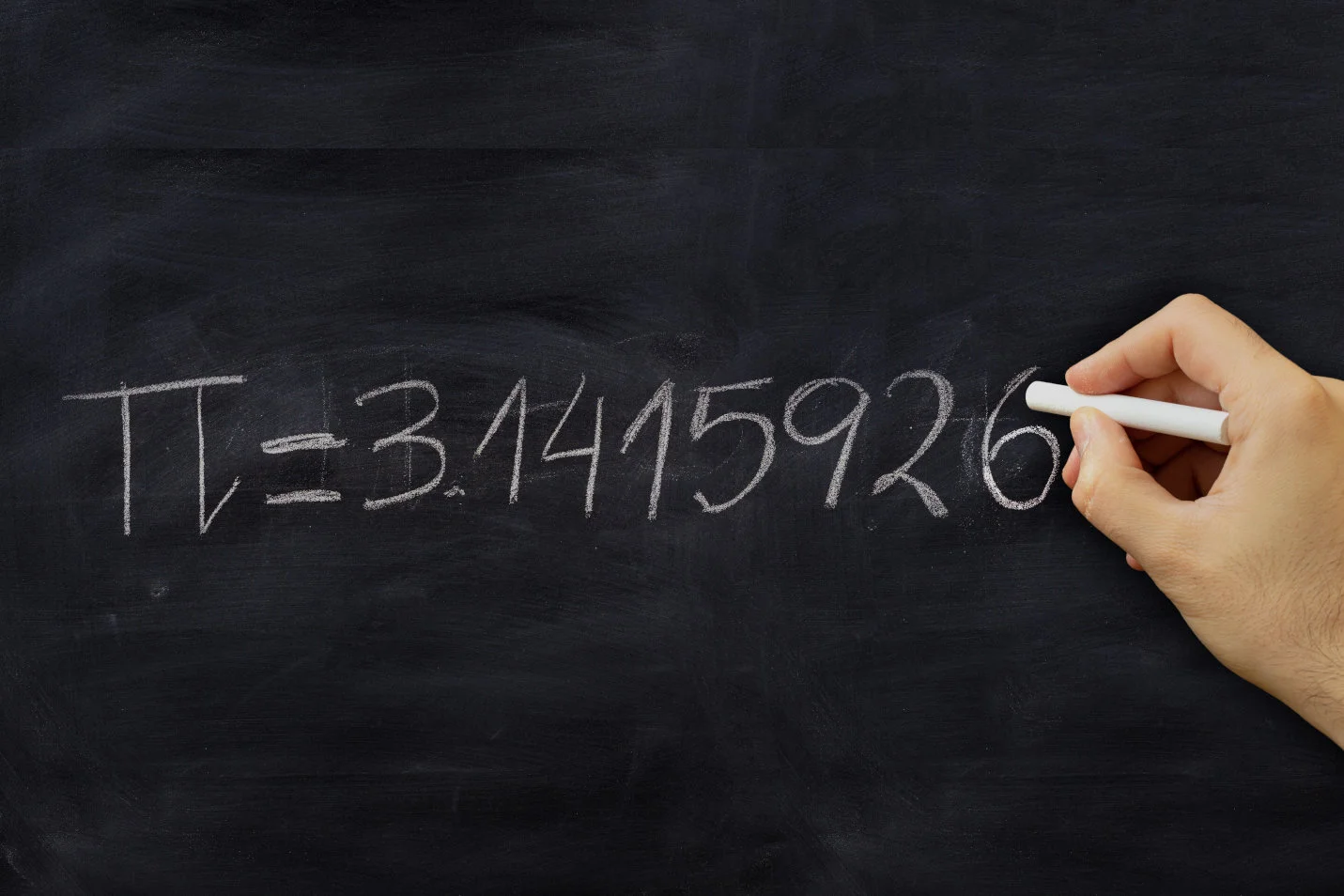
No, not the kind of pie you eat (though we love that kind, too). We mean the number pi, which is usually represented as the Greek letter π. Pi is not a large number–it’s a little bigger than the number 3, but smaller than 4. Most people say it’s about 3.14, but that’s not exactly…well, exact.
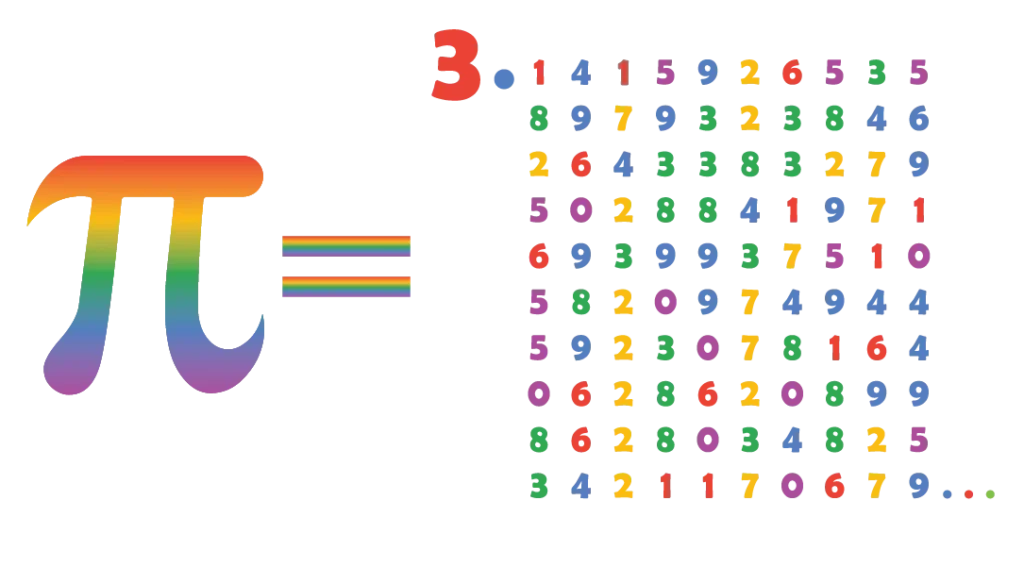
What makes pi amazing is how long it is. 3.14 is only the beginning of a number that is very, very, very long. As in “the digits go on and on without stopping and with no pattern” long. This makes pi an irrational number, meaning it cannot be written as a simple fraction (also known as a ratio). Pi has been calculated to over 100 trillion decimal places and there is still no pattern to the digits. Pi is infinite!
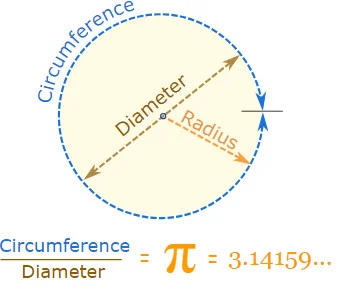
Pi is also a circle. Literally.
The definition of pi is the ratio of a circle’s circumference (distance around) to its diameter (distance across). It doesn’t matter how large or small the circle is, the circumference of a circle divided by its diameter will always be pi.
This mathematical constant allows us to measure all sorts of things to do with circles and other curved shapes such as cones, cylinders, and spheres. Our use of pi extends beyond basic math, however. Pi is used in calculations for building and construction, communications, music theory, space flight, medical procedures, and more!
How is π used in the real world?

When planes fly great distances, they are flying on an ARC OF A CIRCLE (the Earth). To gauge flight time, fuel use, etc., AVIATION EXPERTS need to accurately CALCULATE THAT PATH using pi.
Biochemists use pi when trying to understand the STRUCTURE/FUNCTION OF DNA

Statisticians use pi to track POPULATION DYNAMICS
Physicists looking into the behavior of FLUID RIPPLES see pi and use it in their calculations
Global Positioning Systems (GPS) use pi to CALCULATE A SPECIFIC LOCATION on Earth
Aircraft desginers use pi to calculate areas of the SKIN OF AN AIRCRAFT
Electrical Engineers use pi to solve problems for ELECTRICAL APPLICATIONS
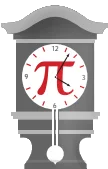
Clock designers use pi when designing PENDULUMS FOR CLOCKS
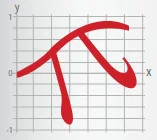
SIGNAL PROCESSING AND SPECTRUM ANALYSIS (identifying frequencies in a wave) use pi, as the fundamental period of a since wave is 2*pi
Pi is celebrated around the world on Pi Day, held every year on March 14th (3/14, get it?). Pi Day at the Saint Louis Science Center is extra special since it’s also 314 Day, celebrating the city of St. Louis! Join us on March 14th for Pi-themed activities and learn all about why pi is so special.
Do you know the first 400 digits of Pi?
Be sure to check out our Pi Day Acitivies on 3.14!
Subjects