Getting to Know GOTO & Digistar
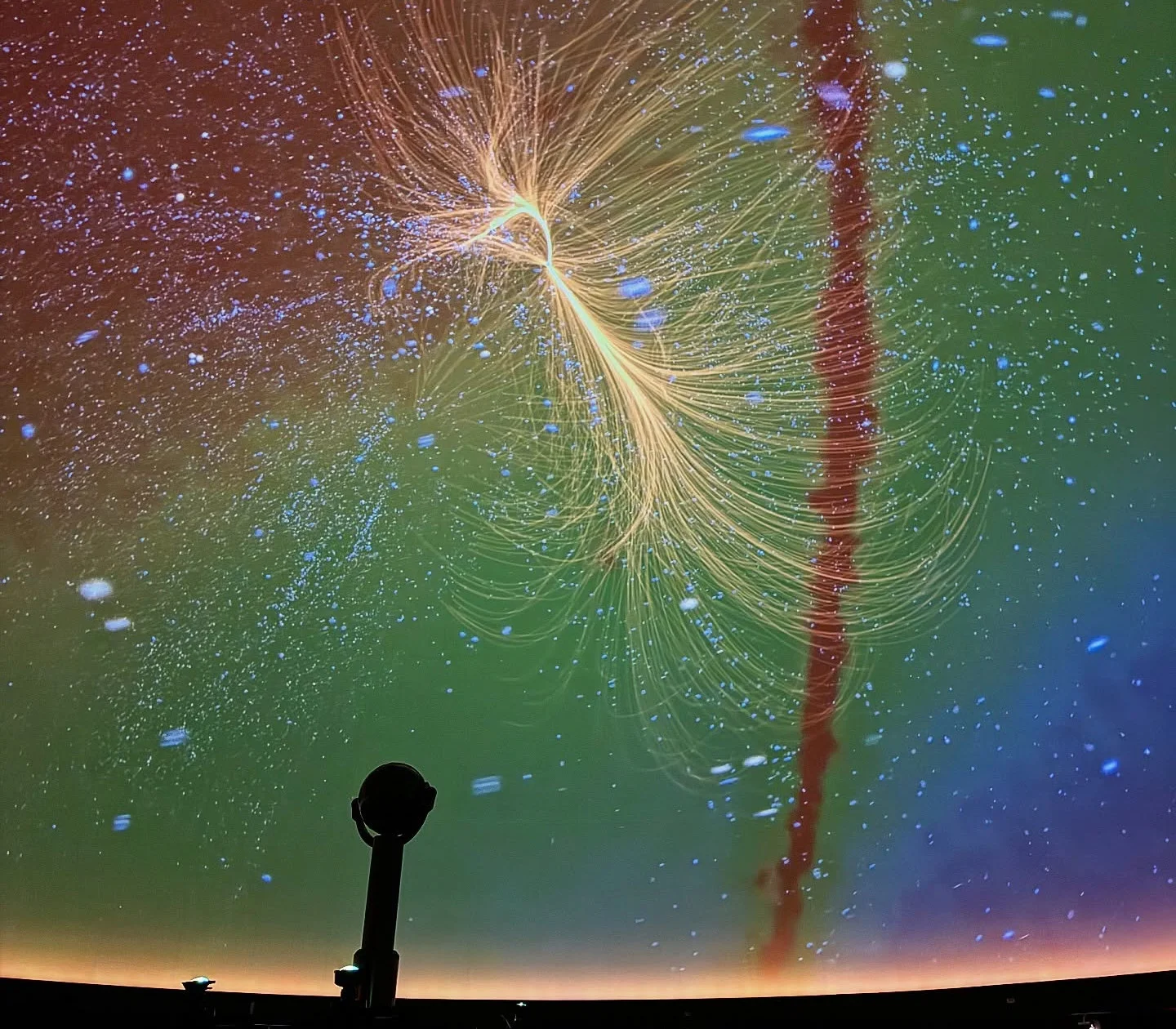
GOTO and The Saint Louis Science Center
Based in the leafy Tokyo suburb of Fuchu City, GOTO is a Japanese astronomical optics company founded in 1926 by Sezio Goto and still run as a family business today by his great-grandson, Nobutaka. Exclusively dedicated to astronomical optics—including telescopes, binoculars, and planetarium projectors—GOTO is now the world’s largest producer of optomechanical and hybrid planetarium projectors, and its logo fittingly incorporates Mt. Fuji, a crescent moon, and the shape of a concave optics lens. Beyond manufacturing, the company also operates several public planetariums in Japan. Notably, the Science Center’s original star projector, in use from 1963 to 1983, was a GOTO ‘Saturn’ L-1, which holds the distinction of being the first major projector the company sold outside of Japan.

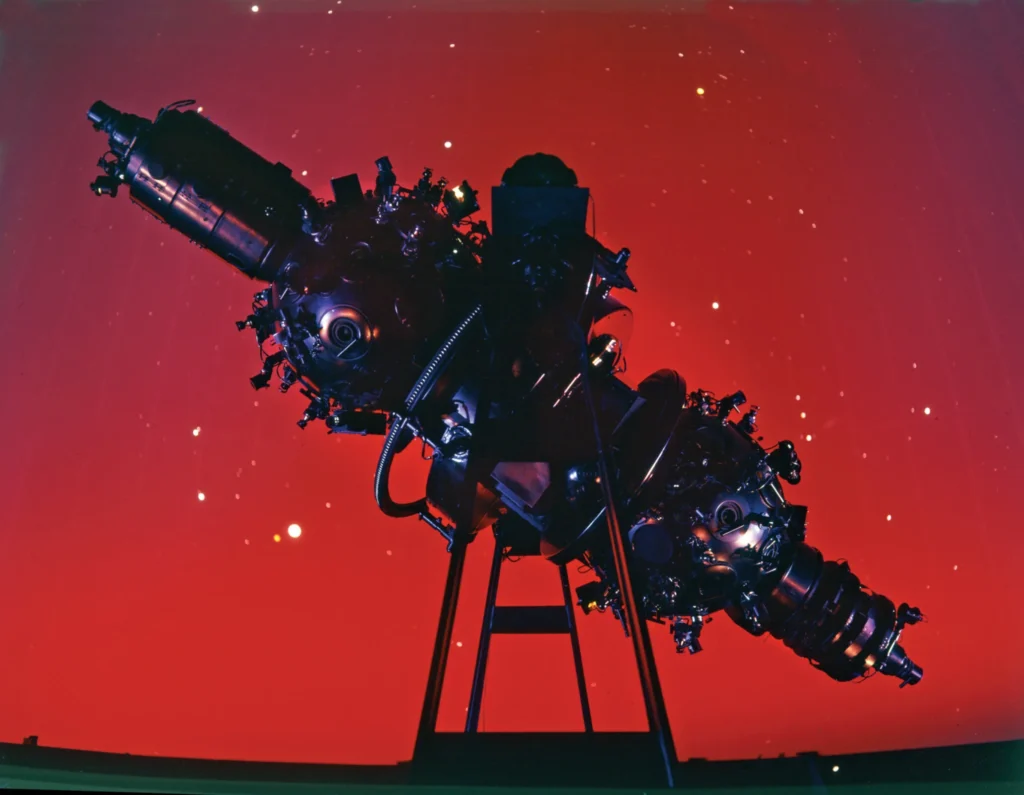
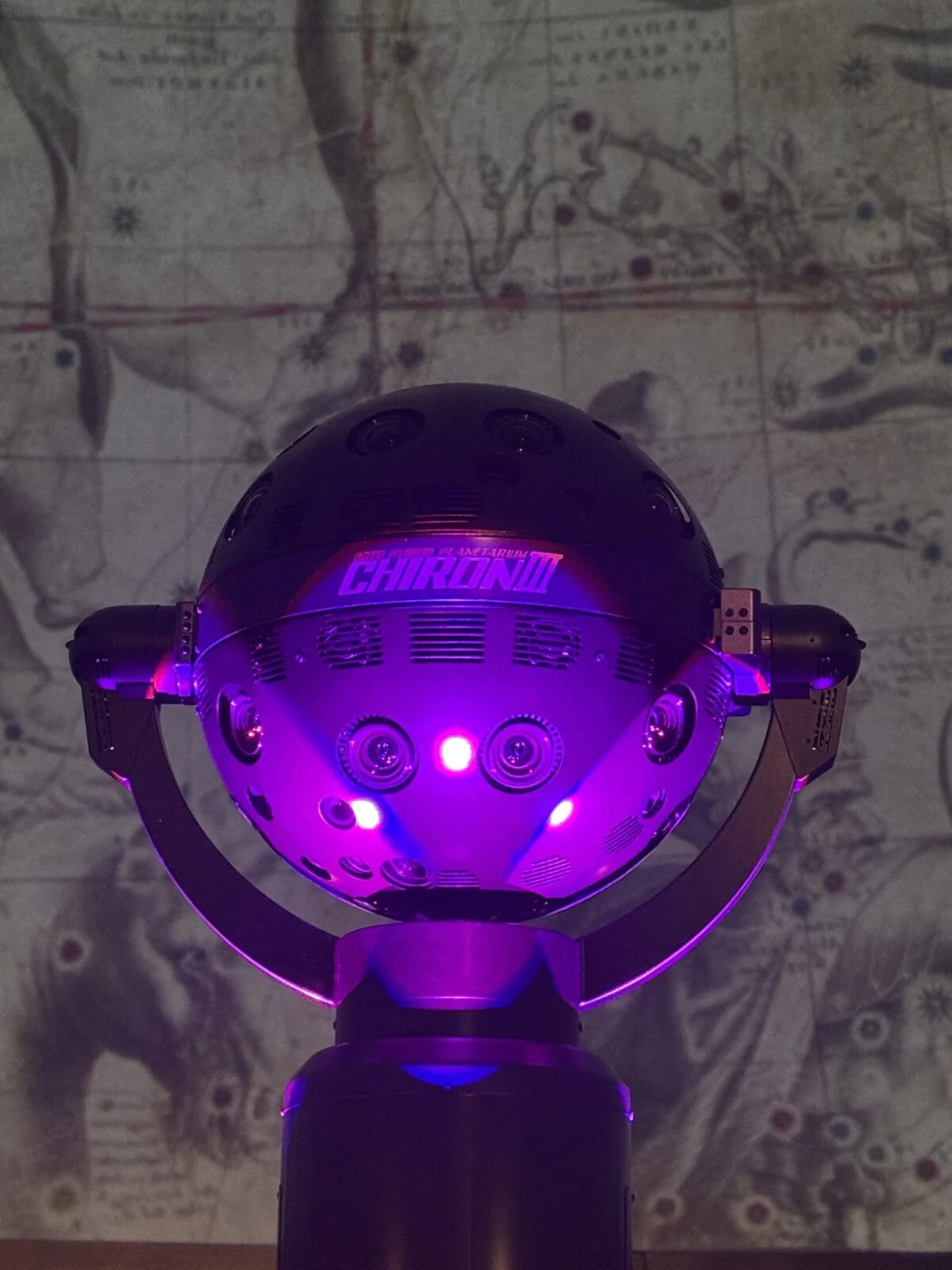
GOTO Chiron III
About the new star projector
- The Chiron III is GOTO’s flagship optomechanical projector for large domes.
- “Chiron” (kai-ron) refers to the son of Chronos in Greek mythology. Chiron was a centaur (a ‘hybrid’) who studied arts and medicine from Apollo, and was known as the “wisest and justest of all centaurs” in the Illiad.
- Our Chiron III is the first and only of its kind installed in the United States, as of 2026.
- Our Chiron III is serial number ‘020’ designating it the 20th Chiron III produced, as of 2026.
- The Chiron III recreates:
- All 9,500 stars visible to the unaided eye down to 6.55 mag (all controllable by mag. and spectral type).
- Approximately 100 million additional individual stars in the Milky Way projection down to 17.5 mag.
- 337 deep sky objects, including all Messier objects, and 9 variable stars.
- Over 100,000 combinations for scintillation.
- The Chiron III is the first optomechanical projector to produce all 9,500 visible stars with accurate color.
- The Chiron III reproduces the sky at a resolution equivalent to over 70k, far exceeding digital and LED domes.
- The Chiron III consists of:
- Star Ball – 48 cm diameter, uses high-powered LEDs fed through fiber optics to 16 star fields, individual bright star projectors, and projectors for Milky Way and DSOs.
- Outboard Planet Arrays – 7 dedicated projectors for Sun, Moon, Mercury, Venus, Mars, Jupiter, & Saturn

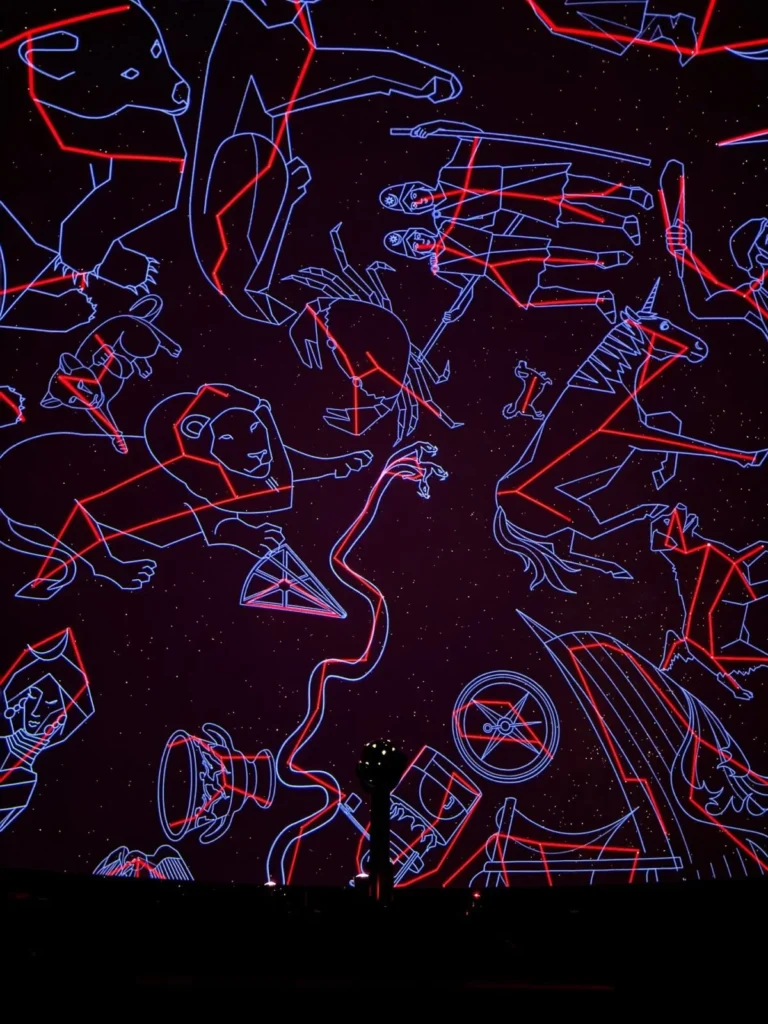
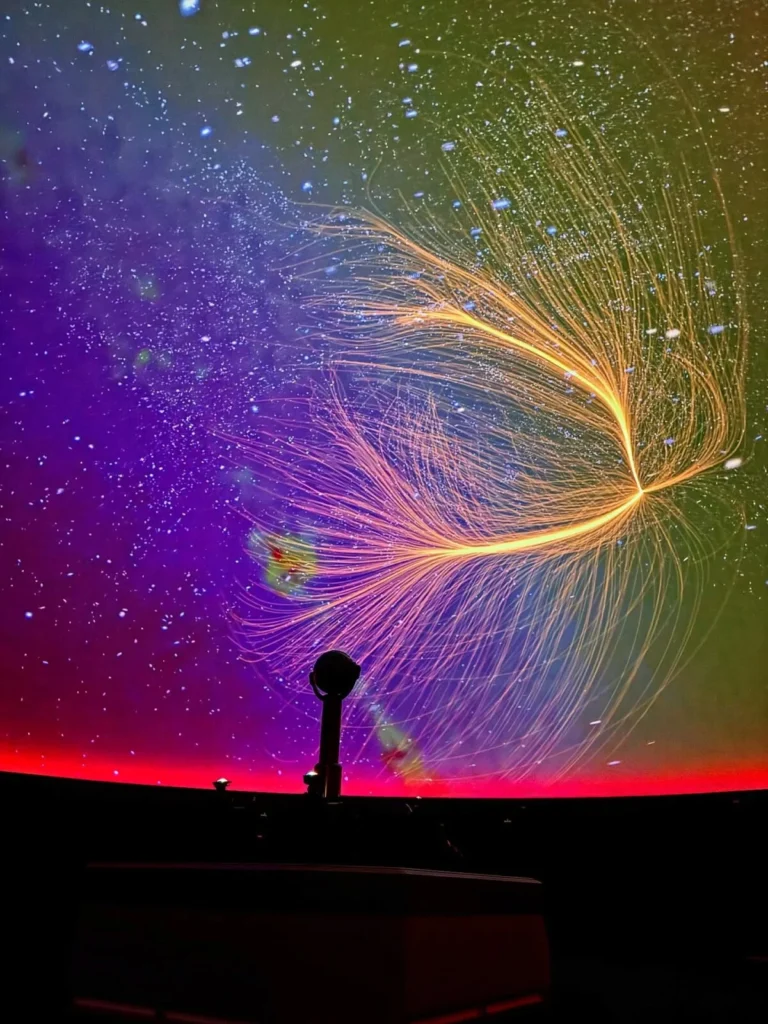
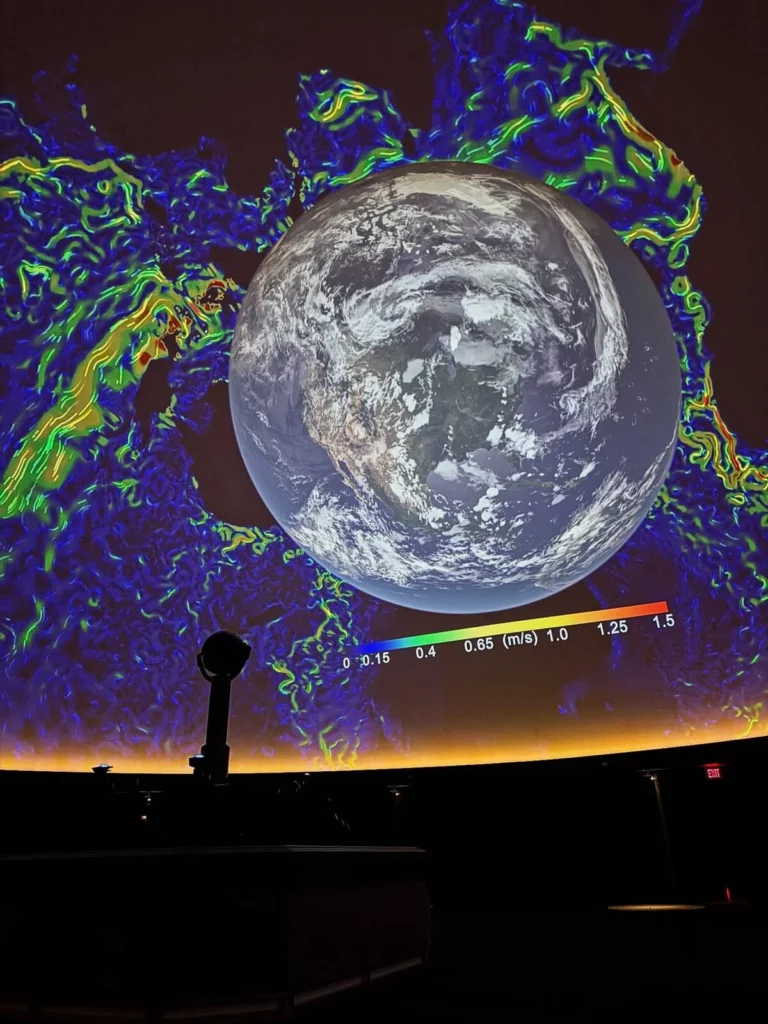
What is a Hybrid Planetarium?
Get a behind-the-scenes look at the McDonnell Planetarium, which has being transformed into the largest and most advanced hybrid planetarium in the U.S.A!
A hybrid planetarium combines traditional optical star projection with immersive digital video technology. This upgrade allows for breathtakingly realistic star fields and immersive journeys across the universe, offering a completely new astronomy experience.
The planetarium is now open, get your tickets today!
About Cosm/Evans & Sutherland (E&S)
- Cosm, founded in 2020, is an “immersive entertainment and technology” company.
- The average guest may be familiar with Cosm due to their sports venues and camera technology used in the NFL, NBA, MLB, NHL, and more.
- Cosm owns Evans & Sutherland (E&S), which was founded in 1968 as the world’s first computer graphics company. E&S created the first digital planetarium projector – Digistar – in 1983.
- E&S’s Digistar prototype was used in 1981 to film sequences for Star Trek II: The Wrath of Khan.
- This was the first entirely computer-generated sequence in a major motion picture!

About the Digistar
- Our system uses “Digistar 2026”.
- We are one of over 700 active Digistar sites worldwide, as of 2026.
- Our Digistar uses custom-ground GOTO lenses on 4 center-mount Sony digital projectors.
- The Digistar can render in real-time:
- The entirety of the observable Universe out to 13.8 billion light-years from Earth.
- Real-time access to hundreds of sky surveys and scientific databases.
- Data from ESA’s Gaia mission provides the most accurate three-dimensional map of the Milky Way.
- High resolution terrain mapping for Earth and other terrestrial bodies.
- Exclusive access to Google 3D photorealistic tiles.
- 3D models utilizing Unreal engine.
- Domecasting and streaming of presentations and live events across the world.

Digistar 1 – 1985 – James S. McDonnell Planetarium
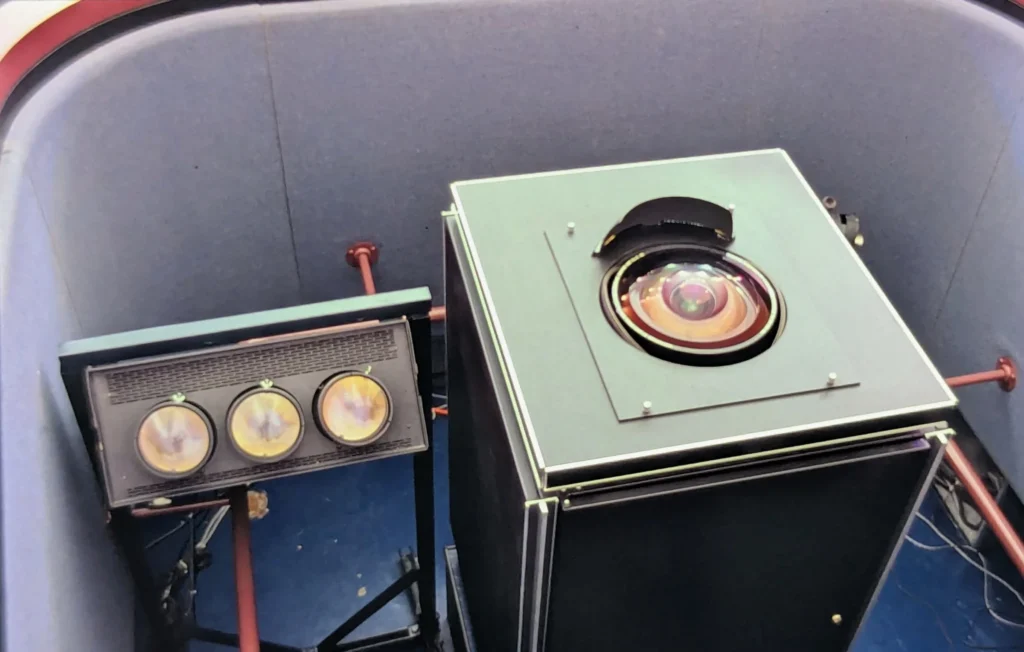
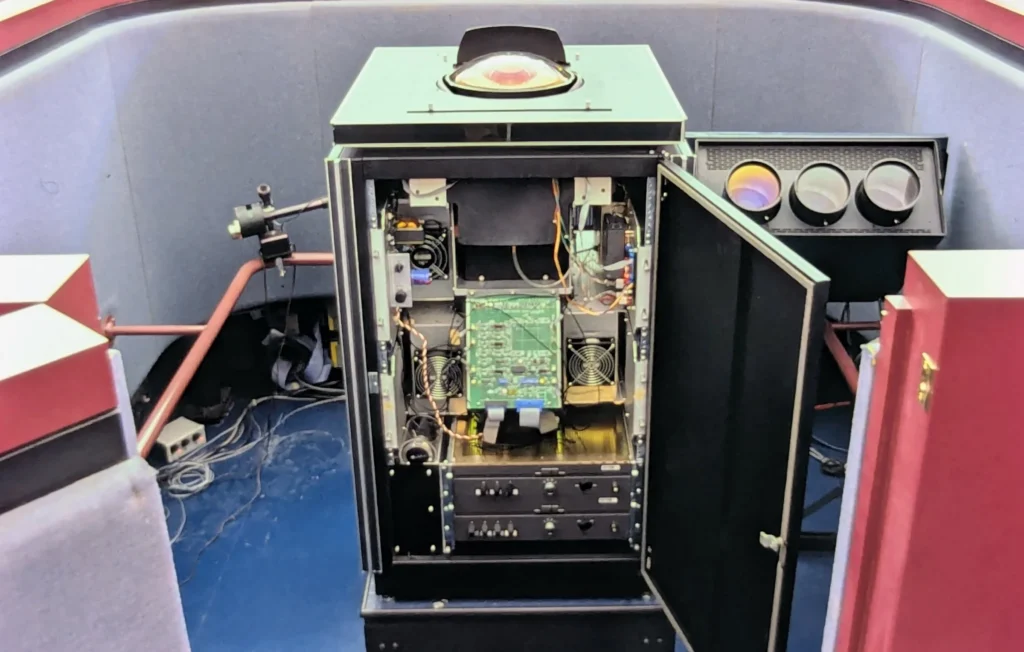
The Saint Louis Science Center ordered the world’s first Digistar system in 1980. The Planetarium would reopen in 1985 with the 3rd operational Digistar system. The Digistar 1 ran from 1985-1999.
