November 11, 2026
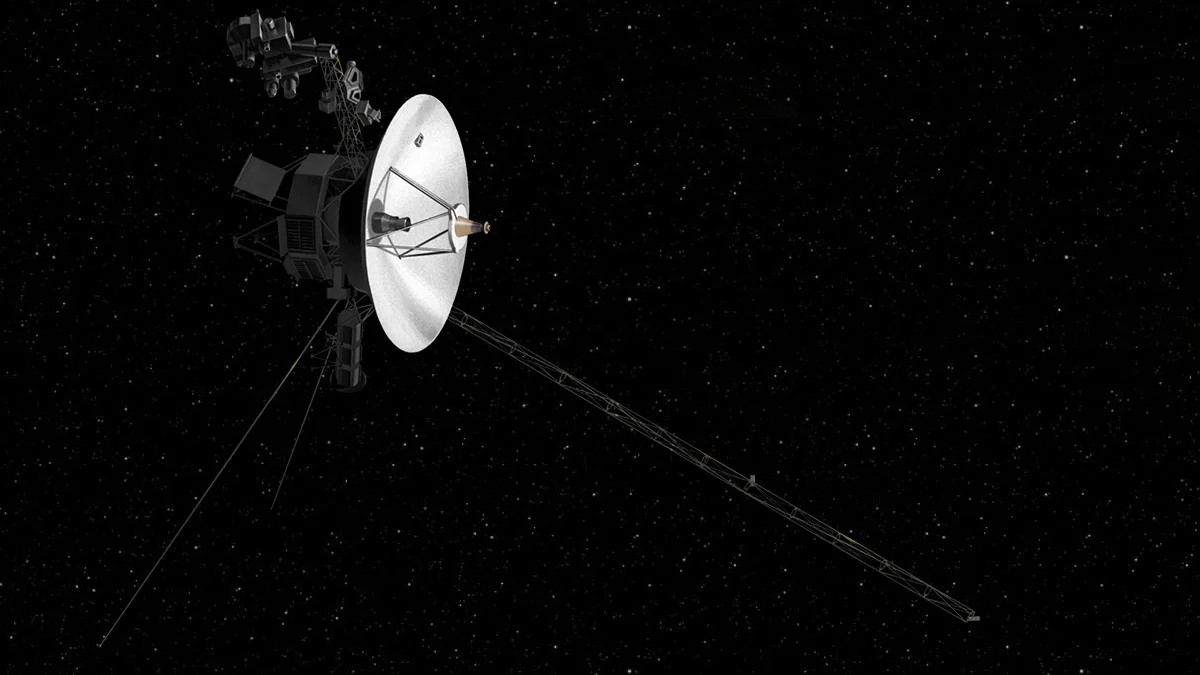
On November 18, 2026, at 4:16 a.m. CST, NASA’s Voyager 1 spacecraft will quietly mark a milestone. Voyager 1 will be 16.094 billion miles (25.902 billion kilometers) from Earth—the distance light travels in 24 hours, also known as a light-day. It is the farthest any human-made object has ever traveled, nearly 50 years in the making. This tiny beacon of hope in the universe is still whispering back to us from the outside of our protective heliosphere.
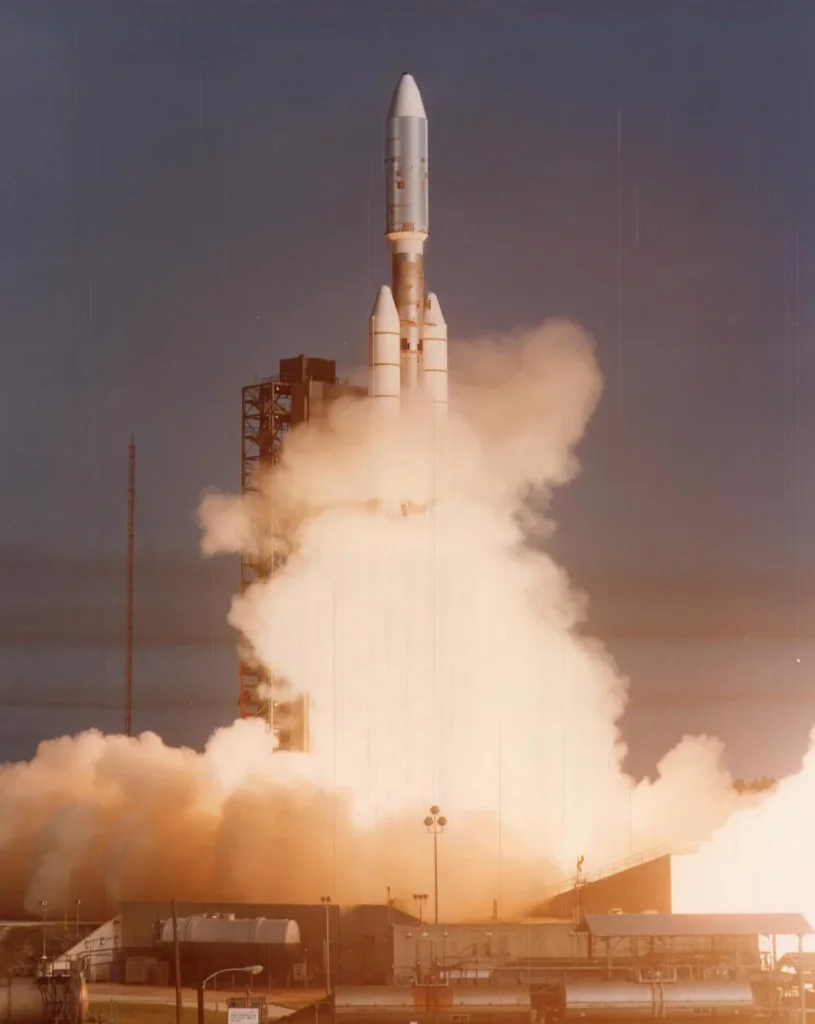
Photo courtesy of JPL/NASA
Voyager 1‘s journey began on September 5, 1977, when it lifted off from Kennedy Space Center atop a Titan IIIE-Centaur rocket. Voyager 1 took took a fast, short trajectory to Jupiter and Saturn compared to it’s twin, Voyager 2. It crossed the asteroid belt, swung past Jupiter in March 1979, and encountered Saturn in November 1980, using each giant planet’s gravity as a slingshot to accelerate outward. After Saturn, Voyager 1 angled northward out of the planetary plane, beginning the interstellar phase of its mission that continues today.
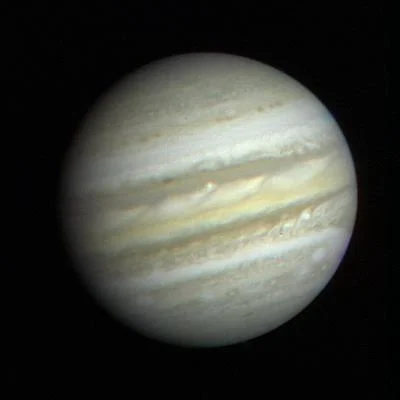
Photo courtesy of JPL/NASA
Along the way, Voyager 1 delivered some of the most profound discoveries in planetary science. At Jupiter, it captured the first close-up views of the Great Red Spot and—most spectacularly—spotted active volcanoes on the moon Io, the first ever found beyond Earth. At Saturn, it revealed five previously unknown moons, exposed the intricate structure of the ring system, and showed that Titan is shrouded in a thick, hazy nitrogen atmosphere. And in 2012, Voyager 1 became the first spacecraft to cross the heliopause, leaving the Sun’s protective bubble and entering interstellar space. Years later, its instruments would pick up the faint vibrations of interstellar plasma—a way of “hearing” the space between stars.
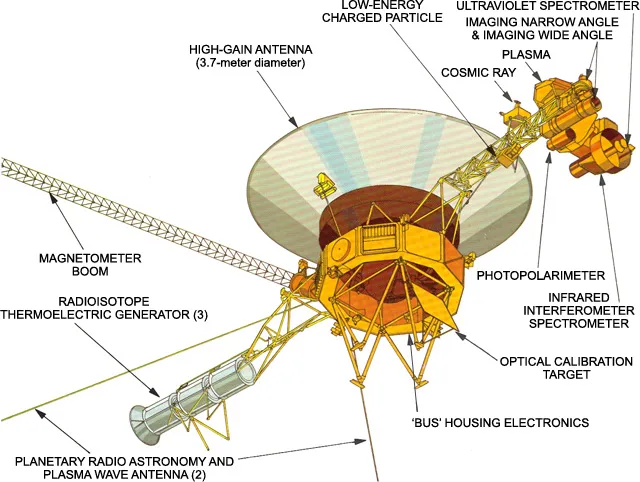
Photo courtesy of JPL/NASA
Even now, nearly five decades after launch, Voyager 1 is still making news. Its power supply, generated by decaying plutonium, dwindles by about 4 watts each year, forcing engineers to make hard choices. In September 2026, the team completed a delicate, months-long effort nicknamed the “Big Bang“—simultaneously turning off three onboard devices for lower-power alternatives on-board to stretch the spacecraft’s remaining energy. Without that procedure, another science instrument would have needed to be shut off as early as summer 2027. Today, only two of Voyager 1‘s original ten instruments remain active: the Magnetometer (MAG) and the Plasma Wave Subsystem (PWS), both listening to the interstellar medium. The probe also gave its team a brief scare in October 2026 when a communications pause silenced its signal for 48 hours, though contact was restored without intervention.
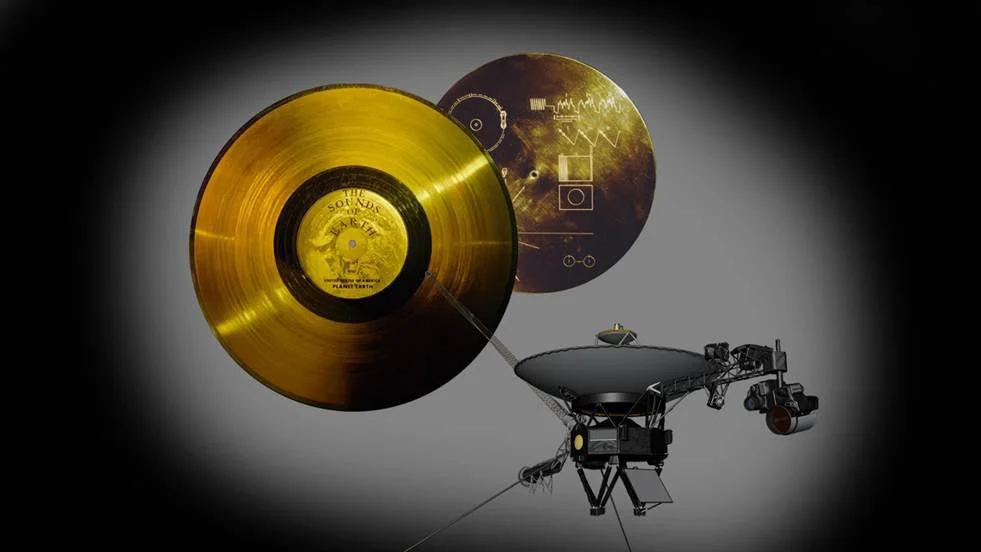
Photo courtesy of JPL/NASA
When Voyager 1 crosses the one-light-day mark, it will be a quiet triumph of engineering and human curiosity—a machine built in the 1970s, running on a fraction of the power of a modern light bulb, still reporting back from a distance where sunlight itself takes a full day to arrive. It carries the Golden Record, a gold-plated phonograph disk with greetings in 55 languages and a portrait of Earth for any civilization that might one day find it. In roughly 40,000 years, it will drift within 1.7 light-years of the faint red dwarf Gliese 445, though its radio voice will have fallen silent long before then. For now, the milestone is ours to celebrate: a spacecraft, launched by human hands, has reached a full light-day into the dark—and it is still going.
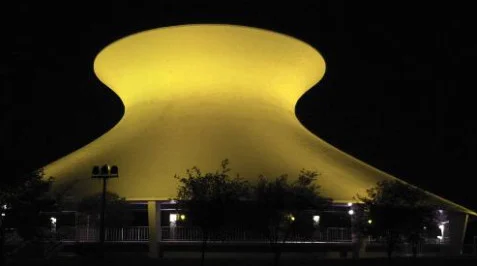
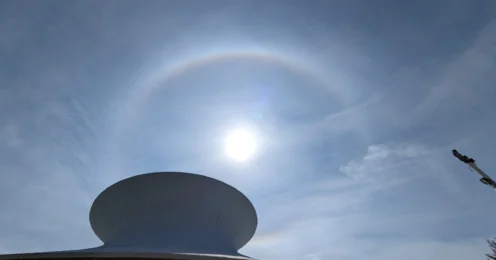
On November 17, the James S. McDonnell Planetarium will light up gold as we join NASA’s ShineBright celebration for Voyager‘s Light Day!
You can also see images and learn more about the planets visited by the Voyager missions in the Planetarium’s Planets of the Sun show!