Monday, December 8, 2025
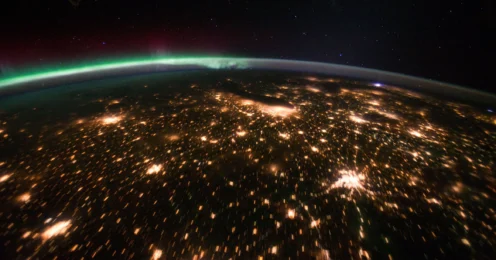
On this date in 1993, the United States Department of Defense opened their global positioning system to civilian use. This GPS system utilized 24 satellites in orbit to provide precise positioning data anywhere on Earth.
Tuesday, December 9, 2025
On this date 1978, NASA’s Pioneer Venus Multiprobe (PVM) entered the atmosphere of Venus. The PVM contained one large and three small atmospheric probes. The radio signals from all four probes were used to characterize the winds, turbulence and propagation in the atmosphere.
Wednesday, December 10, 2025
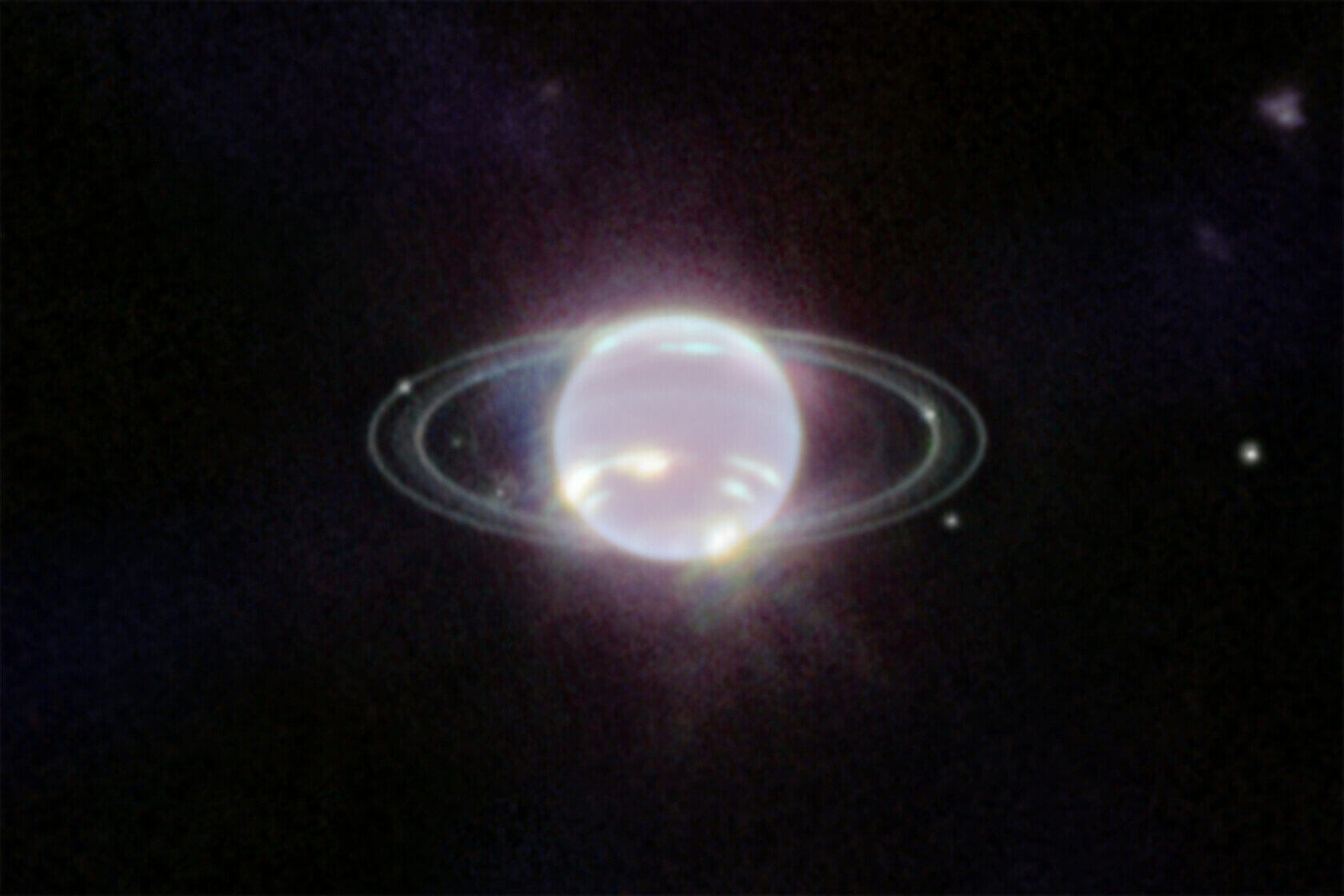
Today, Neptune ends retrograde motion. Retrograde describes a planet’s apparent westward movement relative to the background stars. This phenomenon is caused by Earth’s own motion in its orbit around the Sun. Neptune will resume prograde motion and exhibit apparent eastward movement relative to the background stars.
Thursday, December 11, 2025
On this date in 1972, the last crewed Moon landing occurred when the Apollo 17 LEM touched down at the Taurus-Littrow landing site. Astronauts Gene Cernan and Harrison Schmitt spent three days on the Moon performing geological surveying and collecting various lunar samples.
Friday, December 12, 2025
On this date in 1961, the first privately built satellite was sent into orbit. The Orbiting Satellite Carrying Amateur Radio (OSCAR) satellite reached low Earth orbit and transmitted “Hi” in Morse code 10 times a minute in honor of the 60th anniversary of the first transatlantic radio transmission. It reentered Earth’s atmosphere on January 31, 1962.
Saturday, December 13, 2025
On this date in 1962, the communications satellite Relay 1 was launched from Cape Canaveral Air Force Station. Relay 1 was used to transmit telephone, television, teleprinter, and facsimile signals globally. Unfortunately, the leakage of a high-power regulator caused the satellite to revert to a low voltage state and communication was lost with the craft in February 1965.
Sunday, December 14, 2025
This morning, the annual Geminid meteor shower will reach its peak. Active each year between December 4 and December 17, best observing is forecast for the morning of December 14. The Geminids are capable of producing upwards of 120 meteors per hour (ZHR) when viewed from a dark location.
Subjects