Monday, October 20, 2025
Wondering where the big dipper is? This popular and easy-to-spot asterism is approaching its lowest point in the early evening sky after sunset. If you have trees or buildings blocking your northern horizon, the Big Dipper will not be visible until the early morning.
Tuesday, October 21, 2025
Today, the annual Orionid Meteor Shower reaches its peak. A meteor shower is a celestial event where meteors, or shooting stars, can be observed caused by streams of cosmic debris entering the Earth’s atmosphere. Peaking new moon will leave the sky especially dark for ideal observing prospects.
Wednesday, October 22, 2025
On this date in 1797, the world’s first successful parachute jump was completed in Paris, France. Parachute technology would go on to be vital in all variety of space missions to ensure safe, controlled descent and reentry from orbit.
Thursday, October 23, 2025
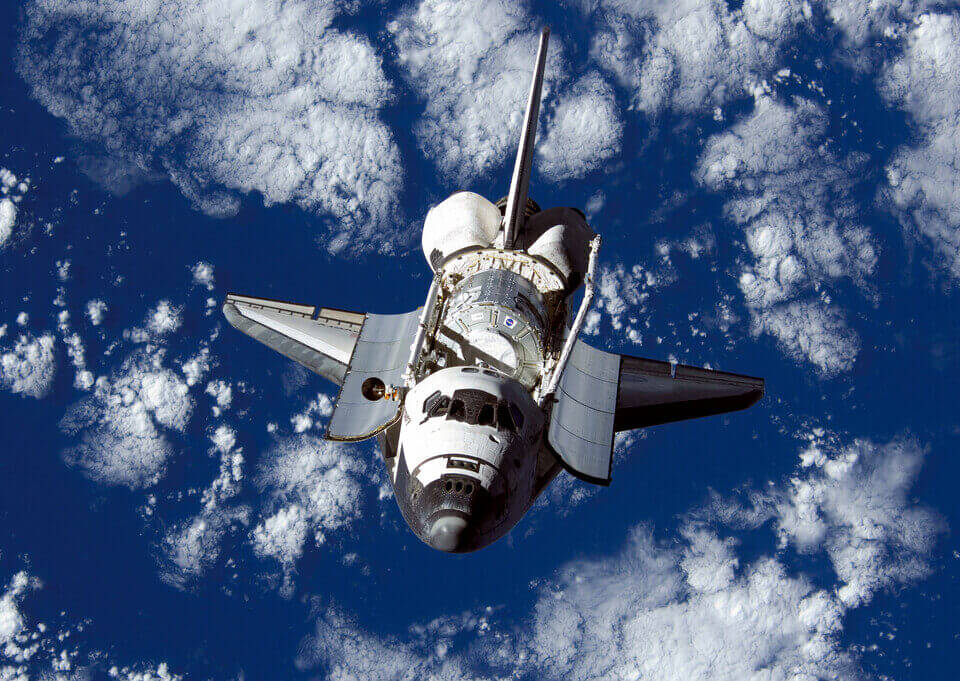
On this date in 2007, Space Shuttle Discovery launched on the twenty-third Shuttle mission to the International Space Station and delivered the Harmony module. Harmony, also known as Node 2, is the utility of the ISS. It connects the laboratory modules of the United States, Europe, and Japan as well as providing sleeping cabins for four of the crew.
Friday, October 24, 2025
Today, a lunar occultation of the star Antares will be visible from parts of South America and Antarctica. Lunar occultations occur when the Moon passes in front of a more distant celestial object, blocking its view for select locations on Earth.
Saturday, October 25, 2025
Today in 1975, the Soviet unmanned probe Venera 10 soft-landed on Venus. Although it was designed to last only 30 minutes in the extremely high-temperature and high-pressure environment of Venus, Venera 10 transmitted for a record 65 minutes.
Sunday, October 26, 2025
The Perseus Double Cluster (NGC 869 and NGC 884) will be well placed for viewing tonight. The pair will rise shortly after sunset and reach their highest altitude in the sky near midnight. These open star clusters lie at a distance of about 7500 light-years from Earth in the Perseus Arm of our Milky Way galaxy. While it is possible to see the double cluster with the unaided eye in dark skies, binoculars are recommended for the best view.
Subjects