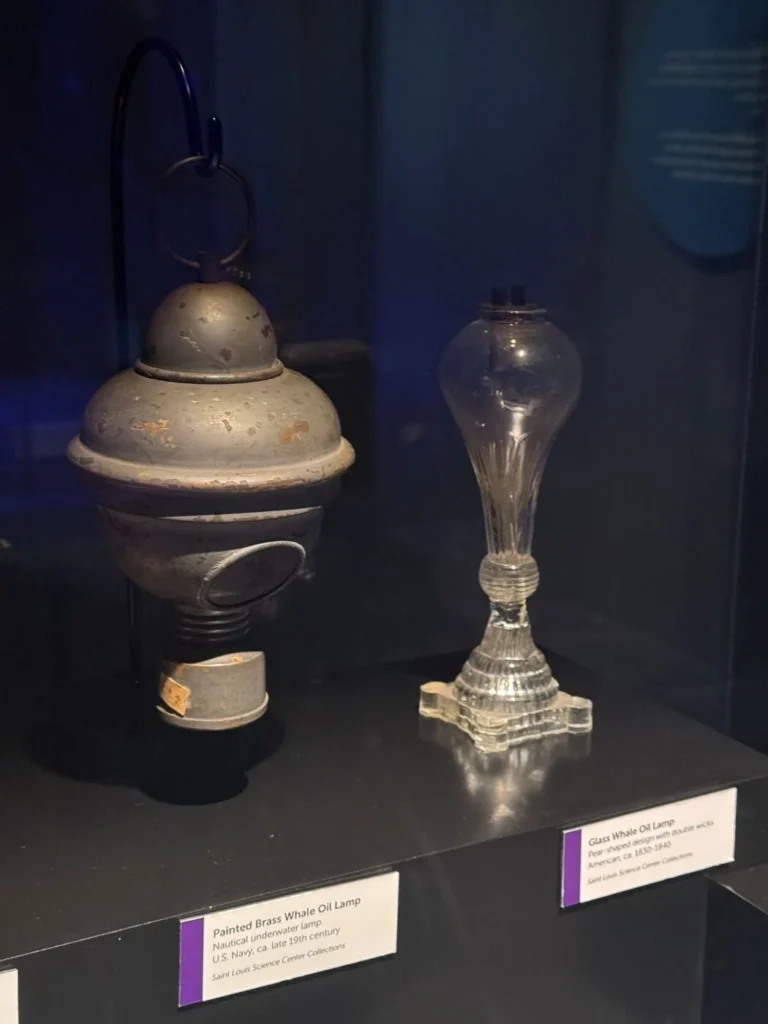
Whale oil was invaluable for oil lamps and candles before electricity was invented, and it served as a high-quality lubricant for machines during the Industrial Revolution. To obtain this oil, whales have been hunted for thousands of years by various cultures. As the demand increased, whaling developed into a very profitable business — with slower moving right whales, bowheads as the first targets and the enormous bulk of blue whales becoming an enticing pursuit as whaling technology improved. Sperm whales were also desired for their abundant blubber and the prized spermaceti found in their heads.
Why Seek Oil From Creatures in Deep Waters?
Whale oil is obtained after whalers strip away the thick layer of blubber off the whale carcass; slice it into smaller, more manageable pieces; and boil those pieces in large pots to create a liquid. Once rendered, whale oil is extremely stable and burns brighter, with less smoke, than other products. It’s estimated that a single large blue whale could yield more than 5,000 gallons of oil.
Although whale oil burned well, it wasn’t cheap to obtain, so whale oil lamps were typically only found in upper middle class and wealthy homes. These lamps came in many designs and served as a bit of a status symbol.

Hunting for Big Blues
In the early- to mid-1900s, humans developed the skills and technology to capture and harvest blue whales. By this time, whale meat and parts were in far lower demand — as the invention of plastic reduced the need for baleen in corsets and other products and the discovery of petroleum meant whale oil was no longer necessary for fuel. However, blue whales were hunted for animal feed, fertilizer, soap, cosmetics and margarine. As a result, while there were more than 300,000 blue whales in the ocean in the early 1800s, the number of living blue whales across the globe fell to fewer than 2,000 by the early 1960s. Today, after the global ban on the hunting of blue whales was implemented in the late 1960s, the worldwide population numbers between 10,000 to 25,000 (including around 7,500 in the southern ocean, around 4,000 in the North Pacific and between 1,000-3,000 North Atlantic creatures).
About Blue Whale: The Exhibition
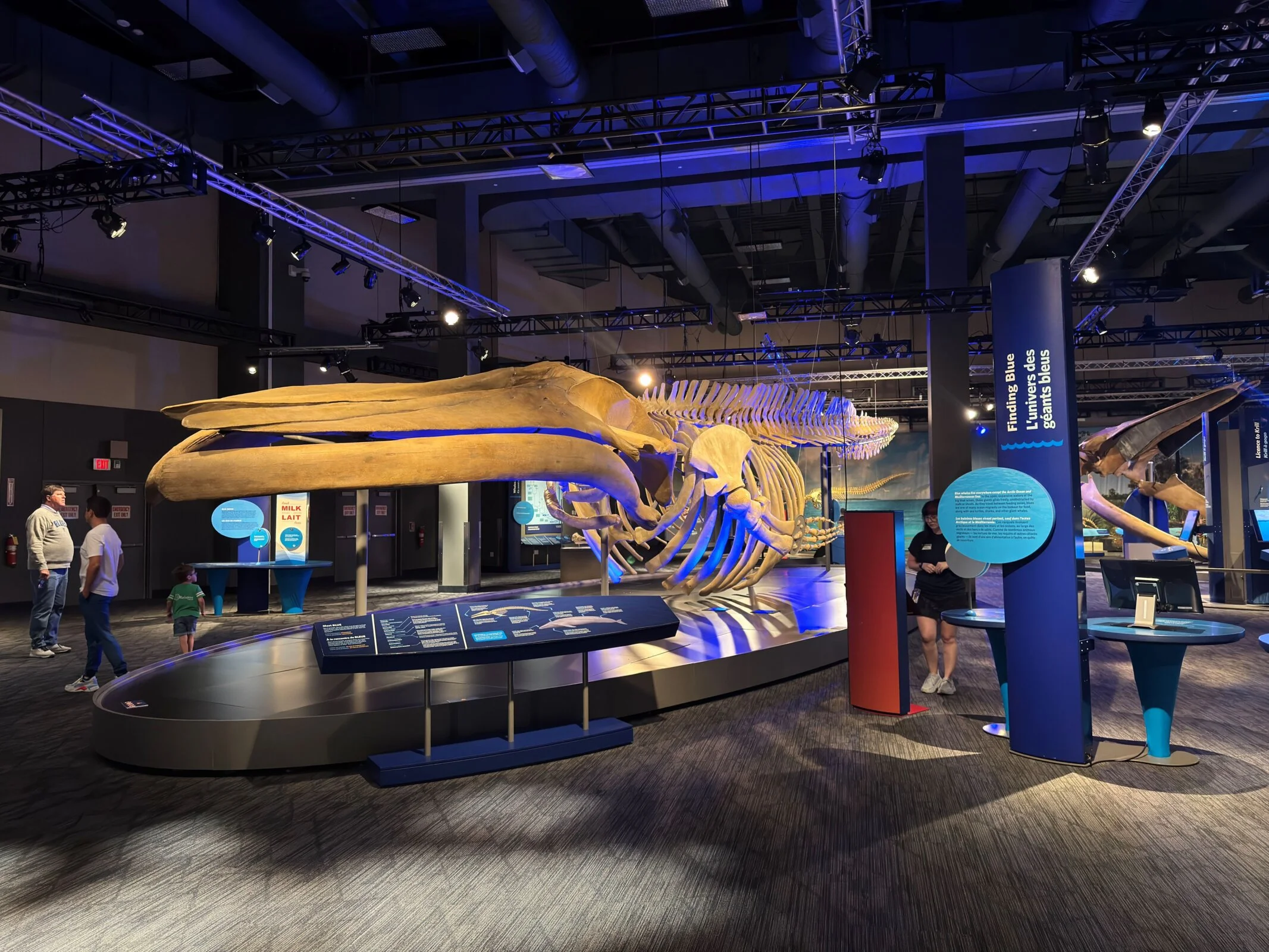
Open until January 10, 2027, Blue Whale: The Exhibition shares the story of the largest creatures to ever live on Earth and presents a once-in-a-lifetime opportunity to stand alongside a graceful ocean giant. The featured specimen on display is a nearly 80-foot long, female blue whale named “Blue,” that was recovered after the tragic passing of nine endangered North Atlantic blue whales that became trapped in sea ice off the coast of Newfoundland, Canada, in 2014. Through hands-on experiences; life-sized replicas of Blue’s skeleton, heart and jaws; and first-hand scientific discovery; the exhibition offers the rare opportunity to feel the awe, wonder and respect for one of Earth’s most extraordinary creatures without leaving the Gateway City.
Learn more about this exhibition and purchase tickets at: slsc.org/blue-whale.
Subjects