Cosm Digistar Projection System Delivers Digital Clarity to Planetarium Upgrade
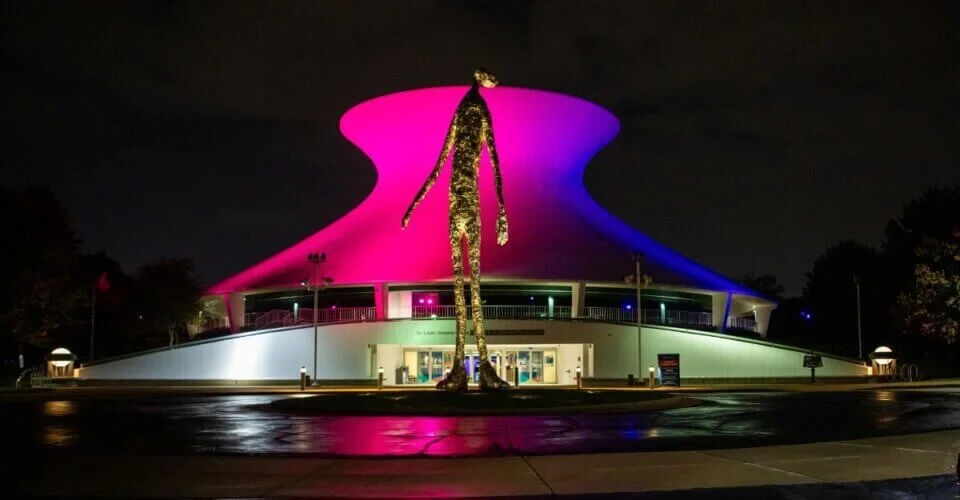
The Saint Louis Science Center’s James S. McDonnell Planetarium is undergoing its largest technology upgrade in more than 25 years — with the installation of a GOTO Chiron III Hybrid Star Projector (the first of its kind to be installed in the United States) and a Cosm Digistar Full-Dome Data Visualization System — to create a fully hybrid planetarium. Modernizing the Planetarium’s projection system will combine the traditional, educator-led astronomy show display with a high-resolution, digital projection system and present many new experiences for Science Center guests.
Expanding the Limit
The Cosm Digistar system will utilize laser-powered digital projectors integrated with hardware and software components to expand the programming offered across the Planetarium dome. It’s 8K+ resolution, 16,000:1 contrast ratio, customized lenses and built-in iris mechanisms adjust the amount of light projected to allow the system to display vivid images with real-time access. Digistar is the industry’s leading planetarium software platform — with access to hundreds of sky surveys, scientific databases and photorealistic tiles, data from NASA, the National Oceanic and Atmospheric Administration, the European Space Agency and more — the system provides the most comprehensive and precise 3D map of the Milky Way galaxy, the latest discoveries by the James Webb Space Telescope and others, and intricate displays of real-world events and landscapes.
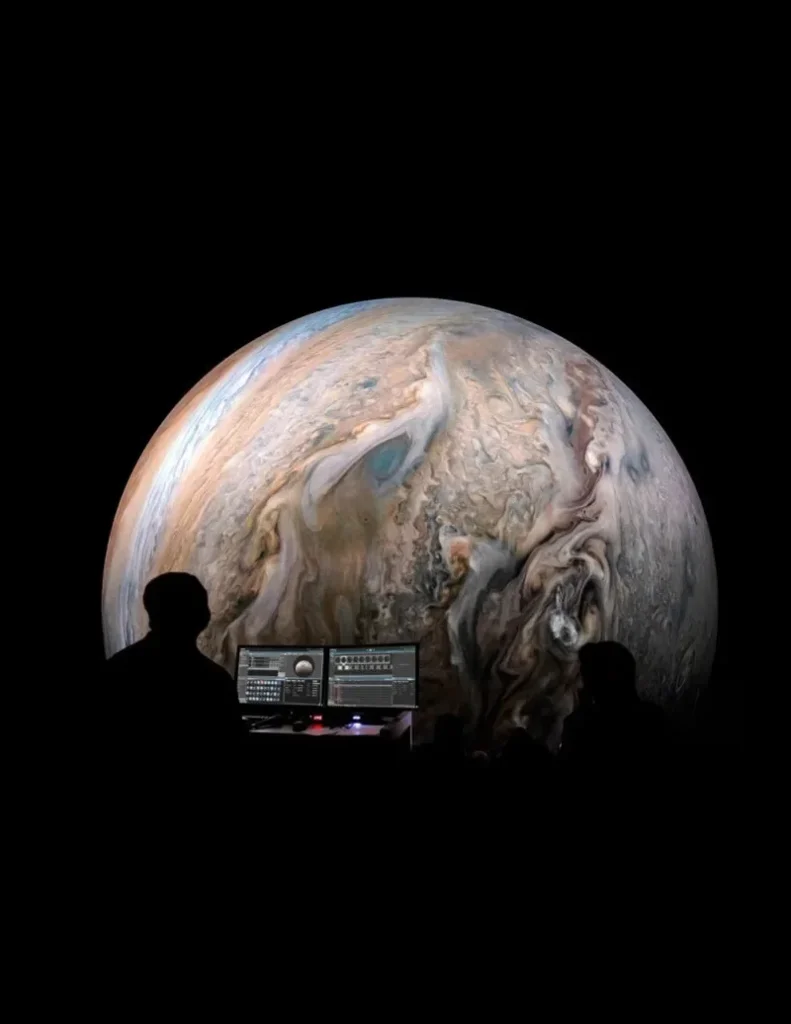
Among the system capabilities include the ability to:
- Visualize landing on Mars, the moon and other celestial bodies.
- Fly across the edge of the observable universe to view more than one billion mapped stars.
- Sail over mountains, valleys, deserts, forests, cities and more with photorealistic qualities.
- Track changing weather patterns, animal migrations, satellite activity and more in real-time.
- Collaborate with more than 700 other planetariums and museums across the globe for lectures, presentations and programming through unique “Domecasting” technologies.

“The addition of this digital projection system gives us the best of both worlds — the breathtaking and realistic star fields guests have come to love at the McDonnell Planetarium along with immersive, 360-degree visuals to explore the universe,” says Planetarium Manager Will Snyder. “The strength of this system lies in its ability to display new discoveries and datasets in near real-time. I think our guests will be blown away by how quickly and how accurately we can bring the latest activities across the cosmos to our programming.”
This installation of the Cosm Digistar system is a “Back to the Future” moment for the Science Center. In the 1980s, the Planetarium purchased the first Digistar system, which opened as the third operational Digistar projector in the world. It operated from 1985-1999.
Looking Back at You EARTH!
Supported by a grant from the American Physical Society (APS), the hybrid planetarium will offer shows that flip our view from the night sky looking up to a closer look at our vast planet from the vantage-point of satellites above in orbit. Celebrating St. Louis’ role in geospatial technology, our As the World Turns exhibit, and a new Planetarium show entitled “The Earth Today: A Changing Planet,” will enable guests to observe how our planet changes each day. Using real-time geospatial data, Planetarium educators will lead guests through programming with insights into current events, the role of geospatial scientists and how satellite imagery improves our lives.
For more information on this project and about the James S. McDonnell Planetarium, visit slsc.org/attraction/mcdonnell-planetarium/.
Subjects