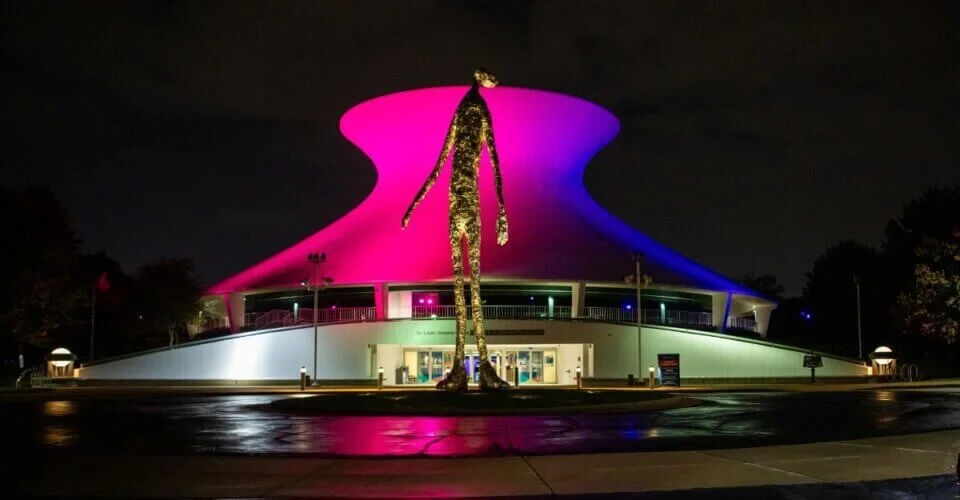
Upgrade to the GOTO Chiron III Hybrid Star Projector To Elevate McDonnell Planetarium’s Programming
The Saint Louis Science Center’s James S. McDonnell Planetarium is undergoing its largest technology upgrade in more than 25 years — with the installation of a GOTO Chiron III Hybrid Star Projector (the first of its kind to be installed in the United States) and a Cosm Digistar Full-Dome Data Visualization System — to create a fully hybrid planetarium. Modernizing the Planetarium’s projection system will combine the traditional, educator-led astronomy show display with a high-resolution, digital projection system and present many new experiences for Science Center guests.
Hello, GOTO
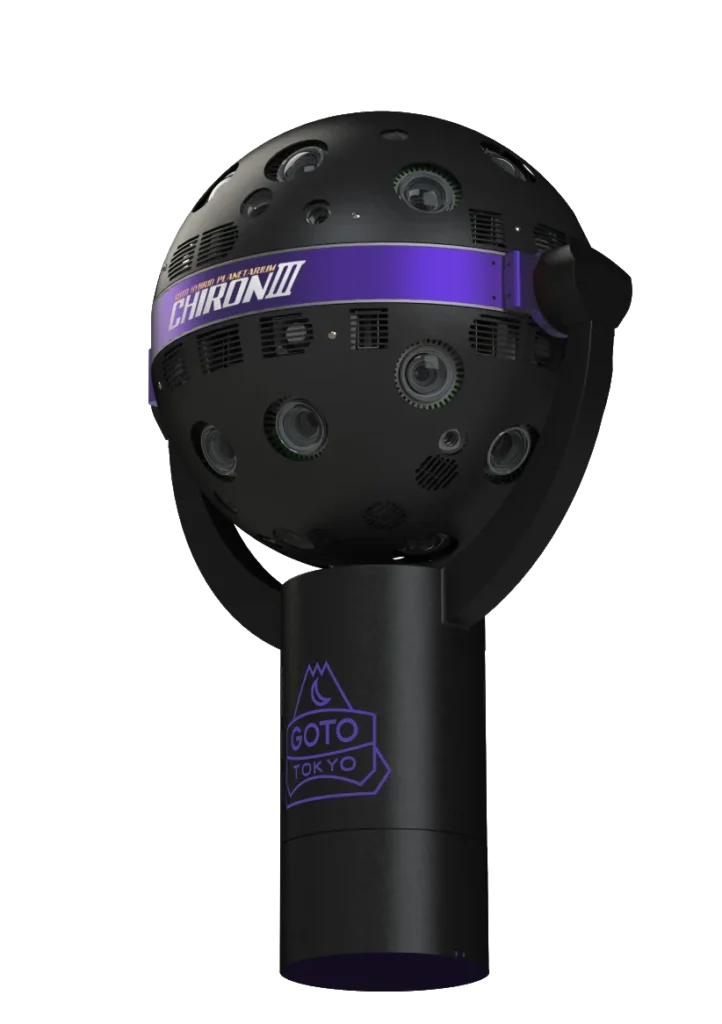
Made possible by the St. Louis-based Centene Foundation, this upgrade elevates Science Center’s astronomy programming to an unprecedented level. As the world’s most advanced optomechanical star projector, the GOTO Chiron III system was designed to work seamlessly with the Digistar projection system to generate a full-dome experience and can:
- Accurately reproduce the night sky from any location on Earth (at any desired date and time from 10,000 years in the past to 10,000 years into the future), from an isolated black mountaintop observatory to a city skyline covered with artificial lighting.
- Project realistic views of the Sun, Moon and visible planets while accurately demonstrating celestial events like eclipses, transits and more.
- Project more than 9,500 individual stars, including all that are visible to the unaided eye. The Chiron III is the first star projector to recreate all the visible stars with accurate color temperature and spectral type.
- Reveal 100 million additional stars within the Milky Way with the aid of binoculars, as well as hundreds of deep-sky objects in unprecedented detail.
- Offer much more in the coming months and years.
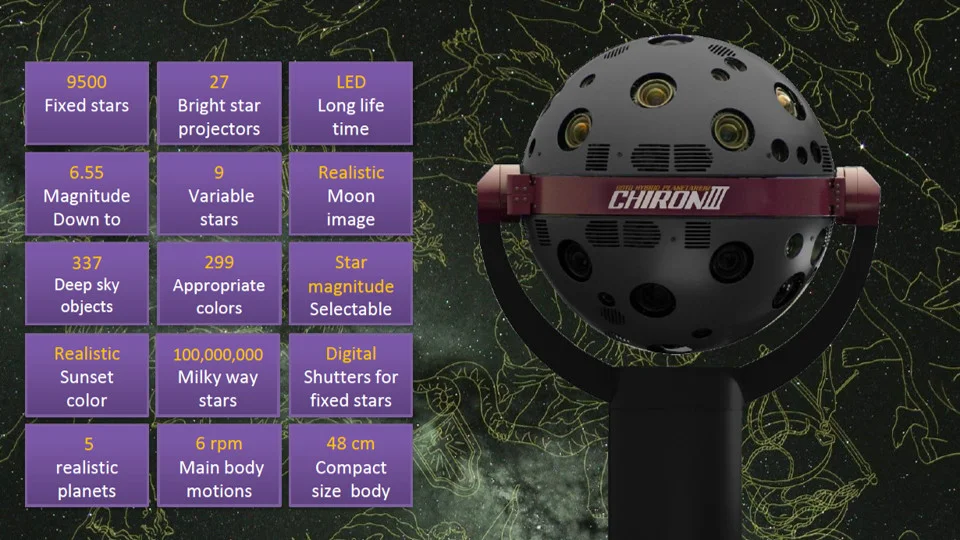
Produced by the Japanese astronomical optics company GOTO, the Chiron III model displays an optic quality that exceeds what’s been achieved by previous projectors with larger projection fields, delivering a resolution equivalent to nearly 70K. Measuring just 48 centimeters in size and requiring only 12 projection fields (versus the 32 fields by previous models), this model generates high efficiency through LED lighting, producing greater brightness and dimming capabilities with only 1/10th the power of previous systems. The system’s high-precision gears and motors allow the Chiron III to move across all three axes to accurately recreate the sky at any location and any point in time.
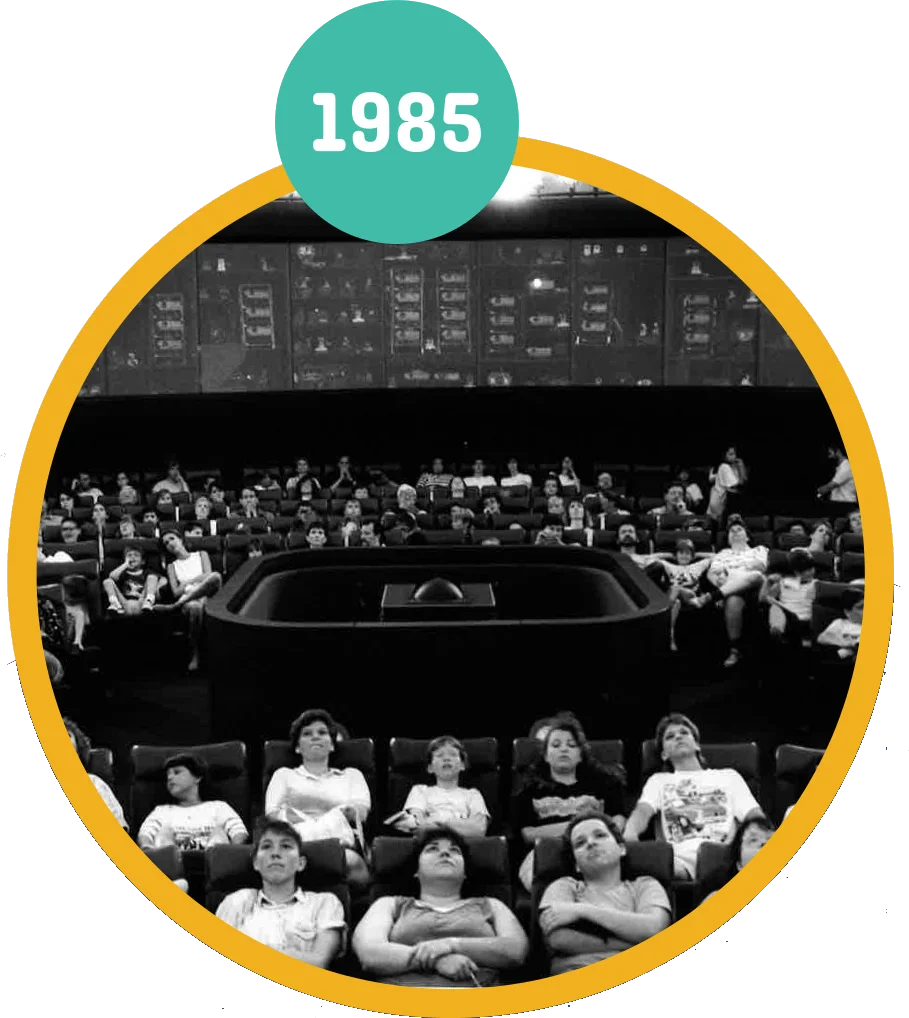
“A GOTO projector returns the McDonnell Planetarium to our original roots,” notes Planetarium Manager Will Snyder. “The first projector installed when the Planetarium opened in 1963 was a GOTO ‘Saturn’ L-1 that, according to Science Center President and CEO Ray Vandiver, ‘looked like a large spark plug’. That original L-1 was the first GOTO projector sold outside of Japan, a trend we’re continuing by being the first institution to utilize the Chiron III model in North America.”


An Update on the Upgrade Project
To complete this upgrade, the Science Center has temporarily closed the Bill and Laura Orthwein StarBay and exhibits on the Planetarium’s upper two floors until the early summer. During the project, guests may still use the Planetarium entrance in Forest Park and experience exhibits within the galleries in the Planetarium lobby, including Mission: Mars, Liftoff, Earth as Art and As the World Turns.
The GOTO Chiron III Hybrid Star Projector replaces the ZEISS UNIVERSARIUM Mark IX projector that was retired after 25 years of service in the McDonnell Planetarium. The Chiron III model is currently being manufactured in Japan and expected to ship to the United States later this month. The full project is expected to open to the public this summer.
For more information on this project and about the James S. McDonnell Planetarium, visit https://www.slsc.org/attraction/mcdonnell-planetarium/.
Subjects