The Update Will Establish the Planetarium as the Largest and Most Advanced Hybrid Planetarium in the United States
ST. LOUIS, MO – January 16, 2026
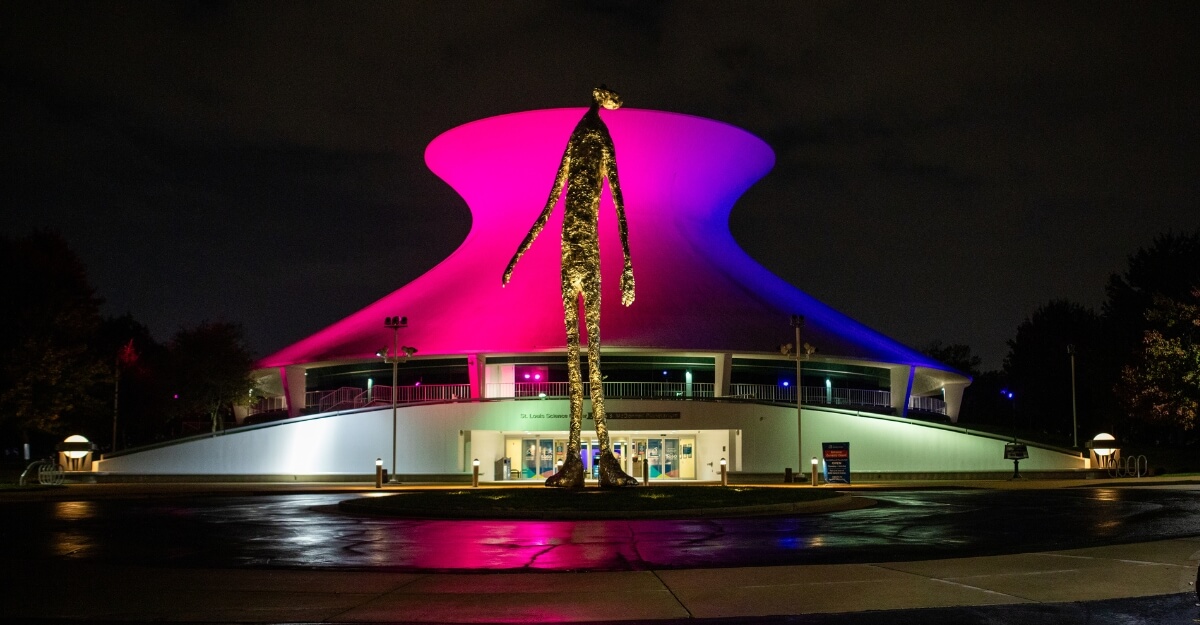
Since its opening in 1963 during the historic Space Race, the James S. McDonnell Planetarium at the Saint Louis Science Center has been THE PLACE for St. Louis residents and visitors to enjoy an up-close, uninterrupted look at the night sky. Today, the Science Center announced that the iconic McDonnell Planetarium will receive its largest technology update in more than 25 years — with the installation of a GOTO Chiron III Hybrid Star Projector (the first of its kind to be installed in the United States) and a Cosm Digistar Full-Dome Data Visualization System. This upgrade will establish the McDonnell Planetarium as the largest and most advanced hybrid planetarium in the nation.
During this installation process, the Bill and Laura Orthwein StarBay and exhibits on the Planetarium’s upper two floors will close temporarily, beginning on February 1 through the early summer. Science Center guests will still be able to utilize the Planetarium entrance in Forest Park and experience the exhibits within the galleries in the Planetarium lobby, including Mission: Mars, Liftoff, Earth as Art and As the World Turns. Other galleries and attractions throughout the Science Center will not be affected by this project and will remain open to guests.
“Millions, like myself, have visited the McDonnell Planetarium over the past six decades and have had the opportunity to marvel at the stars above as both a connection to the past and a bridge to the future,” Science Center CEO and President Dr. Ray Vandiver said. “With these improvements to the projection system and the Bill and Laura Orthwein StarBay, made possible by the St. Louis-based Centene Foundation, we’re ensuring that our Planetarium continues to be the most advanced hub for informal space learning in the region and inspires generations to come to continue exploring the world — and the universe — around us, as there will always be new discoveries to make.”
The upgrades to the McDonnell Planetarium will include:
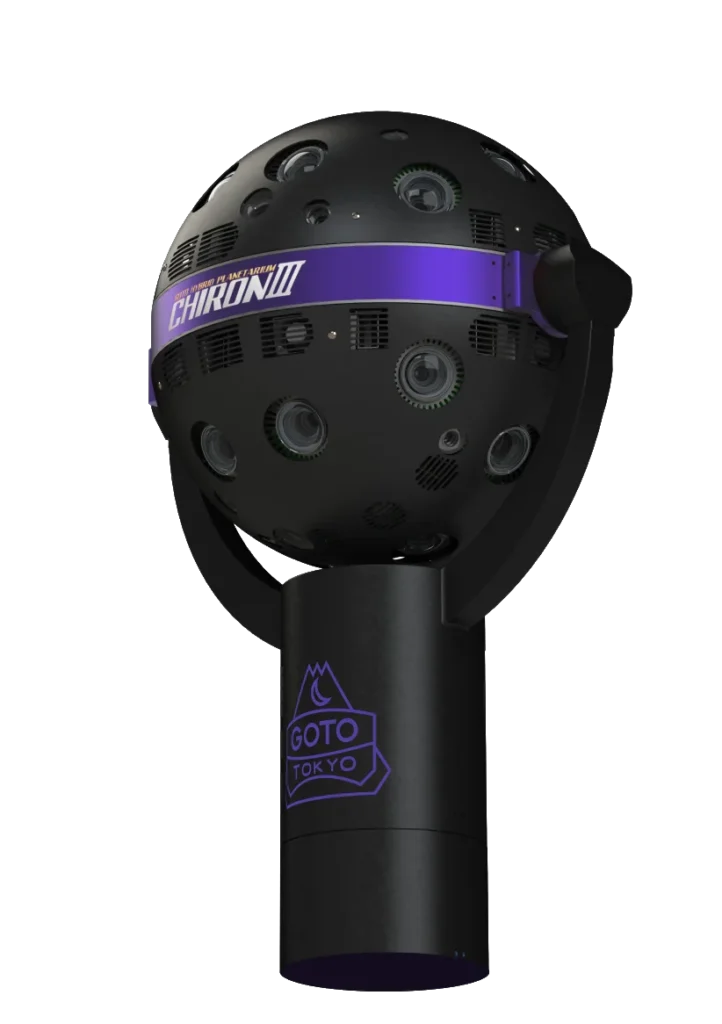
- Modernizing the projection system within the Orthwein StarBay, combining the traditional educator-led astronomy show display with a high-resolution, digital projection system. This system features:
- A GOTO Chiron III Hybrid Star Projector, the world’s most advanced optomechanical star projector, to elevate the Planetarium team’s astronomy programming with experiences such as recreating more than 100 million stars and hundreds of deep-sky objects in unprecedented detail, exploring the edge of the Milky Way galaxy, orbiting distant exoplanets and beyond.
- A Cosm Digistar Full-Dome Data Visualization System to transport guests beyond the night sky viewed from Earth. High-resolution projectors present 360-degree immersive visuals to land on Mars, fly to the edge of the observable universe and take advantage of up-to-the-minute geospatial data; broadcast immersive presentations, 3D models and live current events; and connect with more than 700 other planetariums and museums for lectures and presentations around the globe.
- Upgrading the sound system within the theater:
- Introducing a 22,000-watt, surround-sound sytem to create a full 360-degree immersion.
- Installing enhancements to ensure a Planetarium experience is even more accessible, including:
- An assistive listening system (ALS).
- A telecoil loop system for guests using hearing aids and cochlear implants.
- An Auracast™ Broadcast Audio transmission system, a wireless sound transmission technology that uses Bluetooth to transmit audio to nearby compatible devices (e.g. earbuds, hearing aids, phones and more) to ensure a seamless experience for all.
Planetarium Manager Will Snyder noted, “Combining the depths of space with geospatial positioning across Earth’s surface, our hybrid system will transport guests into the heavens above and to specific points across the globe. Beyond offering unprecedented clarity of far-away objects, the strength of this new installation comes from our ability to display the latest images of new discoveries and noteworthy items in near real-time.”
One of the nation’s only free, nonprofit science centers and featuring hundreds of interactive, hands-on experiences across ten galleries, the Saint Louis Science Center offers free admission to all guests and is open to the public Thursdays through Mondays. For more information on programs and events at the Science Center, please visit slsc.org or call 314-289-4400.
About the James S. McDonnell Planetarium
Since opening in 1963, the James S. McDonnell Planetarium at the Saint Louis Science Center has served as THE PLACE for guests to explore the stars and discover St. Louis’ direct impact on America’s space history. For this, the Planetarium was named America’s Best Planetarium in the 2025 USA Today Readers’ Choice Awards. Presenting daily live shows and in-person telescope viewing throughout the year, guests can learn about life on Mars and see life-sized replicas of rovers; view photos, artifacts and other material from outer space (including Gemini and Mercury space capsules built in St. Louis during the 1960s); and participate in hands-on activities to bring space closer to home.
About the Saint Louis Science Center
The mission of the Saint Louis Science Center is to inspire everyone to be curious and engaged in science. Named a Smithsonian Institution Affiliate in 2016 and America’s Best Free Museum by Newsweek in 2025, the award-winning Science Center engages guests through on-site experiences, including hundreds of hands-on exhibits, the OMNIMAX® Theater, which is one of the only IMAX® Dome with Laser theaters in the world, and the James S. McDonnell Planetarium, which was named America’s Best Planetarium by the USA Today Readers’ Choice Awards in 2025. For more information about the Saint Louis Science Center, please visit slsc.org.
Subjects