Authors
James R. Wright, Jr., MD, PhD
Professor Emeritus of Pathology & Laboratory Medicine, University of Calgary, Cumming School of Medicine, Calgary, Alberta, Canada
Kristina Hampton, MA
Manager of Collection & Special Projects/Exhibits, Saint Louis Science Center, St. Louis, MO, USA
Parts of this paper were published by Missouri Medicine: The Journal of the Missouri State Medical Association and are used by permission.
Missouri Medicine is indexed by PubMed and is open access.
The St. Louis Metropolitan Medical Society (SLMMS, n.b., its name was the St. Louis Medical Society before merging with the St. Louis County Medical Society in 1979) opened its Medical Historical Museum in May 1964 (Figure 1). It was conceived by the Society’s Executive Director, Hollister Smith, and a committee of six SLMMS members: John Byrne, Robert Bassett, Albert Repetto, Hollis Allen, James Macnish, and Arthur Nielsen — with Dr. Byrne serving as committee chair. Its gestation period was very short. Part of the rational for the museum was to celebrate the bicentennial year of the founding of the City of St. Louis.1-3
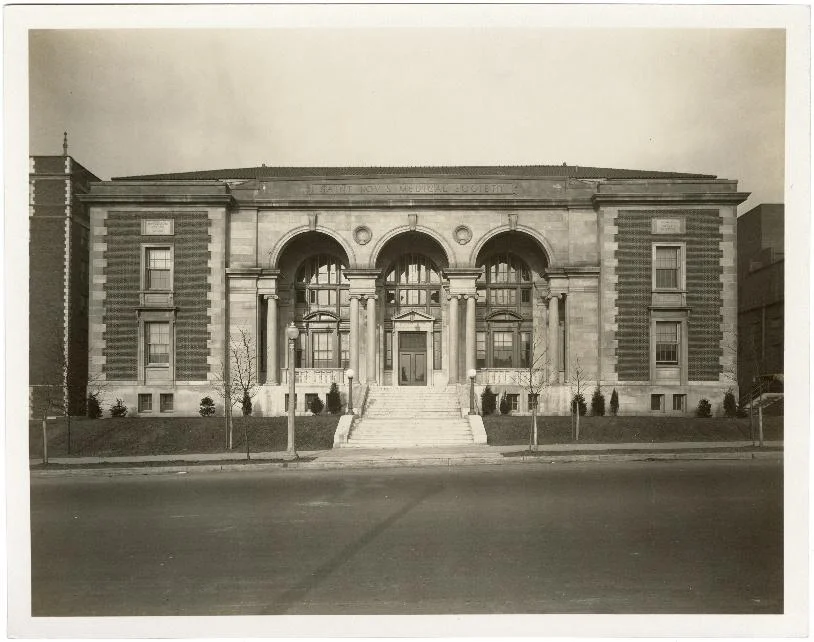
Figure 1. The St. Louis Metropolitan Medical Society building at 3839 Lindell Boulevard; the medical museum was in its basement. “Courtesy of the Missouri Historical Society, St. Louis”
Jack Rice (c1923-1960), reporter for the St. Louis Post Dispatch, wrote on April 7, 1964:
The museum was put together by a committee of doctors, who turned out to be capable do-it-yourself museum builders, fair hands with a hammer and saw and other nonsurgical instruments… Dr. Byrne estimates that this… committee of doctors did about 30 per cent of the carpentry work in the museum, and will do more before the museum is everything the builders want it to be. “We didn’t decide to build a museum until two months ago,” Dr. Byrne said, “and we had it open six weeks after we made the decision. It’s not done in a way to catch the public eye as much as we would like; some of the displays are pretty technical.”1
When the Museum opened, its main features were a reproduction of a doctor’s office from the 1860s, (Figure 2) and a reconstruction of a pharmacy from the 1880s. There were also tributes to “the first and foremost among the city’s early doctors, Antoine Francois Saugrain [1763-1820] and William Beaumont [1785-1853].” Saugrain was a Parisian physician, chemist, and minerologist who established a medical practice in St. Louis in 1799 and was the first physician west of the Mississippi to provide cowpox vaccination for the prevention of smallpox. Beaumont, a former US military surgeon who had previously been based on Mackinac Island, MI where he had performed physiological studies on a patient with a gastro-cutaneous fistula, practiced medicine in St. Louis from 1833 to 1853.
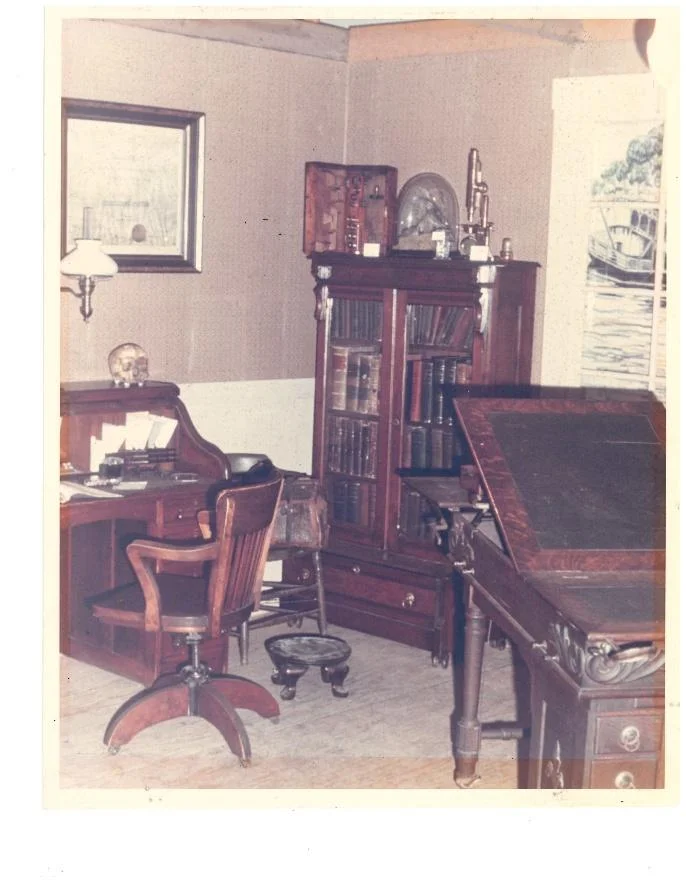
Figure 2. Partial view of 19th century doctor’s office exhibit. “Courtesy of the Saint Louis Science Center”
Beaumont’s exhibit was a reenactment using department store dummies as the doctor and patient. Rice, commented that likely after six years of ongoing experiments, “the only historical inaccuracy in the display is that both dummies have smiles painted on their faces, which might be appropriate for Dr. Beaumont but won’t do for the poor [patient].” Upon the museum’s opening, there were also displays describing St. Louisans who had won Nobel Prizes: Edward Doisy (1893-1986), Joseph Erlanger (1874-1965), Arthur H. Compton (1892-1962), and Carl and Gerty Cori (1896-1984; 1896-1957). Also featured were displays of frontispieces of books authored by St. Louis doctors and display cases filled with old surgical instruments, including amputation kits from the Civil War. The reporter noted that the doctors were struggling to build a country doctor’s buggy because “they are too proud to call in a consultant, a blacksmith.”1
Rice notes that a pamphlet entitled “Bicentennial Medical Museum… Some Authentic Reproductions and a Collection of Memorabilia of Medical Men Depict the Beginnings of a Heritage Exemplifying the Pioneer Spirit of the Age” had been prepared for visitors. No copies are known to be extant. But, within nine months, they had generated a new souvenir brochure.4
Finally, Rice commented on the SLMMS lobby. After mentioning the oil portrait of William Carr Lane, MD (1789-1863), the first (and nine term) mayor of St Louis, he notes that the visitor is greeted by a striking display of old books including “some of the rare ones in the Medical Society library of 40,000 volumes.” He continues:
The only challenge in the lobby that will make a visitor stop and think is… a cigarette vending machine. The machine stands there, offering cigarettes, but there is not an ashtray of any type in either the lobby or the basement museum, and I took it as a subtle reminder of medical opinion against smoking, making the vice available but not neat or practical.1
In March 1967, the museum added a “Quackery Corner… made possible in cooperation with the United States Food and Drug Administration,” (Figure 3) and was renamed the Medical Historical Museum and the National Museum of Quackery.5 In 1968, the SLMMS published a small booklet. According to the global catalogue of library materials WorldCat, only three copies are extant, and sadly, none appear to have been retained in St Louis. The copies at the National Library of Medicine and the Philadelphia Museum of Art were donated by Philadelphia pharmacist William Helfand (1926-2018), a collector of quackery artwork and artifacts who once quipped: “Its probably the second oldest profession. It was one of the easiest things to get into, because all you had to do was say ‘My product cures some serious disease,’ and you did not have to back it up.”6 The authors were able to obtain a scanned copy of the booklet. Its foreword reads:
To record the dramatic story of the practice of medicine in St. Louis for two hundred years, the Board of Curators of the St. Louis Medical Society has developed a medical museum featuring a collection of items that gives a living picture of decades of physicians who have been responsible for the health of this community. This collection of their books, papers, instruments, apparatus and furniture is intended to preserve a priceless heritage.5
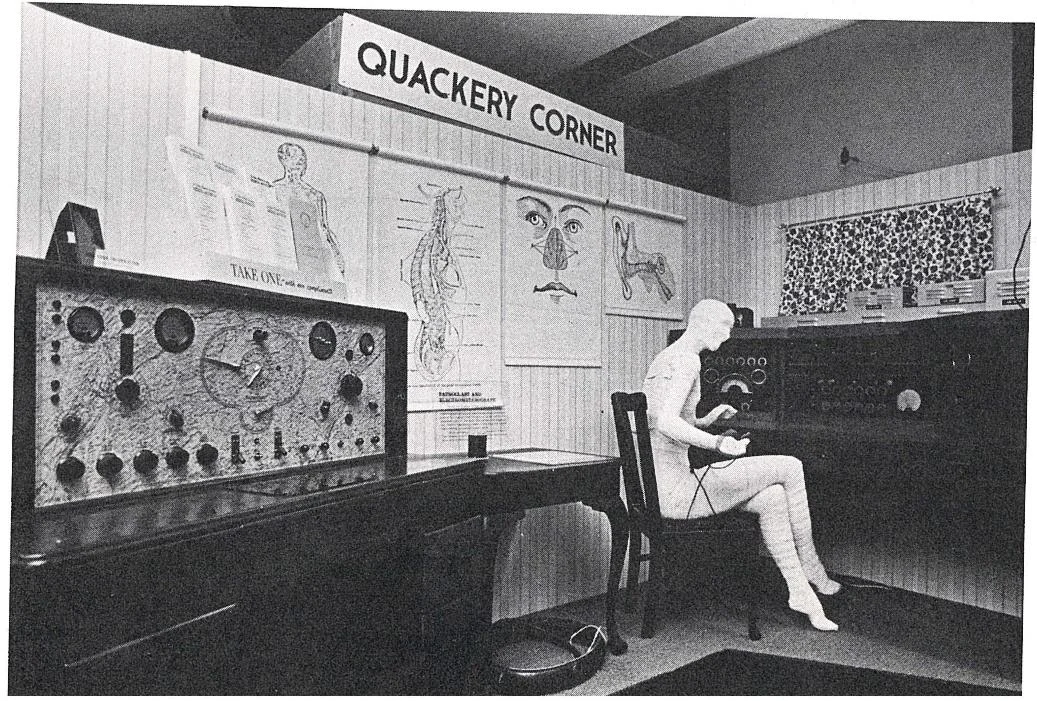
Figure 3. Above. Manikin seated in front of a reflexophone electro-metabograph device developed by Albert Abrams (1863–1924), the “dean of 20th century charlatans.” The device could allegedly diagnose almost any disease and determine life expectancy. Dr. Abrams claimed that different diseased organs and tissues vibrate at different frequencies. By blasting the specific frequency back into the diseased tissue, the patient would be cured. Below. Some of Dr. Abrams other radionic devices.25 The American Medical Association spent much time and effort debunking Abrams’ devices and theories. “Courtesy of the Saint Louis Science Center”
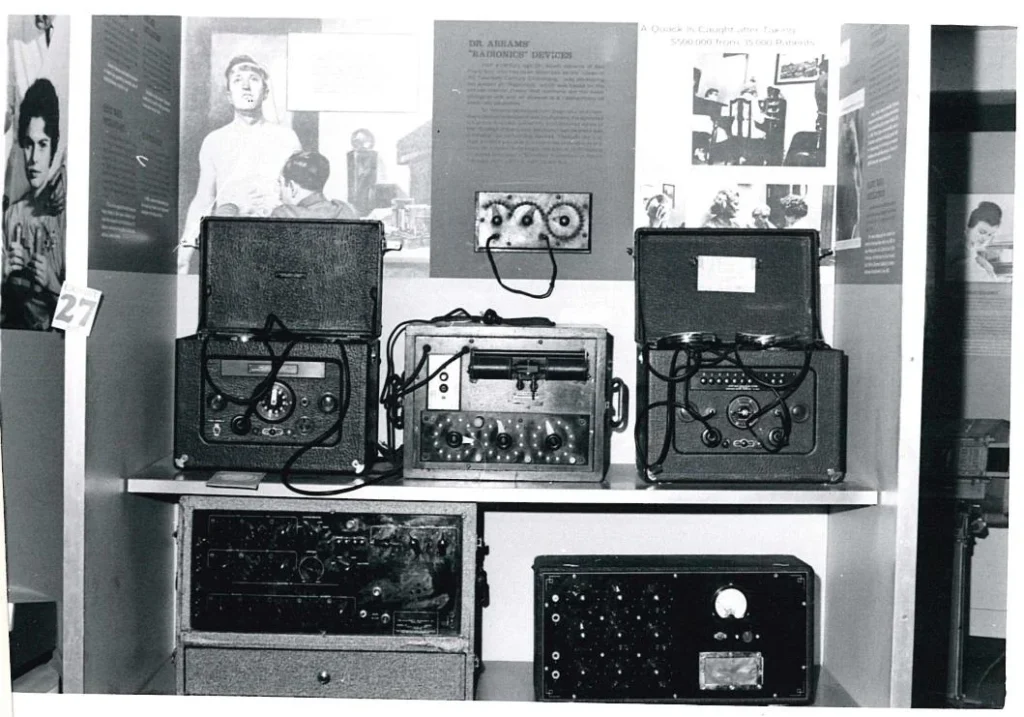
This booklet names several hundred donors categorized in separate lists including physician members, doctor’s families, physician friends, pharmacists, and business firms, government agencies, hospitals, medical organizations, and other museums as well as a financial donor category “friends of the museum.”5 Obscurely buried in this list is the “Food and Drug Administration” who provided ~180 quackery artifacts it had confiscated over the years, which comprised the bulk of the new moniker, “and the National Museum of Quackery.” The quackery materials were initially on long-term loan from the FDA, but the FDA changed this to a donation in 1986. The Medical Historical Museum and the National Museum of Quackery was accredited by the American Association of Museums in November 1971.7,8
In the 1970s, the museum had a wide variety of displays that depicted topics such as medicinal herbs (provided by the Missouri Botanical Garden) and Native American medicine. There were life-size dioramas illustrating the first hospital west of the Mississippi (established in 1828 by four nuns from the Daughters of Charity, n.b., DePaul Hospital is currently the oldest continually operating business in St. Louis), the first medically directed hospital laboratory in St. Louis (St. Mary’s Infirmary), multiple 19th century physicians offices donated by the former proprietor’s descendants, as well as two hospital pharmacies. Displays on the founding of the St. Louis Medical Society, 66 medical books written by St. Louis physicians, 14 medical journals established and “edited by St. Louis men of medicine” beginning with the St. Louis Medical and Surgical Journal (1843), and Dr. Robert E. Schlueter’s Paracelsus book collection highlighted significant holdings from the St. Louis Medical Society’s Library. Additional displays showed the founding of the 47 other St. Louis hospitals starting with City Hospital in 1847, and the establishment of 22 St. Louis medical colleges (mostly proprietary schools with low standards that were by then long gone).7,8
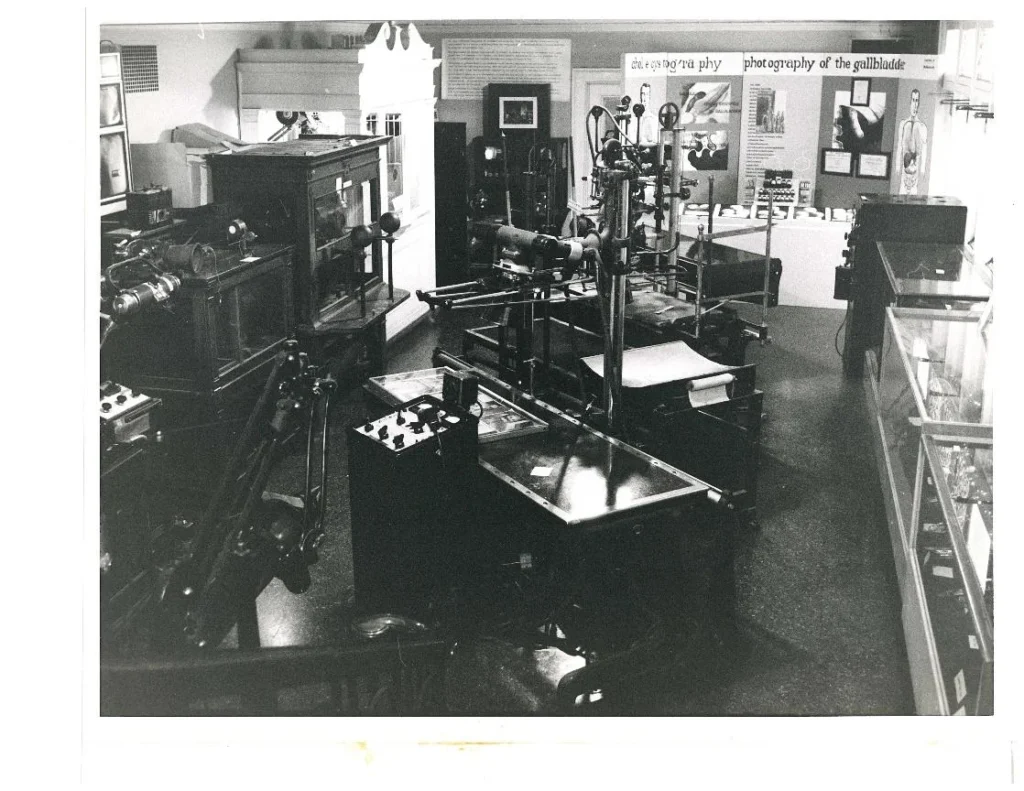
There were displays highlighting endocrinological studies in the Department of Medicine at Washington University (WU) in the 1920s and 1930s, including the case of Robert Wadlow (1918-1940), the Alton giant, who at 8 feet 11 inches is still listed by the Guiness Book of World Records as the tallest person who ever lived. There was a display on early Black physicians in St Louis as well as the formation of the Mound City Medical Forum in 1920, the first local component society of the National Medical Association established west of the Mississippi. Other displays featured surgeon John T. Hodgen (1826-1882), who became an expert on caissons disease during the Eads Bridge construction (1869-1871); anesthesiologist Thomas F. Hornbein (1930-2023), who developed a high-altitude oxygen mask and used it as a member of the first team to climb the west ridge of Mt. Everest; ophthalmologist John Green (1835-1913), who was the first specialist west of the Mississippi; plastic surgeon Vilray Blair (1871-1955); and surgeon Evarts A. Graham (1883-1957), who pioneered one-stage pneumonectomy and cholecystography (Figure 4).7,8
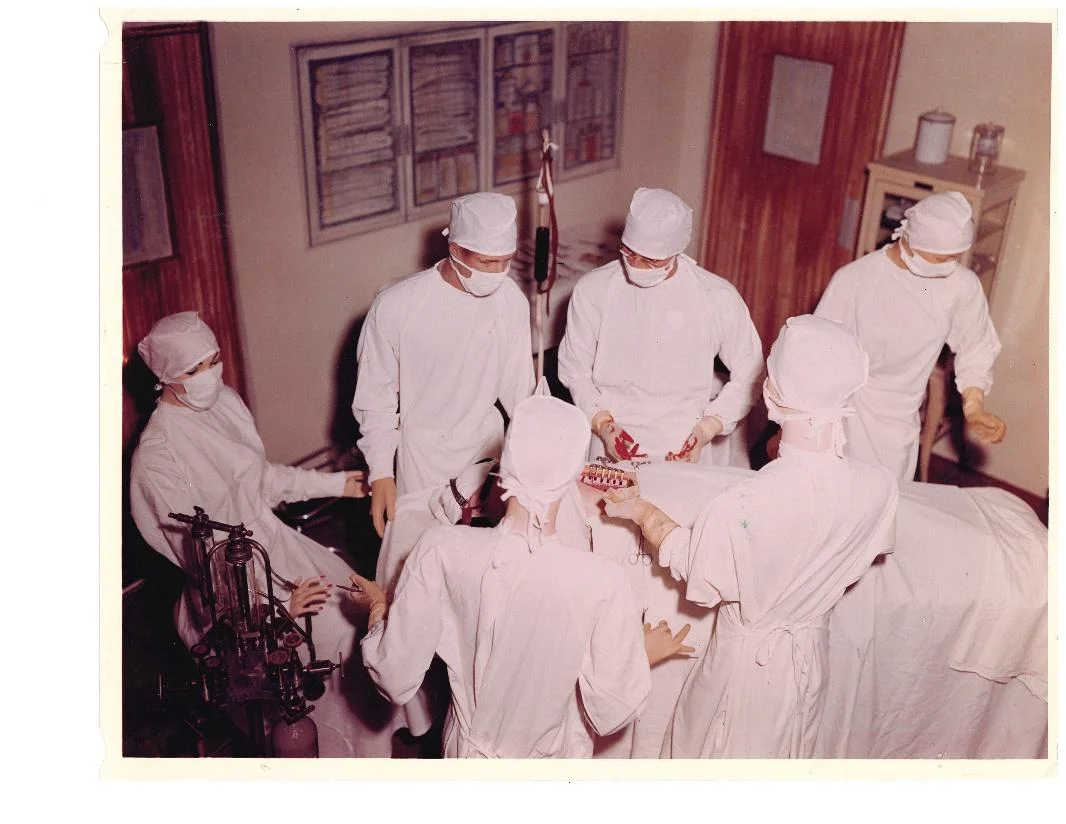
Figure 4. Above: A diorama commemorating Evarts Graham’s pneumonectomy. Below: The Museum’s history or radiology room with its cholecystography display on its back wall. “Courtesy of the Saint Louis Science Center”
While the Museum’s primary location was the SLMMS building at 3839 Lindell Boulevard, it occasionally arranged public outreach displays, such as providing five medical history window display cases at Boatsmen’s Bank during the 1970s. The five windows displayed labeled artifacts pertaining to pharmacy, medical herbs, medical superstition, medical and dental equipment, and medical quackery.
Hard Times:
In the late 1970s, in the context of deciding whether to renovate the current SLMMS building or build new quarters elsewhere, a long-range planning committee discussed the fate of the Museum; the committee was divided, but a majority were against keeping it. By the early 1980s (i.e., once it had been decided to renovate the building), some SLMMS leaders envisioned redeveloping the Museum’s current space and renting it to a revenue-generating organization. The Museum of Science and Natural History, the predecessor of the Saint Louis Science Center (n.b., SLSC was actively being planned but would not open until 1985, see below), held internal discussions as well as some preliminary discussions with SLMMS Executive Director Gordon (Ron) Garrett about whether the Medical Museum artifacts should be donated to the new SLSC. From extant correspondence, SLSC Executive Director Dwight Crandell clearly recognized even at that time that the goals of each organization were not entirely aligned as the SLSC was ultimately interested in educating the public about the human body and how it functions while the Medical Museum’s interest was the history of medical and surgical tools, noting that many of these “seem to command little interest to any but medical students and old doctors.”9
The Museum ran into more serious trouble in the early 1980s when its American Association of Museums’ accreditation was up for renewal. The Museum was being run as a nonprofit organization, by the St. Louis Society for Medical and Scientific Education (SLSMSE), incorporated in Missouri; SLSMSE’s stated purpose was: “…the creation of a medical library, medical museum, and a medical forum providing lectures…”3 Museum activities were being overseen by a museum committee. It would be an understatement to say that the museum had not kept up with changing times in the world of museology.
In February 1982, one month before an accreditation site visit, SLSMSE hired Mary G. (Polly) Park (1935-2020), an art historian and wife of prominent WU neurosurgeon William S. Coxe (1926-2012),10 as its Museum Director. Prior to that, Executive Director Hollister Smith, who helped build the museum back in 1964, had loosely functioned in that role, but his primary interest had been adding to the collection rather than developing it, and Smith had now retired. In his private life, Smith was also an avid collector — of stamps.
The site visit identified many issues. Accreditors described the museum as “a huge potpourri collection that requires a few years of processing.” They noted that the museum was overcrowded, and it desperately needed to catalog its current collection, establish a collecting policy statement to guide in future acquisitions, and identify safe, environmentally controlled storage space for duplicate materials not needed for display. They noted that “the cost of operating the museum is included in the operating budget of the parent society and are impossible to isolate and identify,” precluding long-term planning.3 Finally, the accreditation report stated that:
There is urgent need for orientation so that visitors know instinctively that tours start at a particular point, or in an obvious area… The exhibits are episodic and do not flow naturally from one to another… a museum dealing with difficult medical concepts needs storylines that have beginnings, that show development or progress, and have endings.3
Reaccreditation was withheld because “the museum does not have adequate records, does not have adequate storage for its collection, does not have plans for exhibits or the future of the museum.3
Smith’s replacement as Executive Director, Ron Garrett, and the SLSMSE had big problems to solve. While Park redesigned many of the exhibits addressing the “episodic” issues identified in the report, staffing levels precluded addressing the cataloging issues. On February 22, 1984, discussions with the SLSC began in earnest. A week later, Science Center staff visited the museum and estimated that, above and beyond the cost of building renovations, it would cost several hundred thousand dollars to redevelop the current 3,000 square foot museum displays with plexiglass casings, optimal labeling, and proper lighting. Considering the size of the collection (i.e., roughly 11,920 medical history artifacts), they estimated that it would take almost five years for a qualified person working fulltime to fully process the collection materials. Discussions pertaining to merging the Medical Museum into the SLSC ensued immediately.
On July 17, 1984, the SLMMS membership was sent a letter, a copy of a transfer proposal, and a questionnaire. Members were told that the Board of Trustees of the SLSMSE and the Council of the SLMMS had both voted unanimously to transfer the Museum to the SLSC. The membership was asked to vote before August 14 to either approve the transfer, or if not in favor, to support a dues increase of either $35 or $75 per year. Of the 2,665 surveys mailed, 604 were returned and analyzed: 85% supported the Board’s decision; 10% and 4% of respondents were willing pay $35 and $75 per year to keep it.
Internal discussions continued within the Science Center as to how to utilize the Museum’s holdings. A proposal to develop a series of up to ten chronologically organized “period rooms or life-size dioramas” was presented to Executive Director Crandell.11 Crandell’s response was: “I have some misgivings about the extent of dioramas… In the spirit of collaboration, we might consider approaching the Missouri Historical Society to put up either permanent or temporary displays on historical content dioramas. While I love historical displays, I feel we should minimize their use in our own building.”12
On December 4, 1984, the SLSMSE and the SLSC executed an agreement transferring the museum artifacts to the Science Center. It was agreed that the collection would remain intact and would be designated as the “SLMMS Collection.” A SLMMS Collection Curator position was created for at least three years and “an Advisory Committee comprised solely of six (6) Medical Society members [was] created for the purpose of advising in all facets of the management of the SLMMS Collection.” The agreement generally outlined how the collection would be used and credited.13 Polly Coxe was hired as SLSC Assistant Curator for Medical Technology on January 1, 1985.
The SLSC building did not officially exist yet and so all parties recognized the artifacts would need to be temporarily stored. The Collection was moved into storage at the Oak Knoll complex (formerly, the Museum of Science and Natural History site) starting in November of 1984 and completed by the end of January 1985.
Saint Louis Science Center’s Openings:
The first SLSC site, the James S. McDonnell Planetarium building in Forest Park, opened on July 20, 1985. The Science Center organizers had acquired the Planetarium from the city several years earlier. SLSC leadership had also acquired the Falstaff Brewing Company Headquarters building at 5050 Oakland Avenue (Figure 5) on a rent-to-buy basis. The two buildings were essentially adjacent but were on opposite sides of Highway 40/Interstate 64. Planning was underway to build a Skybridge across the highway connecting the two buildings.
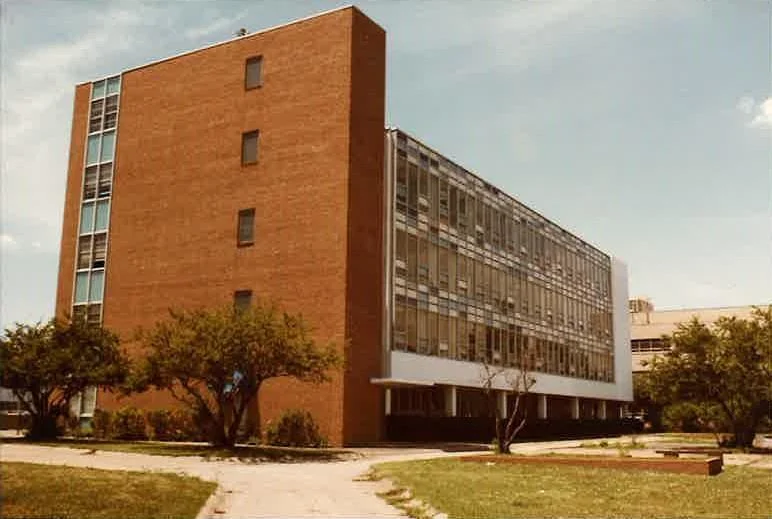
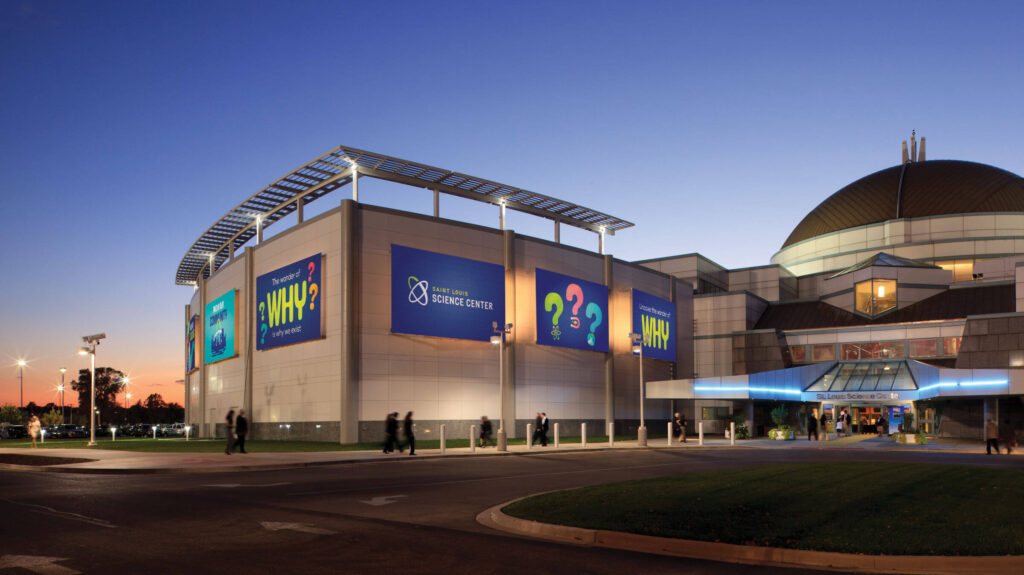
Figure 5. Above: Falstaff Brewery Headquarters Building at 5050 Oakland Avenue was constructed in the late 1950s. Below: Current Saint Louis Science Center Building at the same address. “Courtesy of the Saint Louis Science Center”
Issues soon arose related to when and where the Science Center would first display SLMMS museum artifacts. The agreement stated the collection would be utilized in the SLSC’s first major exhibit in the Science Center building (i.e., 5050 Oakland); however, planning for this building was in a state of flux. While initial plans had been to heavily renovate the ~70,000 square foot, five-level office building and extend the building with ~105,000 square feet of new construction on the north and south facades, it quickly became clear that it would be better to demolish it and create a purpose-built structure; however, this would delay the opening. In December of 1985, the president and the Board of the SLMMS requested, since exhibits at 5050 Oakland would not open until after 1986, that the SLSC allocate at least 500 square feet in its already open Planetarium building for the Society’s 1986 sesquicentennial celebration and assign Coxe to install appropriate medical exhibits. Before this request, neither Coxe nor the SLSC had been made aware of any plans to celebrate the 150th anniversary. In March 1986, Arthur H. Gale (1930-2025), Chair of the SLSC Medical Advisory Committee (see below), proposed an acceptable compromise; a display case entitled “Instruments of Change” was exhibited at Plaza Frontenac Mall in St. Louis from July 21 to October 31, 1986 and then was next displayed at the Planetarium building from November 1, 1986 to January 4, 1987. The display case was purchased by the Medical Society and then donated to SLSC. Fortuitously, a traveling medical history exhibit entitled “Send Us a Lady Physician” had already been booked and was displayed at the Planetarium simultaneously. On August 20, 1986, the SLMMS was the site of an FDA Health Fraud Conference. In February 1987, Polly Coxe gave a talk on medical quackery as part of a lecture series celebrating the sesquicentennial (Unfortunately, the whereabouts of the slides from her talk are currently unknown). Overall, the sesquicentennial celebration was a success. During the transition, SLSC published two brief articles about the SLMMS.14,15
Medical Museum Advisory Committee:
When one of the authors (JRW) arrived in St. Louis as an Anatomical Pathology resident at Barnes Hospital in July 1984, the SLMMS museum still existed but was winding down. Later that year, the SLMMS sought to populate a Medical Museum Advisory Committee. JRW volunteered and was appointed on January 28, 1985. The advisory committee was chaired by Arthur H. Gale.16 Other members included William M. Landau (1924-2017), J Otto Lottes (1906-2002), David S. Martin, Melvin E. Meyer (1932-2012), John Payne Roberts, Charles S. Sherwin (c1921-2012), and Kenneth R. Smith, Jr. (1932-2024). WU internist and medical historian, Kenneth M. Ludmerer was named adjunct curator. The committee’s designated purpose was to “advise St. Louis Science Center on plans of the Museum for development, recommends changes and additions to the Museum, and ways and means of securing financial support.”
The committee’s focus, name, meeting locations, and membership morphed over the next few years. It was soon called the SLSC’s Medical Advisory Board/Committee and eventually renamed the Advisory Board for the Medical Technology Collection. Minutes for most 1985-1986 committee meetings are extant in SLSC Archives.
The Medical Museum Committee had initially believed that large portions of the Collection could be displayed together as a 3,000 square foot unit in the newly acquired Falstaff Building, potentially recreating portions of the SLMMS Museum, while simultaneously addressing its previously identified deficiencies. The committee supported exhibits “incorporating medical artifacts according to a chronological unfolding of the history of medicine” and providing “a chronological approach of turning points in 20th century medical progress.”17,18 Expectations soon grew into a proposal estimated to occupy 7,000 square feet.19 Enthusiasm within the committee waned with the news that there had been a change of plans related to renovation of the Falstaff Building (see below) and that this had created new space constraints. On October 13, 1987, Gale wrote Crandell: “We would like to discuss in general terms the future of the medical society museum collection. Since the display of this collection has been put on ‘hold,’ our committee has not had anymore meetings, and I think this would be a good opportunity to update the members of the committee on the collection.”20
The committee’s vision differed from the SLSC’s overarching vision, which was to use interactive exhibits, coupled with informal educational programs, to make science interesting and understandable to the general public; components of the collection were to be pieced together to create medical technology exhibits. Quoting the 1988 SLSC Annual Report: “The ‘Medical Technology’ exhibit compares and contrasts past and present methods of diagnosis. The exhibit also identifies trends that may affect medical technology in the future and emphasizes local and regional advances in medical technology research and development.”21
We have been unable to find further minutes for either the SLMMS Medical Museum Advisory Committee or its spinoff committee, the SLSC’s Medical Advisory Board/Committee. Polly Coxe resigned on March 31, 1987, but continued her inventory of museum artifacts in a volunteer capacity and completed this on November 6, 1987. Her final inventory count was 11,920 artifacts occupying 1,738 square feet of storage space at Oak Knoll Park. Ronald R. Beer replaced Coxe as Assistant Curator of Medical Technology.22 Sometime in 1987, a SLSC Medical Technology Committee, populated by SLSC staff rather than SLMMS physicians, developed a draft exhibit outline.23 The Medical Society museum/medical advisory committees appears to have either been inactive or dissolved after 1987; however, Beer does write SLMMS Executive Director Garrett on July 19, 1991, asking him to schedule a meeting with the Museum Advisory Committee. It is unclear whether this meeting occurred.
Saint Louis Science Center: Med Tech Gallery and Inside the Vault:
The plan to repurpose the Falstaff Building was formally dropped by the end of 1986. A master plan which outlined a new building and detailed major exhibits was begun in early 1987 and was completed and presented to the SLMS Medical Advisory Board in December 1987.22 The Capital Campaign for this project was announced in 1988. The Falstaff building was purchased outright in early 1989, and demolition began in June of that year. A beautiful new building was erected at 5050 Oakland Avenue (Figure 5), and it opened its doors to the public on November 2, 1991. The ~700-foot long skybridge crossing I-64 was built and it merges into an ~360-foot tunnel connecting it to the lower level of the Planetarium (Figure 6).

Figure 6. Science Center complex as designed by architect E. Vernor Johnson. 1991.
One of us (KH), hired as the SLSC Manager of Collections & Special Projects/Exhibits in 2013, provides the next parts of the story. One of the first major exhibits in the newly opened SLSC complex was called the Med Tech gallery, which was located in the tunnel leading to the Planetarium (Figure 7).
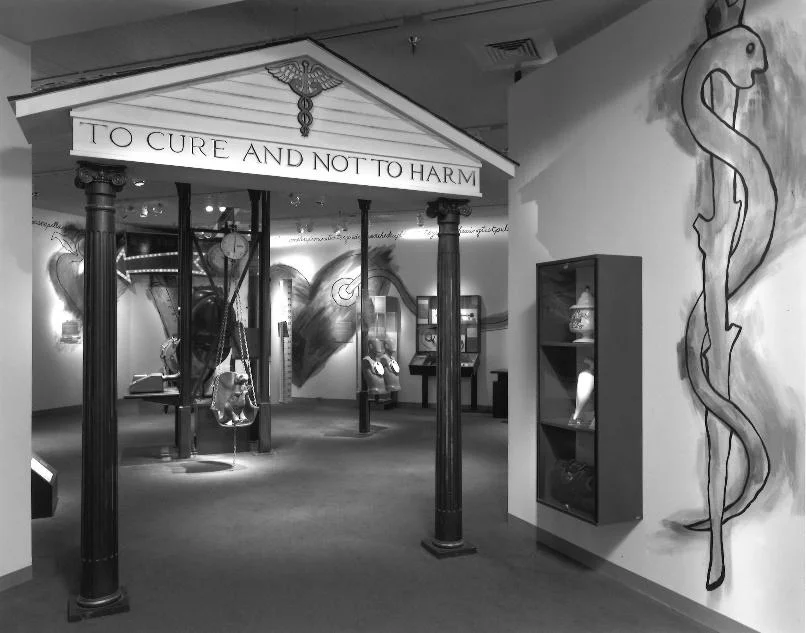
Figure 7. Med Tech Gallery in the tunnel, circa 1996. “Courtesy of the Saint Louis Science Center”
It included more than 300 SLMMS artifacts like the iron lung, pharmacy cabinets full of historic drug jars, and some of the medical quackery items, but was also interactive — letting visitors take their weight, height, and blood pressure, listen through a stethoscope, look through an endoscope, and tap on drum “cavities” to listen for fluid (Figure 8). With a renovation of the Planetarium and tunnel scheduled to begin in 2000, the entire Med Tech gallery was moved to the First Floor of the new 5050 building in August, replacing a portion of another popular exhibit called Human Adventure. The new combined Human Adventure and Med Tech gallery opened in late October 2000 and remained the most popular exhibit in the SLSC until it was moved in 2010. Over the years, there have been other exhibits featuring objects from the SLMSM collection displayed in the SLSC. One example would be a 2010-2011 exhibit on the Civil War which featured medical tools and equipment from that time. The SLSC also loans objects from the collections to other institutions; it currently has medical objects loaned to St. Louis Children’s Hospital and the Missouri Civil War Museum as well as a handful of quackery objects loaned to the “Museum of Quackery and Medical Frauds” based at the Science Museum of Minnesota.24
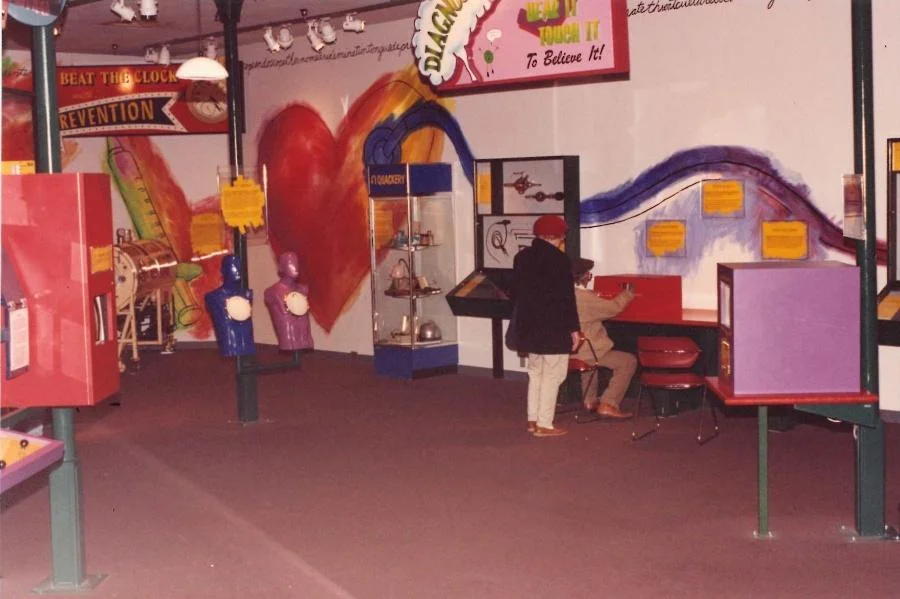
Figure 8. Med Tech exhibit with quackery display case (center) and iron lung (back left corner). “Courtesy of the Saint Louis Science Center”
In 2021, the SLSC opened an exhibit entitled Inside the Vault, where thematic displays are produced from artifacts in their stored collections. The current installment, which was installed in December 2024 and expected to remain in place until the end of 2026, features nearly half of the quackery artifacts acquired with the SLMMS collection (Figure 9). Seeing these is a bargain, as the SLSC remains one of very few science museums in America with free entry.
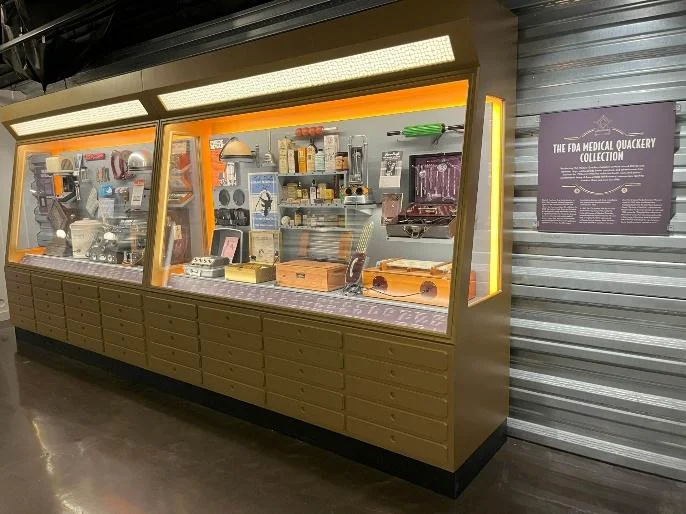
Figure 9. Saint Louis Science Center Inside the Vault exhibit of the quackery artifacts. “Courtesy of the Saint Louis Science Center”
In 2005, the SLMMS moved from its majestic building at 3839 Lindell Boulevard, which had opened in 1926 and had housed both its museum and its library, to Creve Coeur, MO. When the SLMMS closed its rare book library, WU acquired many of its rare books, including the James Moores Ball Collection, a collection of early American medical monographs, and the Robert E. Schlueter – Paracelsus Collection. The Lindell Boulevard building was sold to St. Louis University and renamed Young Hall.
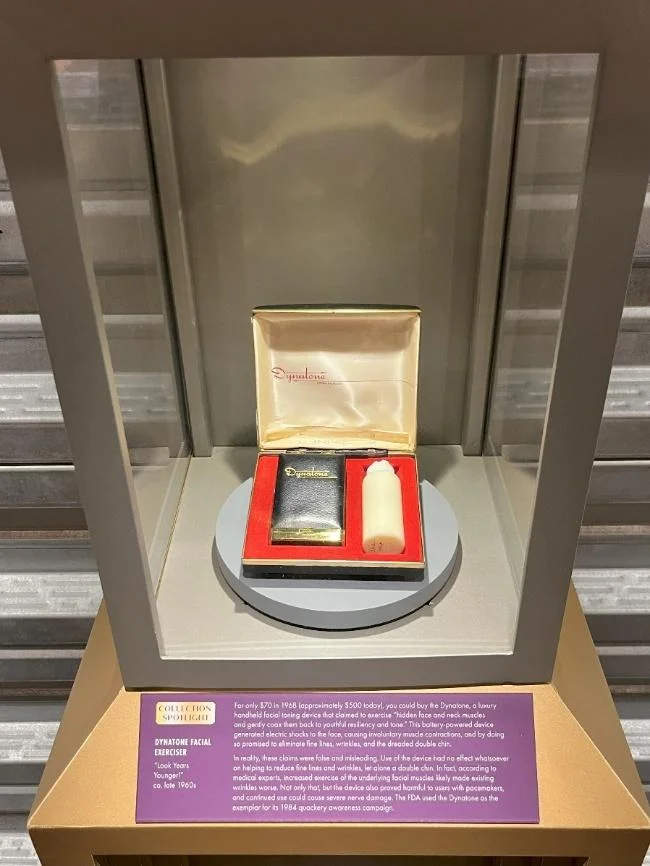
Figure 10. Saint Louis Science Center Inside the Vault exhibit case with the Dynatone Facial Exerciser, circa late 1960s. This handheld facial toning device used low-voltage electrical impulses to contract and relax face and neck muscles, thus allegedly eliminating fine lines, wrinkles, and “the dreaded double chin.” “Courtesy of the Saint Louis Science Center”
Acknowledgements:
James would like to thank Dr. Ken Ludmerer from Washington University School of Medicine for reviewing the draft of this paper to verify information, having served as an eyewitness to events while on the Medical Museum Advisory Committee.
Kristina would like to thank Elisa Israel, the Director of Research and Evaluation at the Saint Louis Science Center, for her meticulous record keeping that helped verify dates for the Med Tech gallery. She would also like to thank her fellow Exhibits team member Jon Baker for his assistance sleuthing through the archival records. Finally, she would like to thank Dave Francis, Director of Exhibits, for his continued support and encouragement, and the time necessary to work on this project.
References:
- Rice, Jack. “St. Louis doctors build their own museum. Displays of Beaumont and Saugrain among exhibits in Medical Society basement.” St. Louis Post-Dispatch, Wednesday, April 7, 1964.
- Medical Tribune staff. “An Idea, Six Physicians, and Much Work Result in Medical Museum in a Basement.” Medical Tribune, Volume 5, No 88, Monday, August 24,1964.
- Fox, Thomas. American Association of Museums Accreditation Visiting Committee On-Site Evaluation for Museums: The St. Louis Medical Museum. Washington, D.C.: American Association of Museums, March 26, 1982. Copy in Saint Louis Science Center (SLSC) Archives.
- St. Louis Medical Society’s Bicentennial Medical Museum. St. Louis, MO: St. Louis Medical Society, circa January 1965, 15 pages. SLSC Archives.
- Medical Historical Museum and the National Museum of Quackery: founded March 8, 1964, to record the contribution of St. Louis professional men to the health of the community. St. Louis, MO: St. Louis Medical Society, circa 1968, 20 pages (NLM Unique ID: 101531688).
- Genzlinger, Neil. “William Helfand, a collector intrigued by quackery, dies at 92.” The New York Times, October 5, 2018.
- The Saint Louis Medical Society Museum: Medical Historical Museum – National Museum of Medical Quackery. “Educational Souvenir.” St. Louis, MO: St. Louis Medical Society, circa, early-mid1970s.
- Key to the St. Louis Medical Museum Illustrative Brochure and Catalogue Saluting Our Nation’s Bicentennial. Medical Historical Museum – National Museum of Quackery. St. Louis, MO: St Louis Medical Society, circa 1976, 50 cents, 64 pages.
- Memorandum, Dwight Crandell to Board of Commissioners. November 25, 1981. SLSC Archives.
- Mary “Polly” Gessner Coxe, obituary. Lupton Chapel, Inc., May 9, 2020, accessed September 25, 2025, https://www.luptonchapel.com/obituaries/print?o_id=6987986.
- Memorandum, Jeffrey Bonner to Dwight Crandell. September 19, 1984. SLSC Archives.
- Memorandum, Dwight Crandell to Jeffrey Bonner. September 24, 1984. SLSC Archives.
- Agreement between the St. Louis Society for Medical and Scientific Education and the St. Louis Science Center. Fully executed on December 4, 1984. SLSC Archives.
- Coxe, Mary P. “’The Gentleman Giant,’ Robert Pershing Wadlow,” Discovery Magazine, Fall/Winter Volume V, No.3, 1985. SLSC Archives.
- Coxe, Mary P. “The St. Louis Metropolitan Medical Society – 150 Years of Leadership in Medical Care,” Discovery Magazine, Summer, Volume VI, No. 2,1986. SLSC Archives.
- Arthur H Gale, MD, September 11, 1930 – September 17, 2025, obituary. Rindskopf-Roth Funeral Chapel accessed September 25, 2025. https://www.rindskopfroth.com/obituary/arthur-gale-md.
- SLMMS and SLSC. Medical Advisory Board Minutes. Wednesday, November 20, 1985. SLSC Archives.
- SLMMS and SLSC. Medical Advisory Board Minutes. Monday, March 10, 1986. SLSC Archives.
- Polly Coxe. St. Louis Science Center Medical Technology Exhibits Proposal, July 1986; Draft #2. October 1986. SLSC Archives.
- Gale, Arthur H. Arthur H. Gale correspondence to Dwight S. Crandell, October 13, 1987. SLSC Archives.
- St. Louis Science Center. 1988 Annual Report. St. Louis, MO: Saint Louis Science Center, March 1989.
- Ronald Beer. Report to the Medical Advisory Committee. St. Louis, MO: Saint Louis Science Center, December 15, 1987. SLSC Archives.
- Ronald Beer. Medical Technology Committee Meeting Minutes. November 5, 1987. SLSC Archives.
- Otto, Rebekah. “Museum of Quackery and Medical Frauds: A museum within a museum, devoted to history’s most questionable medical devices,” Atlas Obscura, accessed October 10, 2025. https://www.atlasobscura.com/places/museum-quackery .
- Pilkington, Mark. “Far out Science: A vibe for radionics.” The Guardian, Thursday, April 15, 2004.
Subjects