The Saint Louis Science Center envisions an equitable and inclusive society where people are passionate about science and use it to improve lives, transform communities and empower future generations. Through exposure to STEM concepts and recognition of contributions made by members of various communities, we hope that individuals from all backgrounds can find their place in STEM.
As we celebrate Asian American/Pacific Islander Heritage Month, we’re recognizing a few STEM-sational individuals who’ve inspired us all to make an impact:
Dr. Chien-Shiung Wu
Chinese-American experimental physicist who made significant contributions to the field of nuclear physics, helping on the Manhattan Project to develop the process for separating uranium metal into isotopes (1912-1997).
Inspirational Quote:
“It is shameful that there are so few women in science… The world cannot afford the loss of the talents of half its people if we are to solve the many problems that beset us.”
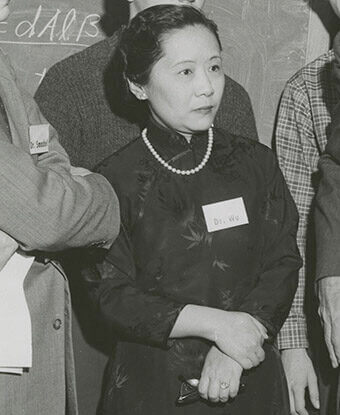
Often called the “First Lady of Physics” and the “Queen of Nuclear Research,” Dr. Chien-Shiung Wu was a Chinese-American experimental physicist who made significant contributions to nuclear physics. Born in Liuhe, Jiangsu province, China, Wu received her early education at the Ming De Women’s Vocational Continuing School that was founded by her father and the Suzhou Normal School #2. She graduated from the National Central University in Nanjing in 1934 with a degree in physics.
Wu immigrated to the United States in 1936 to pursue graduate studies at the University of California, Berkeley, from which she earned a Ph.D. in 1940 and was elected Phi Beta Kappa. After graduation, she accepted a position as the first female faculty member in the physics department at Princeton University and taught naval officers. During World War II, she joined the Manhattan Project at Columbia University, where she helped develop the process for separating uranium metal into isotopes by gaseous diffusion.
Her most famous study (now recognized as the Wu experiment) came in 1956 when she disproved the law of conservation of parity in weak nuclear interactions, confirming the theoretical work of physicists Tsung-Dao Lee and Chen-Ning Yang that earned them the 1957 Nobel Prize in Physics. While Lee and Yang received the 1957 Nobel Prize in Physics for their theoretical work, Wu’s experimental contribution went unrecognized by the Nobel Committee—a significant oversight in scientific history—but were credited by Lee and Yang in their acceptance speech.
Wu became the first female president of the American Physical Society in 1975. Her numerous accolades include the National Medal of Science (1975), the Wolf Prize in Physics (1978), and the first honorary doctorate awarded to a woman at Princeton University. She continued her research and teaching at Columbia University until her retirement in 1981, passing away on February 16, 1997.
For more information:
Dr. David Ho
Made groundbreaking contributions toward understanding and treating HIV/AIDS by understanding the replication mechanism for the virus and pioneering the use of combination antiretroviral therapy. (1952-Present).
Inspirational Quote:
“We’re trained to be objective, analyzing data, but we have to remember the human element. Sciences are intertwined with humanities.”
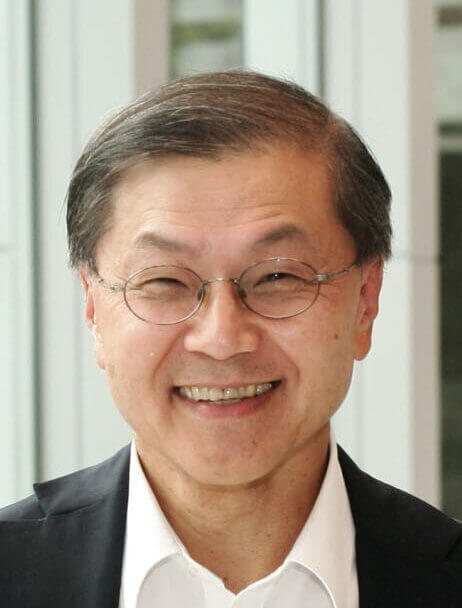
Dr. David Da-i Ho is a Taiwanese-American physician, virologist, and researcher renowned for his groundbreaking contributions to understanding and treating HIV/AIDS. Born on November 3, 1952, in Taichung, Taiwan, Ho immigrated to the United States with his family at age 12 and settled in Los Angeles.
Ho graduated from Massachusetts Institute of Technology with a Bachelor of Science in biology in 1974 and earned his medical doctorate from Harvard Medical School in 1978. He completed his clinical training at Cedars-Sinai Medical Center in Los Angeles and the University of California, Los Angeles (UCLA).
As a young doctor in Los Angeles in the early 1980s, Ho encountered some of the first cases of what would later be identified as AIDS. He quickly became involved in AIDS research, making significant contributions to understanding the replication mechanism of HIV.
Ho’s most pivotal contribution came in 1996 when he led a team that pioneered the use of protease inhibitors in combination with other antiretroviral drugs—a treatment approach called Highly Active Antiretroviral Therapy (HAART) or combination antiretroviral therapy. This breakthrough transformed HIV/AIDS from a death sentence into a manageable chronic condition, saving millions of lives worldwide.
For these achievements, TIME magazine named him Person of the Year in 1996, noting, “Ho’s insights have brought us to the threshold of being able to manage AIDS for an individual’s lifetime.”
Since 1990, Ho has served as the scientific director and CEO of the Aaron Diamond AIDS Research Center in New York City, and as a professor at Rockefeller University. He holds 14 honorary doctorates and has received numerous awards, including the Presidential Citizens Medal in 2001. In response to the COVID-19 pandemic, Ho redirected some of his laboratory’s resources toward finding treatments for this new viral threat.
For More Information:
Dr. Isabella Aiona Abbott
Known as the “First Lady of Limu” for her work in studying and identifying edible seaweed varieties (1919-2010).
Inspirational Quote:
“I grew up at a time when people lived off the sea and off the land. Hawaiians knew limu the way others might know garden plants. I learned from my mother.”
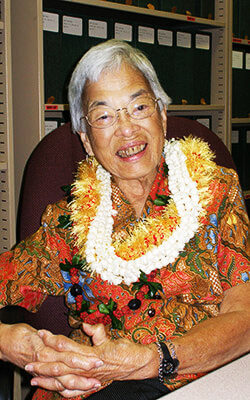
Dr. Isabella Kauakea Yau Yung Aiona Abbott was a Native Hawaiian botanist and ethnobotanist known as the “First Lady of Limu” (seaweed) for her pioneering work in Pacific algae studies. Born on June 20, 1919, in Hana, Maui, she was the daughter of a Hawaiian mother and Chinese father.
Abbott grew up in Honolulu, where her mother taught her traditional Hawaiian knowledge about limu (seaweed), including identification, gathering practices, and uses in food and medicine. This traditional knowledge would later complement her formal scientific education, creating a unique approach to algal studies that bridged Indigenous and Western scientific traditions.
She earned a bachelor’s degree from the University of Hawaii in 1941 and became the first Native Hawaiian woman to earn a Ph.D. in science, when she earned her doctorate in botany from the University of California, Berkeley in 1950. Her dissertation examined the algal genus Liagora.
Abbott taught at Stanford University from 1960 to 1982, becoming the first female full professor in the biological sciences department. After retiring from Stanford, she returned to Hawaii as the G.P. Wilder Professor of Botany at the University of Hawaii at Manoa, where she continued teaching and research until her second retirement at age 70.
Throughout her career, Abbott identified over 200 species of algae, with several species named after her, including Rhododermis abbottiana and Abbottella, a red algae genus. She authored eight books and over 150 publications, including the definitive reference Marine Algae of California (1976) and Limu: An Ethnobotanical Study of Some Hawaiian Seaweeds (1974).
Abbott received numerous honors, including the Gilbert Morgan Smith Medal from the National Academy of Sciences and being named a Living Treasure of Hawai’i. She passed away on October 28, 2010, at the age of 91.
For More Information:
Subjects