Day Sky Update May 2026
This is the Saint Louis Science Center’s DAY SKY UPDATE for the Month of May 2026.
Information updated monthly or as needed.
Times given as local St. Louis time which is Central Daylight Time (CDT). For definitions of terminology used in the night sky update, click the highlighted text. If relying on times posted in Universal Time (UT), St. Louis is -5 hours when CDT. Additionally, times will be posted in a 24-hour format.
Join us for our next solar telescope viewing, Sunday, May 17, held in association with the St. Louis Astronomical Society. These viewing sessions are weather dependent. For details, see the information at the bottom of this page or visit https://www.slsc.org/explore/mcdonnell-planetarium/public-telescope-viewings/
Daytime Astronomy Primer
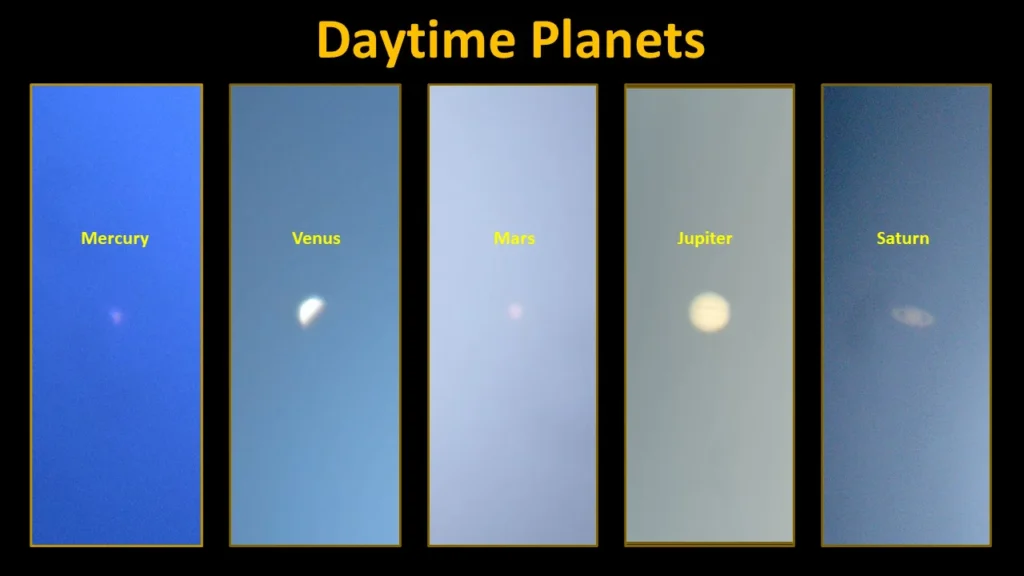
Image shows daytime telescope view of the five naked eye planets. Image credit: Eric Gustafson
For most, astronomy is a hobby that is left to the darkness of night. While most astronomical objects are only visible at night, the day sky can offer a careful observer several astronomical targets along with a multitude of atmospheric phenomena to enjoy. When posted, the DAY SKY UPDATE will explore these possibilities which may include a highlight of the month, cloud observing, sun rise/set times, daytime Moon information, daytime planets and other topics. As always, when viewing during daytime, you must use caution as the Sun is always near.
Aside from solar filters, there are other safety steps that you should consider. Sunscreen, hats and sunglasses are always advisable. Visible light is how we observe the world around us, however, there is light we cannot see such as ultraviolet (UV) and infrared (IR) lights. While both are an issue if you are using an optical system, UV light is an issue through exposure. This can be mitigated by using sunscreen, sunglasses and limiting exposed skin. While sunglasses are not safe instruments to view the Sun with, they do protect your eyes from exposure to ultraviolet light that we are susceptible to during the day.
Cloud of the Month
When it comes to cloud spotting, sometimes seeing a unique cloud feature just means being at the right place at the right time. And unfortunately, that is the case when it comes to clouds that only last a minute or two. One of these short-lived clouds is known as the Kelvin Helmholtz wave cloud. This specific cloud takes the shape of a crashing wave and will leave an impression if you see it.
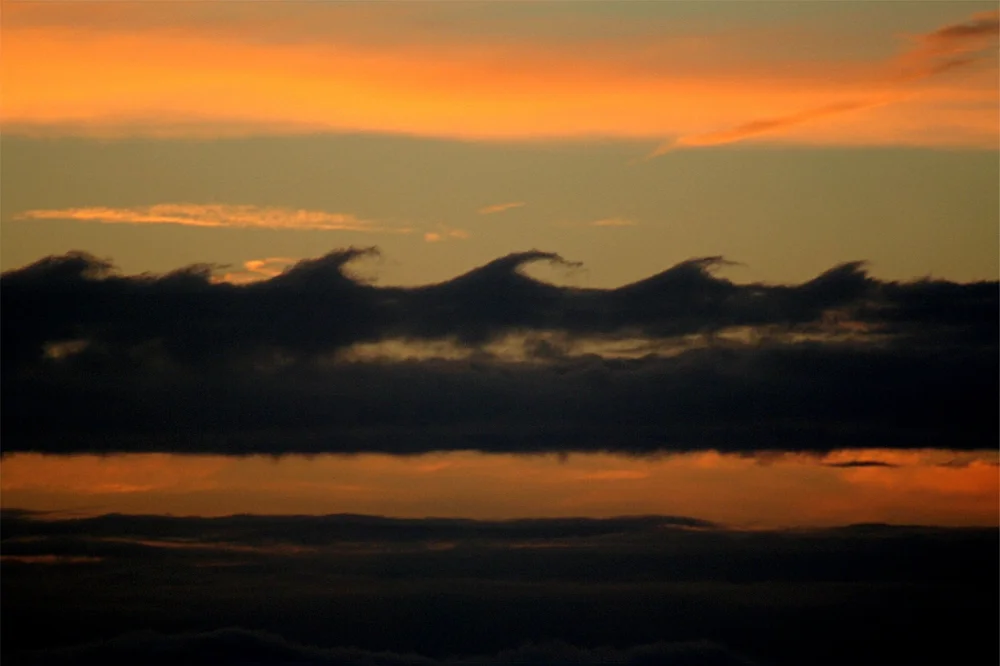
Image showing Kelvin Helmholtz clouds during sunset November 2006 in San Francisco, CA. Image credit: Brocken Inaglory.
Let’s first go over a little bit of fluid dynamics, which is the study that describes the motion of liquids and gases. In the late 19th century, German Physicist Herman Von Helmholtz was studying the movement of a fluid and how it interacts with a disturbance to cause flow separation. Scottish mathematician Lord Kelvin then collaborated and developed the mathematical solution to show this instability. Their collaboration became one of the most important fluid dynamic concepts that we call “Kelvin Helmholtz instability”, also known as KH instability for short. Kelvin Helmholtz instability depicts the instability between the boundaries of two parallel fluid streams that have different velocities and densities. Lord Kelvin was focusing on how this is used to show the formation of ocean waves caused by wind over water. One can also detect KH instabilities on Jupiter within the great red spot as well as on Saturn!
We of course are interested in being able to spot them in the sky, so how do these instabilities form as clouds? Let’s start off by stating that the atmosphere is a fluid, so it behaves that way. Like any other cloud, it all starts with moist air that rises and condenses to form a cloud. The cool and interesting thing about kelvin Helmholtz clouds is that they can form at all cloud layers! Meaning you can spot these KH clouds as low, mid, and high level clouds. What gets the wave shape started is the presence of wind shear, which is a change in wind speed or direction with height. Think of two columns on air. The bottom one has cool dense air that is moving slowly. The top column has warm, less dense air that is moving fast. Because we don’t live in a vacuum, small disturbances (like wind shear) will disrupt the flow and cause the system to become unstable (meaning if the air starts to rise, it will continue to rise). Because the air on top is moving significantly faster, this causes the rising cloud to start “rolling over” to create the wave shape. This instability causes turbulence in the air to increase as well. Kelvin Helmholtz clouds are an easy sign for pilots to avoid the area, though KH instabilities also occur in the atmosphere without any clouds present, which can be nerve racking for pilots.
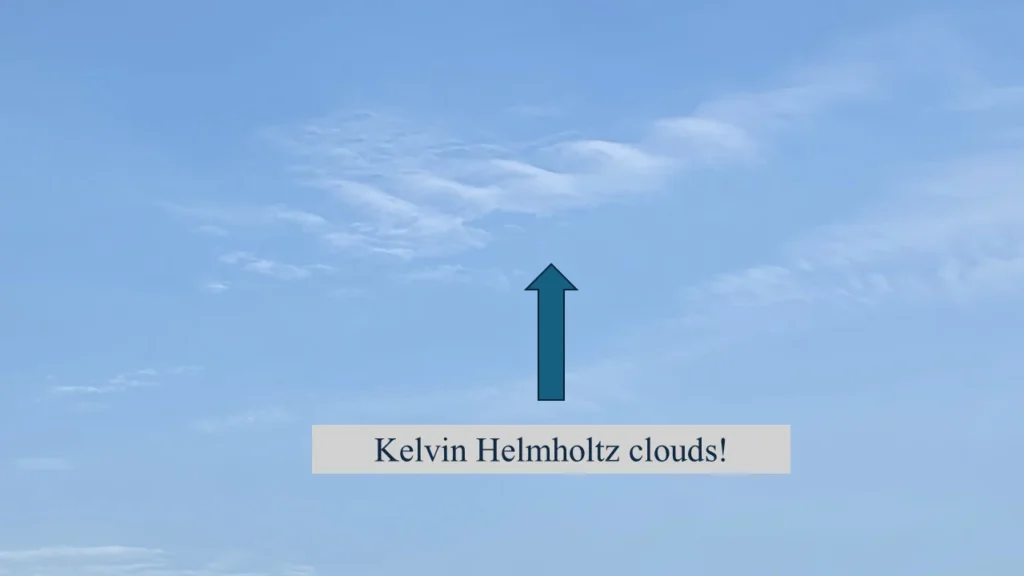
Image showing Kelvin Helmholtz clouds August 2025 in St Louis, MO. This image emphasizes that clouds don’t always have to look perfect like we expect. Image credit: Alex Guajardo
Kelvin Helmholtz clouds are a great reminder of the complexities of atmospheric and fluid dynamics. Understanding how they form and maybe even getting the chance to see them form and dissipate, strongly shows that the atmosphere is a fluid. Here is your reminder to always look up, because you might just miss a super rare cloud that will be gone before you even get the chance to enjoy it.
The Sun and the Moon
Sun Information
The month of May sees the Sun continue to head towards its northern standstill later this year in June. When viewed from St. Louis, the Sun’s maximum altitude will shift from 66.6° on May 1, 2026, to 73.4° on May 31, 2026. The next major position of the Sun occurs on June 21, 2026, as the Sun reaches the June solstice.
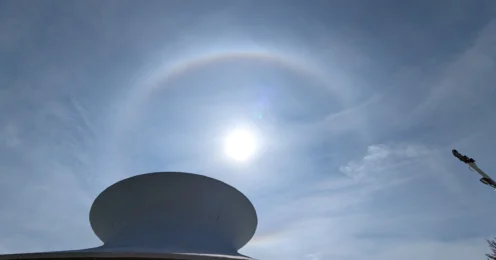
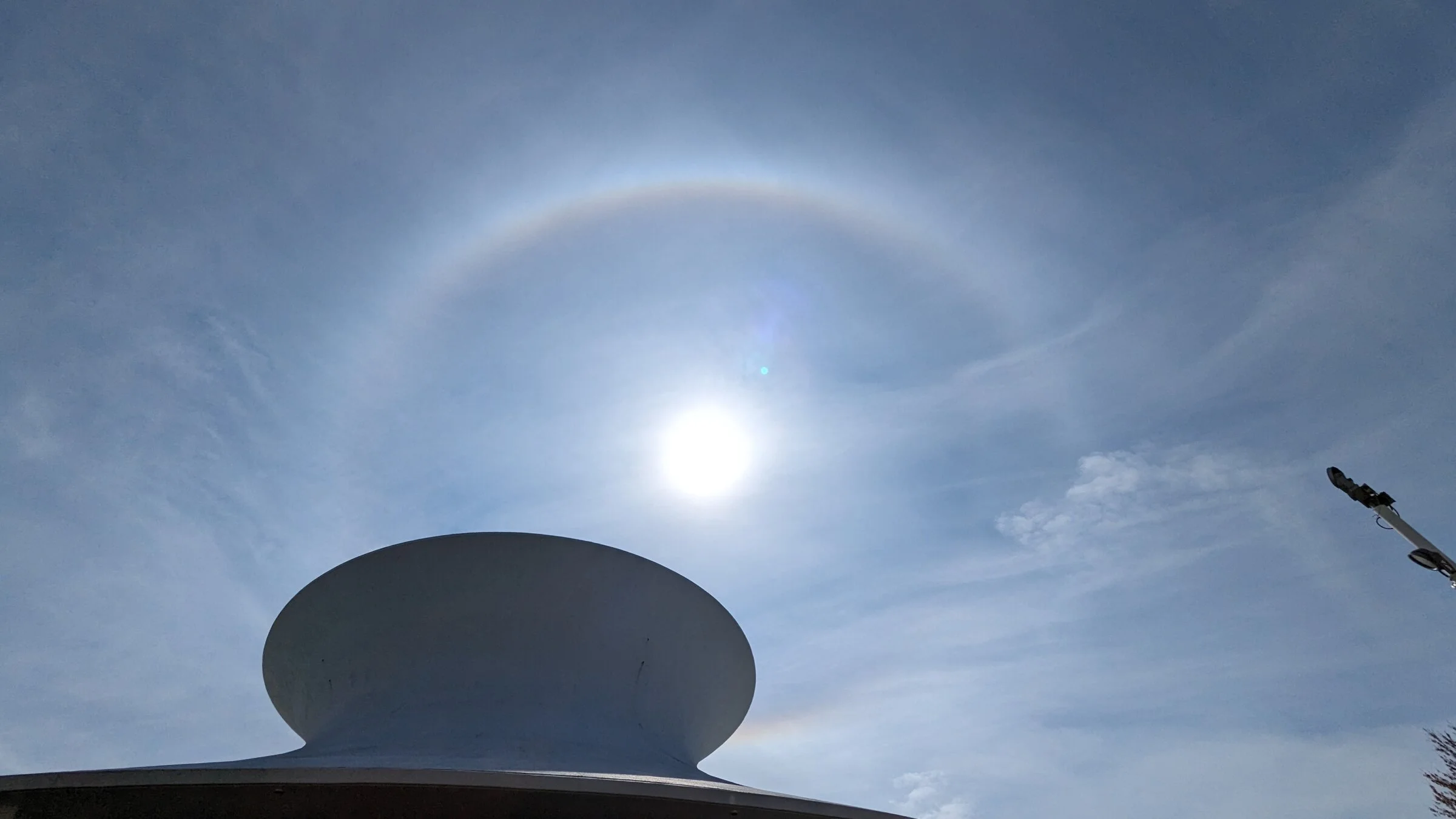
The spring bloom is in full swing meaning we should be on the lookout for pollen corona. The March Day Sky Update discussed a type of atmospheric optic called a corona. These displays are usually caused by water droplets in clouds. Another cause of the display is pollen suspended in the air. In May several trees common to Missouri are still releasing pollen so pollen corona are still a possibility.
May is also a busy month for bird migration in the Mississippi Flyway. Bird watching is a great option for those cloudy days. There are several migratory birds to be on the lookout for. Local parks and trails are good places to get started. Below you will find several resources for bird watching and awareness.
Forest Park Forever – Bird Walks
| June Solstice | June 21, 2026 |
| Sept. Equinox | Sept. 22, 2026 |
| Dec. Solstice | Feb. 21, 2026 |
| March Equinox | March 20, 2027 |
Sunrise and Sunset Times for St. Louis Missouri
The sunrise and sunset times below were calculated by the Earth Systems Research Laboratories for NOAA. These times are calculated using equations for Jean Meeus’s Astronomical Algorithms. The atmosphere complicates these calculations due to the refraction of sunlight as it passes through the atmosphere. For the times listed below, the amount of atmospheric refraction is assumed to be 0.833°. Variations in the atmosphere can change the amount of refraction so the times posted are accurate to within a minute for latitudes between +/- 72°.
| Day | Sunrise (CDT) | Sunset (CDT) |
| 1-May | 6:03 | 19:53 |
| 2-May | 6:02 | 19:54 |
| 3-May | 6:01 | 19:55 |
| 4-May | 6:00 | 19:56 |
| 5-May | 5:59 | 19:57 |
| 6-May | 5:58 | 19:58 |
| 7-May | 5:57 | 19:59 |
| 8-May | 5:55 | 19:59 |
| 9-May | 5:54 | 20:00 |
| 10-May | 5:53 | 20:01 |
| 11-May | 5:52 | 20:02 |
| 12-May | 5:51 | 20:03 |
| 13-May | 5:51 | 20:04 |
| 14-May | 5:50 | 20:05 |
| 15-May | 5:49 | 20:06 |
| 16-May | 5:48 | 20:07 |
| 17-May | 5:47 | 20:08 |
| 18-May | 5:46 | 20:09 |
| 19-May | 5:46 | 20:09 |
| 20-May | 5:45 | 20:10 |
| 21-May | 5:44 | 20:11 |
| 22-May | 5:43 | 20:12 |
| 23-May | 5:43 | 20:13 |
| 24-May | 5:42 | 20:14 |
| 25-May | 5:41 | 20:14 |
| 26-May | 5:41 | 20:15 |
| 27-May | 5:40 | 20:16 |
| 28-May | 5:40 | 20:17 |
| 29-May | 5:39 | 20:17 |
| 30-May | 5:39 | 20:18 |
| 31-May | 5:38 | 20:19 |
Moon (daytime views)
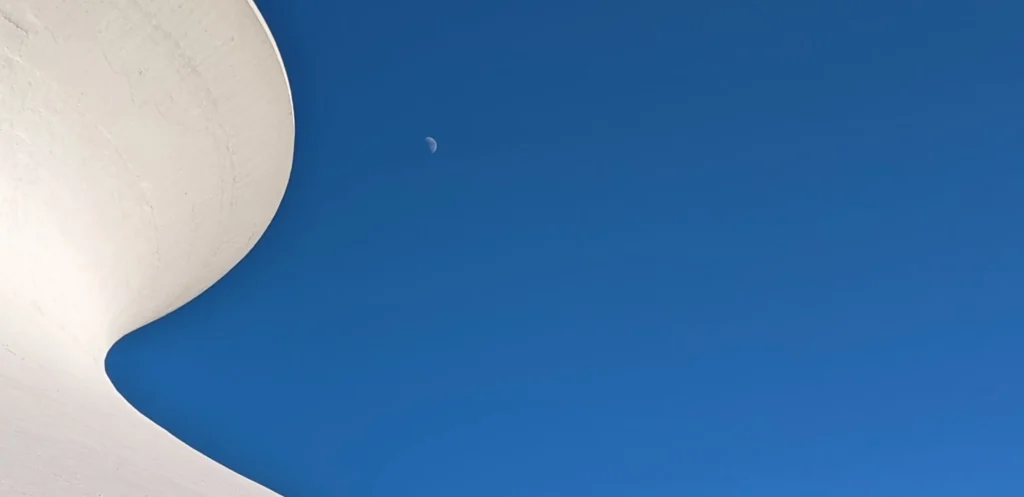
Last quarter moon occurs on May 9, 2026, and first quarter moon occurs on May 23, 2026. The best daytime views of the Moon are always near the quarter phases. Look for the Moon in the morning at the beginning of May. When we are near first quarter phase, look for the Moon in the afternoon.
The Moon crosses the ecliptic at its ascending node this month on May 11, 2026, and then at its descending node on May 23, 2026. This behavior occurs because the Moon’s orbit around Earth is tilted about 5.1° with respect to Earth’s ecliptic. This nodal cycle of the Moon is called a draconic month which is 27.2 days long. Being aware of these crossing nodes helps observers know if the Moon will appear south or north of the ecliptic.
You may have noticed that May has two full moons. This can happen because the Moon’s synodic cycle (phase cycle) is only 29.5 days long and an average calendar month is 30 days long. When you have two full moons in a month, it is called a “Blue Moon.”
| Phase | Date | Time (CDT) |
| Full Moon | May 1, 2026 | 12:23 |
| Last Quarter | May 09, 2026 | 16:11 |
| New Moon | May 16, 2026 | 15:01 |
| First Quarter | May 23, 2026 | 06:11 |
| Full Moon | May 31, 2026 | 03:45 |
Solar Sunday will be held every Sunday starting May 17, 2026 from 11:00 a.m. until 3:00 p.m. (Weather Dependent). This will continue until Labor day.
Every Sunday from Memorial Day to Labor Day, the St. Louis Astronomical Society and the Saint Louis Science Center will set up a number of safe solar telescopes outdoors and be on hand to answer your questions. Telescope viewing begins at 11:00 a.m. weather permitting.
The St. Louis Astronomical Society helps host the monthly Star Parties at the Saint Louis Science Center. In addition to our daytime viewings, they also help facilitate our nighttime Public Telescope Viewing. These nighttime viewing sessions occur on the 1st Friday each month. Visit SLAS’s website linked above to learn about other telescope events SLAS hosts around the St. Louis area.
Subjects