The Saint Louis Science Center envisions an equitable and inclusive society where people are passionate about science and use it to improve lives, transform communities and empower future generations. Through exposure to STEM concepts and recognition of contributions made by members of various communities, we aim to inspire and empower individuals from all backgrounds to pursue and thrive in STEM fields.
This month, as we celebrate Black History Month, we recognize a few STEM-sational individuals who’ve inspired us all to make an impact.
Dr. Daniel Hale Williams – Performed one of the world’s first successful open-heart surgeries in 1893 (1856 – 1931)
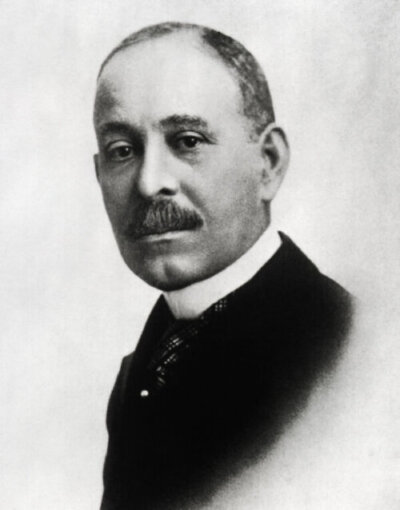
Considered one of the preeminent surgeons in the 19th and 20th centuries, Dr. Daniel Hale Williams is recognized for performing the one of the world’s first successful open-heart surgeries, founding the first Black-owned hospital in America, and expanding opportunities for Black doctors and nurses. He was the first Black man appointed to the Illinois State Board of Health and became a charter member of the American College of Surgeons.
Born in 1856, Dr. Williams was forced to quit schooling at age 11 after the death of his father. He began as a shoemaker’s apprentice but left that profession and learned to become a barber. After opening his own barber shop at age 17, he returned to school and completed secondary education at Haire’s Classical Academy. In 1878, he worked as an apprentice to Dr. Henry Palmer, a prominent surgeon in Wisconsin, and entered Chicago Medical College (which later became the medical department for Northwestern University). He graduated from the college in 1883 and became one of three Black physicians working in Chicago at the time.
As none of the established hospitals in the city would offer privileges for minorities to operate, Dr. Williams joined the South Side Dispensary. While gaining a successful reputation for his work, he was appointed to the Illinois State Board of Health and organized support to open Provident Hospital and Training School in 1891. Provident offered open admission to all races and was the first hospital in the nation with an intern and nursing program that hired African Americans — providing opportunities for Black doctors and nurses to train in the medical profession. Opening this hospital not only mentored medical providers, it improved the quality of care and reduced the death rate for patients in the community.
In July 1893, Dr. Williams encountered a patient suffering from a stab wound to his chest. While treating the patient, he discovered several lacerations to the heart, arteries, and pericardium. He expanded the wound to provide access to the damaged areas and successfully treated the man without any of the beneficial tools of modern surgery – like X-rays, antibiotics, advanced technology, or previous training. The patient recovered, left the hospital just 51 days after entering, and lived for an additional 20 years after the incident.
Dr. Williams left Chicago in 1894 to become chief surgeon at Freedman’s Hospital in Washington D.C., which was considered the most prestigious medical position available for African Americans at that time. He worked to improve the care provided by the hospital’s staff and organized the National Medical Association for black professionals, as they were barred from joining the American Medical Association. In addition, he served as the Professor of Clinical Surgery at Meharry Medical College in Nashville — the first medical school for African Americans in the southern United States — and was an attending surgeon at Cook County Hospital and St. Luke’s Hospital after returning to Chicago before the turn of the century.
For more information:
Dr. Marie Maynard Daly – the first African-American woman to earn a Ph.D. in chemistry (1921-2003)
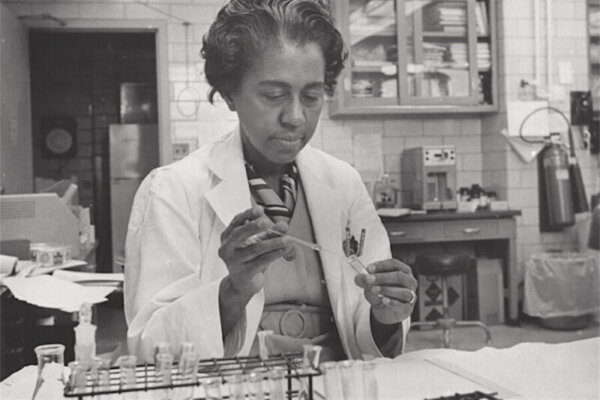
Raised in a family that focused on education, Dr. Marie Maynard Daly became the first African-American woman to earn a Ph.D. in chemistry in 1947. She focused her research on how proteins are built and used within the human body. With that background, she conducted important studies into the relationship between nutrition and heart health — emphasizing the connection between cholesterol and problems within the circulatory system.
Inspired by a science-loving father, Dr. Daly was born in New York City in 1921. She attended Hunter College High School, a premier secondary school for young women. She then enrolled in Queens College during World War II from where she earned a bachelor’s degree in chemistry with magna cum laude distinction and worked as a laboratory assistant and tutor. Using that income and fellowship grants, she earned a master’s degree from New York University in one year. She then studied at Columbia University, becoming the first African American woman in the United States to earn a doctorate in chemistry.
At Columbia, she studied under Dr. Mary Caldwell, a leading researcher in the biochemistry of nutrition. Dr. Daly focused her studies on how proteins are made and how the body uses them in digestion. After earning her Ph.D., she continued research into the circulatory system, becoming one of the first scientists to discover a link between a diet high in cholesterol and clogged arteries that lead to heart attacks.
Recognizing the difficulties she faced in her career, Dr. Daly joined several programs to enhance science opportunities for future generations. She was one of 30 minority women scientists who participated in a conference by the American Association for the Advancement of Science that published a report with recommendations for drawing women into STEM fields and advancing their knowledge. She also helped recruit and support Black students for Albert Einstein College of Medicine and created a scholarship for Black science students at Queens College in her parents’ honor.
For More Information:
Dr. Shirley Ann Jackson – first woman to chair the U.S. Nuclear Regulatory Commission and first Black woman to receive a doctorate in physics from M.I.T. (1946 – Present)

A woman who has achieved many firsts, Dr. Shirley Ann Jackson was encouraged to excel in STEM by her parents. She is the second African-American woman in the United States to have earned a doctorate in physics and the first Black woman to earn a Ph.D. in any field from the Massachusetts Institute of Technology (MIT). She was named by Discover magazine as one of its “50 Most Important People in Science” in 2002 and became the first woman to chair the U.S. Nuclear Regulatory Commission. She later became president of Rensselaer Polytechnic Institute (RPI) and was the first woman and first African American in this position.
Born in Washington D.C. in 1946, Jackson enrolled at MIT to study physics after serving as the valedictorian for her high school class. She earned a Bachelor of Science in theoretical physics in 1968 and remained at the school to study nuclear physics for her Ph.D. Continuing post-doctoral research, she served for two years at the Fermi National Accelerator Laboratory in the Chicagoland area and a year at the CERN laboratory in Switzerland. Then, she joined AT&T Bell Laboratories to study ceramics to find the best materials to function as semiconductors for electrical currents. During this time, she became the president for the National Society of Black Physicists.
The 1990s were special for Dr. Jackson. She worked as a professor of physics at Rutgers University to start the decade. Then, in 1995, President Bill Clinton appointed her to chair the Nuclear Regulatory Commission, and she went on to help found the International Nuclear Regulators Association, which she chaired from 1997-1999. In 1998, she was inducted into the National Women’s Hall of Fame as an advocate for women and minorities in STEM. After that she joined RPI as its 18th president, where she developed a strategic plan to establish and manage a capital improvement campaign to generate more than $1 billion for the school and improve the overall student experience.
Called by Time magazine as “perhaps the ultimate role model for women in science”, Dr. Jackson has earned many honors. In 2014, President Barack Obama awarded her the National Medal of Science, given to individuals who’ve made important contributions to the advancement of knowledge in science and engineering. She was given the Thomas Alva Edison Science Award for contributions to physics and earned the Vannevar Bush Award from the National Science Board for a lifetime of achievements in scientific research.
For More Information:
Subjects