The Saint Louis Science Center envisions an equitable and inclusive society where people are passionate about science and use it to improve lives, transform communities and empower future generations. Through exposure to STEM concepts and recognition of contributions made by members of various communities, we aim to inspire and empower individuals from all backgrounds to pursue and thrive in STEM fields.
This month, as we celebrate Native American Heritage Month, we’re recognizing a few STEM-sational individuals who’ve inspired us all to make an impact.
Dr. John Bennett Herrington – First Native American to fly in space (1958 – Present).
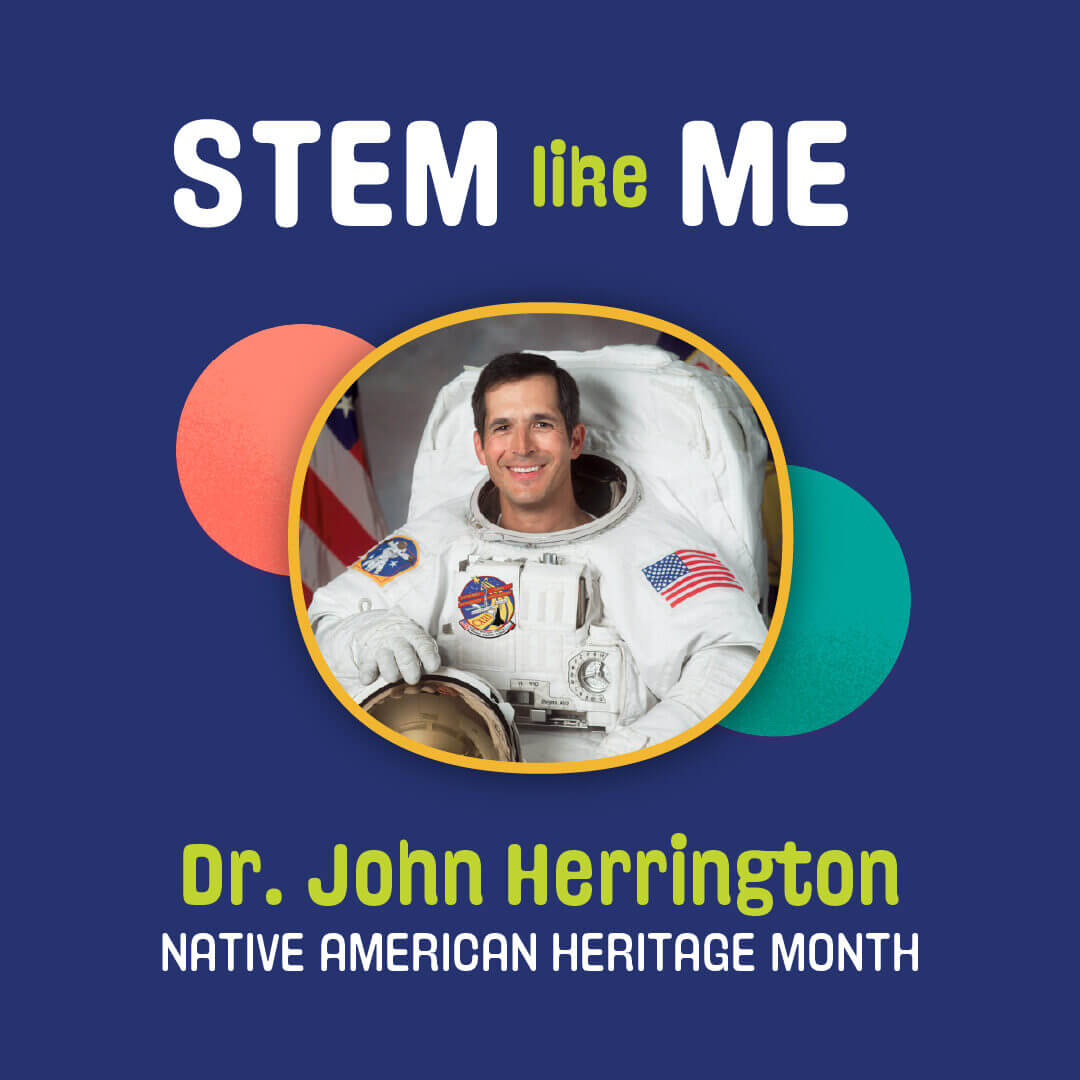
A member of the Chickasaw Nation, John Bennett Herrington was the first Native American to fly in space as a NASA astronaut. He was born in Wetumka, Oklahoma, and earned a bachelor’s degree in applied mathematics from the University of Colorado – Colorado Springs in 1983. He became a commissioned aviator in the U.S. Navy in 1984 and went on to earn a master’s degree in aeronautical engineering from the U.S. Naval Postgraduate School in 1995 and a PhD in education from the University of Idaho.
With the Navy, Herrington logged more than 3,800 flight hours in more than 30 different types of aircraft. He made three operational deployments across the Pacific Ocean and conducted several test assignments in various aircraft. He was selected by NASA as an astronaut candidate in 1996 and completed two years of training and evaluation. In 2002, Herrington became the first enrolled member of a Native American tribe to fly in space when he served as mission specialist on STS-113, the 16th Space Shuttle mission to the International Space Station. During this mission, he performed three spacewalks, totaling 19 hours and 55 minutes.
For his service, he received a great deal of recognition. He was inducted into the Chickasaw Hall of Fame in 2002, the International Air & Space Hall of Fame in 2017, the Oklahoma Hall of Fame in 2019 and the National Native American Hall of Fame in 2018. He also received several awards, including the Navy Commendation Medal, the National Defense Service Medal and three Sea Service Ribbons.
Since retiring from NASA and military service in 2005, Herrington has become a passionate advocate for STEM education, particularly among Native American youth. He completed a cross-country bike ride across the United States to promote STEM education and authored a children’s book, “Mission to Space,” to inspire young readers.
Quote: “I think it’s important for kids to dream and to see themselves doing things they might not otherwise have thought possible.”
For more information:
Dr. Gregory Cajete – Native American author who brought Indigenous perspectives into science education (1958-Present).
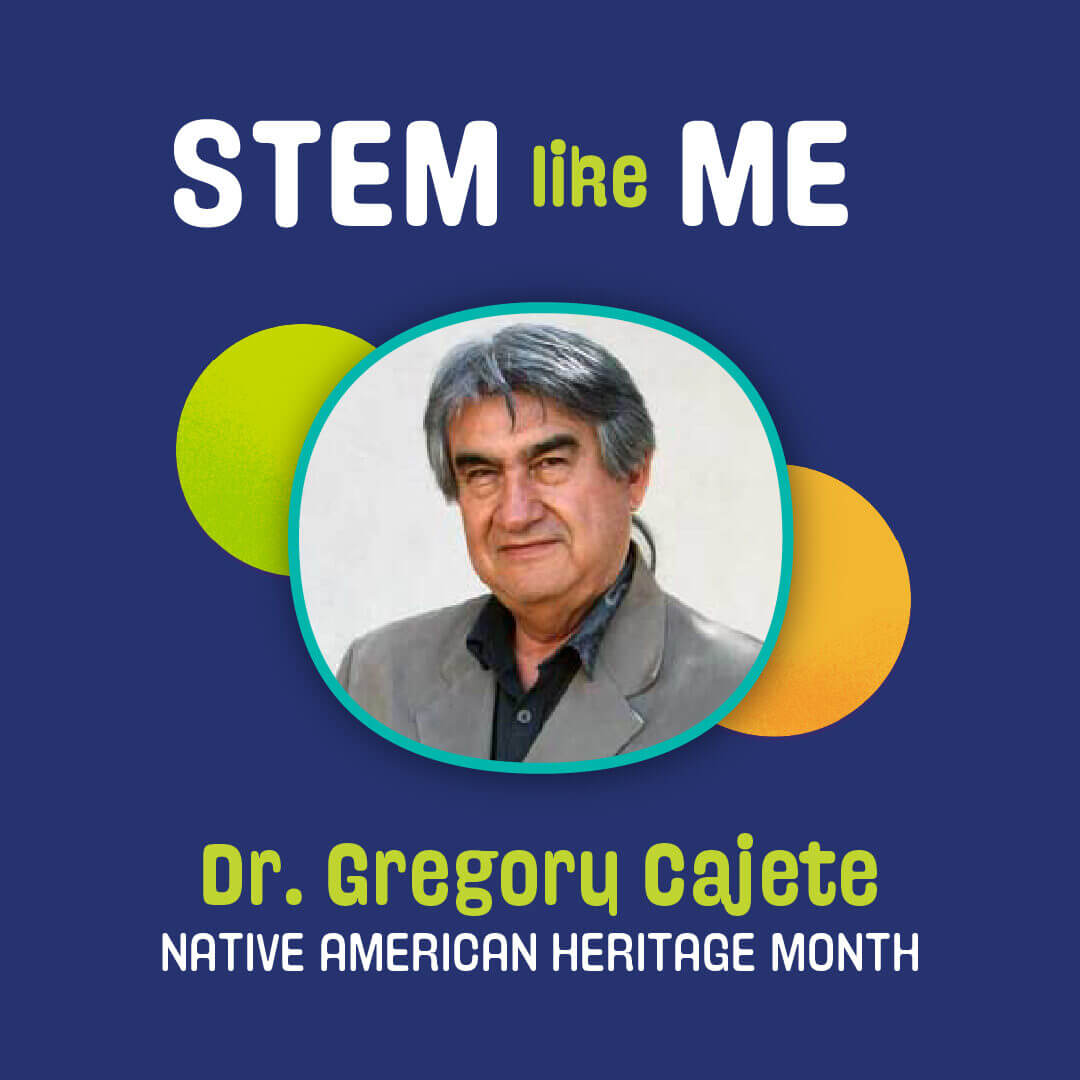
Dr. Gregory Cajete is a renowned educator, author and expert in culturally based science education. He has been a pioneer in developing Native American-based science curricula and in exploring the intersection of Indigenous knowledge and Western science. He was born a Tewa Indian in Santa Clara Pueblo, New Mexico. He earned a bachelor’s degree in biology and sociology from New Mexico Highlands University, a master’s degree from the University of New Mexico and a doctorate in social science education from International College – Los Angeles.
As Emeritus Professor and Former Director of Native American Studies program at the University of New Mexico, Cajete significantly influenced the field of multicultural science education. His work focuses on reintegrating Indigenous perspectives into science and environmental education.
Cajete has authored several influential books, including “Look to the Mountain: An Ecology of Indigenous Education,” “Ignite the Sparkle: An Indigenous Science Education Curriculum Model,” and “Native Science: Natural Laws of Interdependence,” which have become seminal works in the field of Indigenous science education.
Quote: “Native science is a reflection of the metaphoric mind of Indigenous peoples. It is holistic, reflective, and constantly adapting.”
For more information:
Annie Dodge Wauneka – First Native American to earn the Presidential Medal of Freedom for improving public health (1910 – 1997).
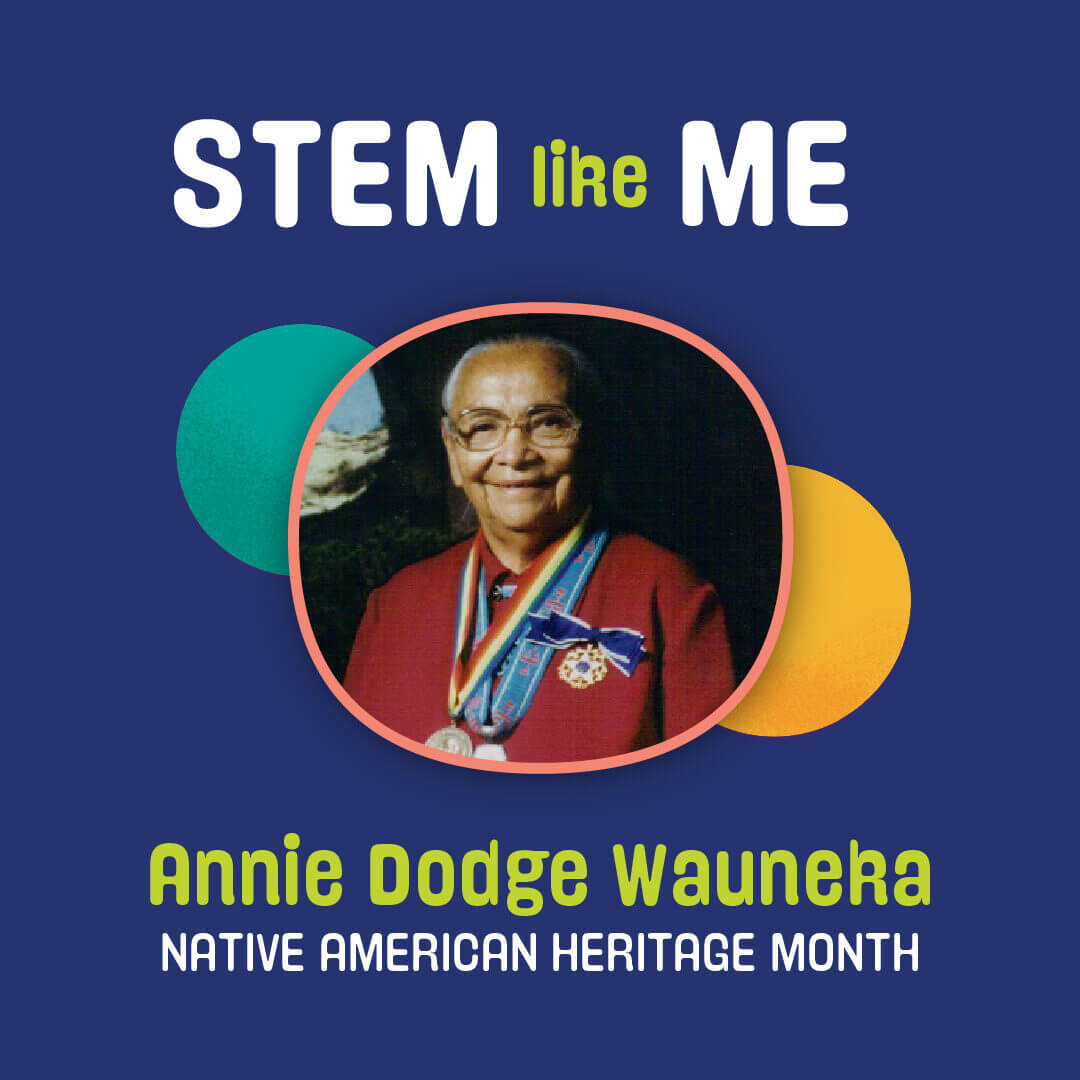
Annie Dodge Wauneka was born near Sawmill, Arizona, on the Navajo Reservation. She was the daughter of Henry Chee Dodge, the last official Head Chief of the Navajo Tribe and first Tribal Chairman of the Navajo Business Council.
Wauneka dedicated her life to improving the health and welfare of the Navajo people. As an eight-year-old child, she contracted a mild case of the 1918 Great Influenza epidemic and helped care for other students in her Indian Affairs Boarding School after recovering from the illness that killed millions around the globe — an experience she notes as inspiring her interest in public health. She attended the Albuquerque Indian School from grades 6-11 and met her future husband, George Wauneka. After graduating, she earned a bachelor’s degree in public health from the University of Arizona and became the second woman elected to the Navajo Tribal Council in 1951, serving for 27 years and leading the Health and Welfare Committee.
Her work focused on combating major health issues affecting the Navajo Nation, including tuberculosis, alcoholism, prenatal care, unsanitary living conditions and the well-being of infants and young children. Wauneka was instrumental in bridging the gap between traditional Navajo healing practices and modern medicine, often translating complex medical terms into the Navajo language to improve understanding and acceptance of Western medical treatments. In addition to work with Navajo tribes, she also served on advisory boards for the U.S. Surgeon General and the U.S. Public Health Service.
Wauneka received numerous awards for her work, including the Presidential Medal of Freedom in 1963, becoming the first Native American to receive this honor. She was later selected as the Ladies’ Home Journal “Woman of the Year” in 1976 and was designated “The Legendary Mother of the Navajo Nation” by the Navajo Council in 1994. She was inducted into the National Women’s Hall of Fame in 2000
Quote: “I’ll go and talk to the people. I’ll go to the homes where there are TB patients. I’ll talk to them in Navajo and tell them what TB is.”
For more information:
Subjects