The Saint Louis Science Center envisions an equitable and inclusive society where people are passionate about science and use it to improve lives, transform communities and empower future generations. Through exposure to STEM concepts and recognition of contributions made by members of various communities, we hope that individuals from all backgrounds can find their place in STEM.
As we celebrate Pride Month, we’re recognizing a few STEM-sational individuals who’ve inspired us all to make an impact:
Lynn Conway
Invented generalized dynamic instruction handling to improve computer processors and revolutionized microchip design (1938 – 2024).
Inspirational Quote:
“You have to persist through the setbacks and the failures and just keep going. That’s what it takes to make a real difference.”
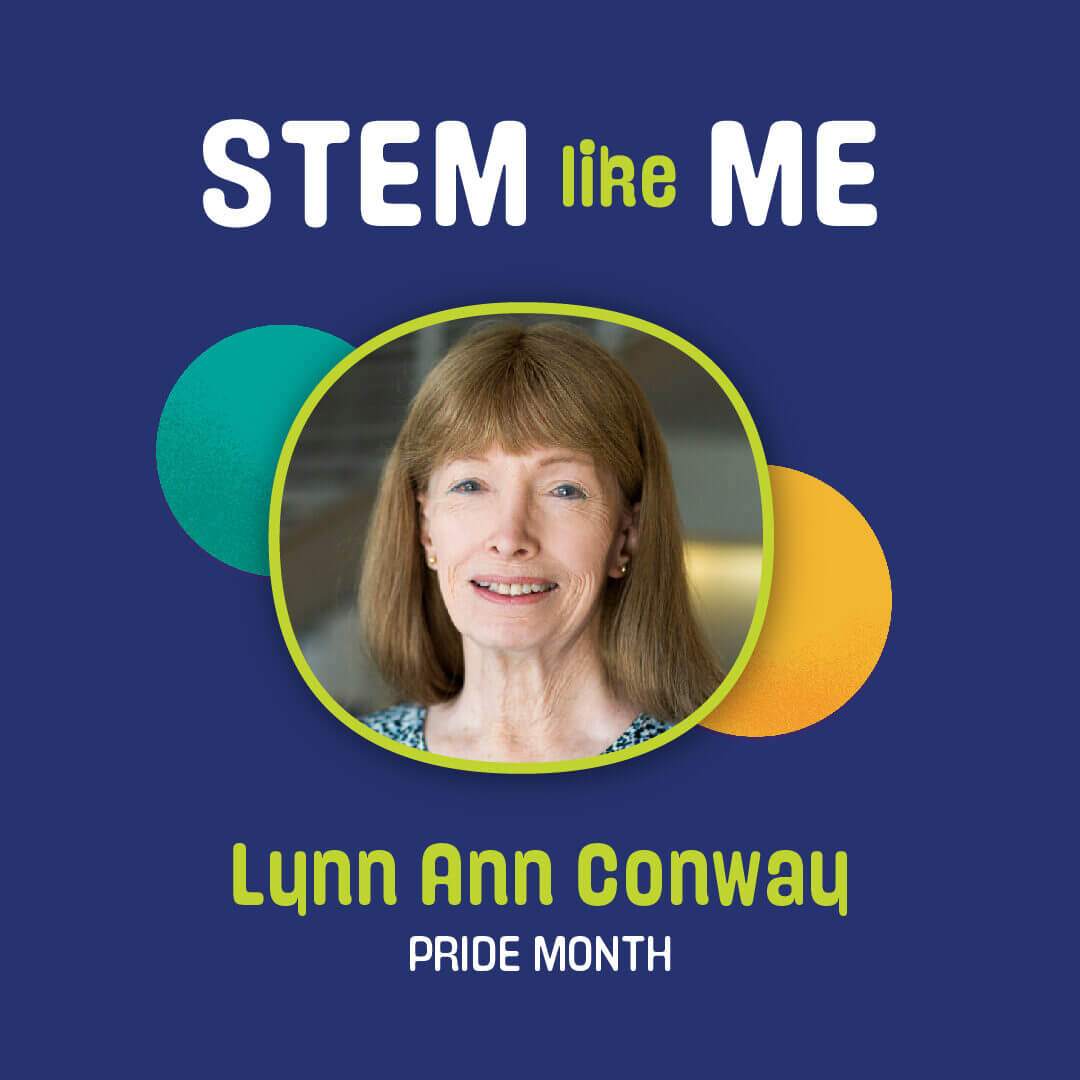 An American computer scientist, electrical engineer, and transgender activist, Lynn Conway invented generalized dynamic instruction handling, a key advancement used in out-of-order execution that improves the performance of modern computer processors during her career at IBM in the 1960s. IBM fired Conway in 1968 after she revealed her intention to undergo a gender transition, which the company apologized for in 2020.
Following her transition, Conway adopted a new name and identity and restarted her career in “stealth mode.” She worked at Xerox PARC from 1973 to 1983, where she led the “LSI Systems” group. She initiated the Mead–Conway VLSI chip design revolution in very large-scale integrated (VLSI) microchip design, which reshaped the field of microchip design during the 1980s. Conway joined the University of Michigan as a professor of electrical engineering and computer science in 1985.
Until 1979, designing computer chips had been a difficult process that could only be completed by the most knowledgeable electrical engineers. Each of a chip’s transistors had to be hand-designed and connected. Conway and Carver Mead devised a method to simplify chip design and make it accessible to any computer scientist through automated processes and structured design—a method that involves breaking down system elements into more standardized, modular parts. They co-authored “Introduction to VLSI Systems” (1980), which became a seminal textbook in the field.
When nearing retirement, Conway learned that the story of her early work at IBM might soon be revealed through academic investigations. She began coming out in 1999 to friends and colleagues about her gender transition, using her website to tell her story. Her life story was then more widely reported in 2000 in profiles in Scientific American and the Los Angeles Times. In a Forbes interview, Conway commented, “From the 1970s to 1999, I was recognized as breaking the gender barrier in the computer science field as a woman, but in 2000 it became the transgender barrier I was breaking.”
In 2020, IBM CEO Arvind Krishna formally apologized to Conway for the company’s treatment of her in 1968 and awarded her the IBM Lifetime Achievement Award. She was inducted into the National Inventors Hall of Fame in 2023 for her invention of VLSI design methods.
For more information:
Dr. Ben Barres
Proved the importance and role of glial cells in brain function (1954 – 2017).
Inspirational Quote:
“The best science comes from passionate commitment to the truth, wherever it leads, and that requires an environment where all scientists can contribute their best work.”

Dr. Ben Barres was an American neurobiologist known for his work on glia, the most numerous cells in the brain, at Stanford University School of Medicine. He was also a pioneer for transgender rights and was the first openly transgender scientist elected to the National Academy of Sciences.
Born as Barbara Barres in West Orange, New Jersey, he obtained a Bachelor of Science in Biology from Massachusetts Institute of Technology in 1976, a medical doctorate from Dartmouth Medical School in 1979, and a residency in neurology at Weill Cornell Medicine. During his residency, Barres noted the lack of knowledge about the causes or cures of neurodegeneration. In studying pathology reports, he noticed a correlation between neural degeneration and irregular patterns of glial cells in the brain and, intrigued, resigned his residency to pursue research in neuroscience at Harvard Medical School. He completed a PhD in neurobiology there in 1990, and then did postdoctoral training at University College London under Martin Raff. In 1993, Barres joined the faculty of Neurobiology at the Stanford University School of Medicine.
At age 17, he learned that he had been born with Müllerian agenesis, for which he received surgical correction. After transitioning to male in 1997 at age 43, Barres published extensively on sexism in the sciences. In 2008, he was appointed to the Chair of Neurobiology at Stanford.
Barres’s research focused on glial cells, which make up nine of every 10 cells in the human brain that are not nerve cells. When Barres first began studying them, glia were thought to be not much more than “packing peanuts,” supplying positional stability and various nutrients to the brain’s much more talented neurons. Barres and his lab transformed this view entirely, proving that glial cells are critical to sustaining the overall architecture of the brain’s constellation of synapses and play central roles in brain function and dysfunction.
After transitioning, he noticed that people who were not aware of him being transgender treated him with respect much more than when he presented as a woman. After delivering his first seminar as a man, one scientist was overheard to comment, “Ben Barres gave a great seminar today, but his work is much better than his sister’s (believing work published under his deadname to be his sister’s) work.” His experience of living as both a woman and a man in science gave him unique insights into gender discrimination.
In 2013, he was elected to the National Academy of Sciences, becoming its first openly transgender member. Barres was critical of economist Lawrence Summers and others who have claimed that one reason there are fewer women than men in science and engineering professorships might be that fewer women than men had the very high levels of “intrinsic aptitude” required for success in those fields.
For More Information:
Dr. Sara Josephine Baker
Physician who improved the public health and welfare of children as a commissioner of health in New York City and was the first woman to serve professional representation on the League of Nations (1873 – 1945).
Inspirational Quote:
“The way to keep people from dying from disease, it struck me suddenly, was to keep them from falling ill. Healthy people don’t die.”
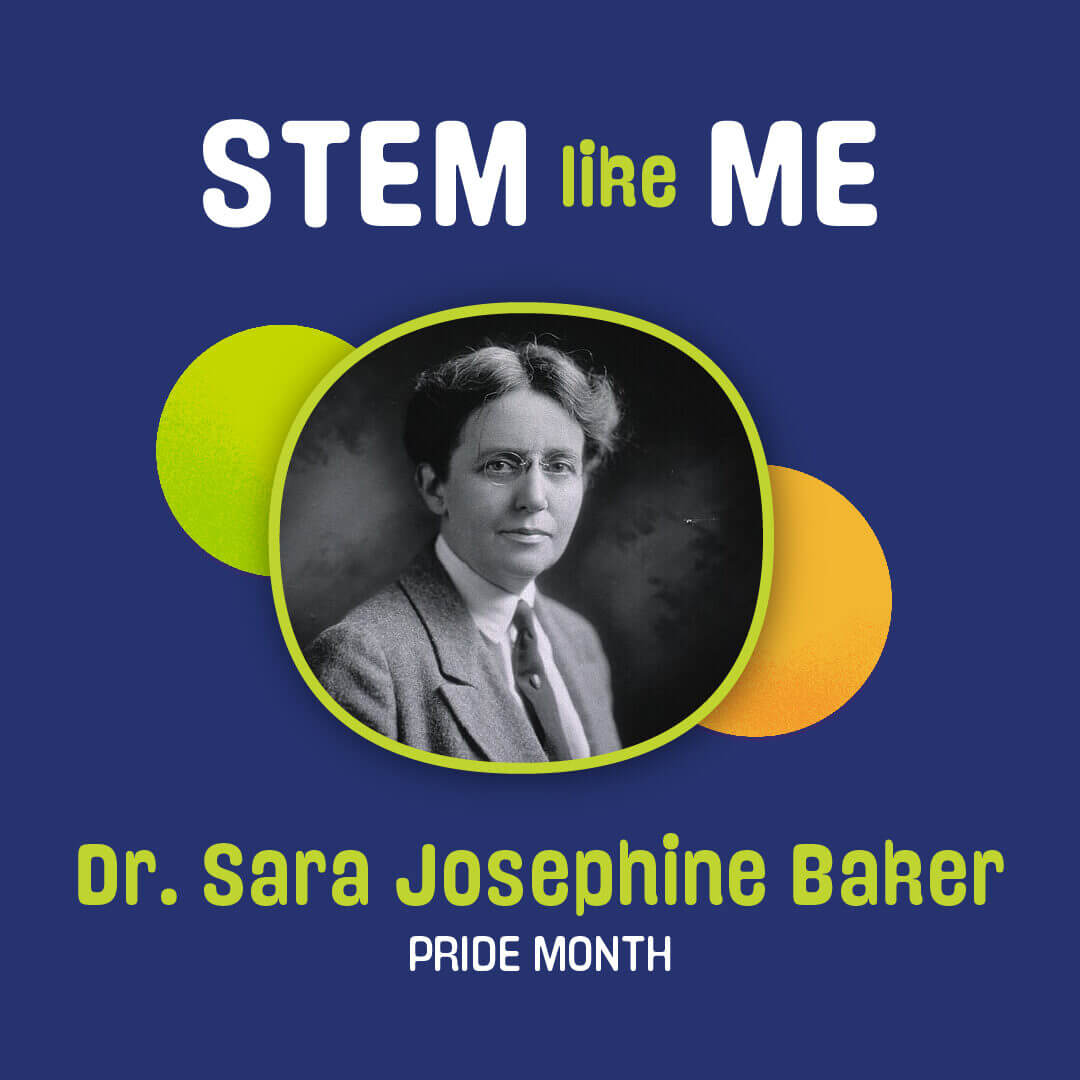
Dr. Sara Josephine Baker was an American physician who contributed significantly to public health and child welfare in the United States by serving as a commissioner of health in New York City. Born in Poughkeepsie, New York, to Daniel Mosher Baker, a Quaker lawyer, and Jenny Harwood Brown, one of the first graduates of the all-women Vassar College, Baker was instilled with the importance of education from an early age.
At just 16, Baker earned a scholarship to her mother’s alma mater. However, around that time, her father and brother passed tragically of typhoid — devastating the family and threatening their financial stability. Heartbroken but determined to support her mother and sister, Baker passed up her scholarship and started down the path to become a physician.
In 1898, Baker graduated second in her class from the Woman’s Medical College of the New York Infirmary, a women-only medical program founded in 1868. At the time, only six percent of all physicians were women. After graduation, Baker left New York for an internship at Boston’s New England Hospital for Women and Children, an outpatient clinic that served some of the city’s poorest residents, seeing firsthand the cyclical linkage between ill health and poverty.
Known as “Dr. Joe,” she wore masculine-tailored suits and joked that colleagues forgot that she was a woman. In 1901, Baker passed the civil service exam and qualified to be a medical inspector with New York City’s Department of Health. In 1907, she became assistant to the commissioner of health, where she aided in the apprehension of “Typhoid Mary” Mallon.
In August 1908, the Division of Child Hygiene was established in the health department, and Baker was named director — making her the first woman in the U.S. to hold an executive position in a health department. The division (later raised to bureau) was the first government agency in the world devoted to child health. There, Baker evolved a broad program including strict examination and licensing of midwives, appointment of school nurses and doctors, compulsory use of silver nitrate drops in the eyes of all newborns to prevent blindness from the gonorrhea bacteria, inspection of schoolchildren for infectious diseases, and numerous methods of distributing information on health and hygiene among the poor.
Her most notable achievement was transforming the city’s basic infectious disease inspection protocol into a comprehensive approach to preventative healthcare for children. During the summer of 1908, Baker led a team of 30 nurses into the city’s slums and taught mothers with infants basic hygiene skills. With such promising results, New York City had the lowest infant mortality rate of any major American city by 1923.
Baker spent much of the later part of her life with Ida Alexa Ross Wylie, a novelist, essayist, and Hollywood scriptwriter from Australia who identified as a “woman-oriented woman”. Both women, and their friend Louise Pearce, were members of Heterodoxy, a feminist biweekly luncheon discussion club, of which many members were lesbian or bisexual. Neither Baker nor Wylie ever declared themselves openly to be queer, but according to Dr. Bert Hansen, the two women were partners. In 1935 Baker and Wylie decided to move to Princeton, New Jersey with Pearce.
For More Information:
Subjects