The Saint Louis Science Center envisions an equitable and inclusive society where people are passionate about science and use it to improve lives, transform communities and empower future generations. Through exposure to STEM concepts and recognition of contributions made by members of various communities, we hope that individuals from all backgrounds can find their place in STEM.
This month, as we celebrate the anniversary of Missouri’s statehood, we’re recognizing a few STEM-sational individuals who’ve inspired us all to make an impact.
Edwin Hubble
First person to prove there are other galaxies than the Milky Way and that the universe is expanding at a common rate – (1889 – 1953).
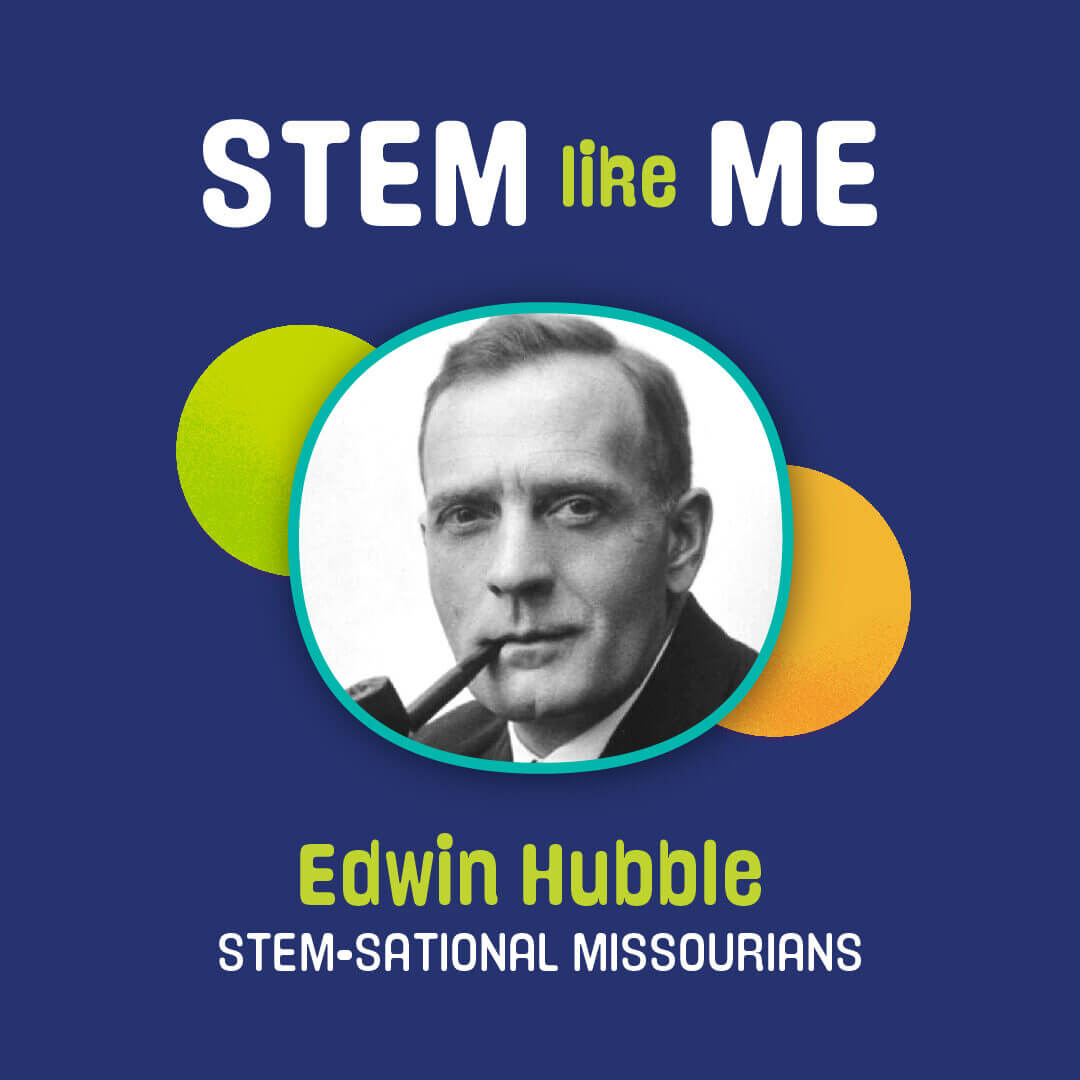
Born in Marshfield, Missouri, Edwin Hubble was the first person to prove that there are galaxies beyond the Milky Way and developed “Hubble’s Law” that observes that the universe is expanding at a common rate. For his efforts, the Hubble Space Telescope was named in his honor.
Hubble’s family moved to the Chicago area in his youth, where he was recognized for being both a good student and a good athlete. A track, baseball, football and basketball star, he won several first-place medals in high school track competitions and earned a spot on the University of Chicago’s basketball team — leading them to their first Big Ten Conference championship in 1907. He earned a Bachelor of Science degree from the university (studying mathematics, astronomy and philosophy) and was a lab assistant for Nobel Prize winner Robert Millikan during his studies. He then became a Rhodes Scholar and studied for three years at The Queens College in Oxford, England, where he earned a master’s degree in law. After college, he taught at New Albany High School in Indiana and coached the school basketball team. He left teaching a year later to return to the University of Chicago to study astronomy and earn a PhD.
In 1919, he joined the Mount Wilson Observatory team in Pasadena, California. His focus there was to research nebulae (clouds of dust and gas in space). Using the new 100-inch Hooker telescope, the largest telescope in the world at that time, he scanned the universe and discovered that what was thought to be nebulae within the Milky Way was instead other galaxies. This discovery revolutionized thinking by astronomers and led to the discovery of what would eventually be billions of other galaxies throughout the universe. He also discovered that the farther apart that galaxies are from one another, the faster they move away, and that this expansion rate remains a constant proportion for the distance — a theory now termed “Hubble’s Law” to describe the expansion of the universe.
In 1990, NASA launched the Hubble Space Telescope, named in his honor. The goal of this project was to photograph the universe and to document Hubble’s Law. The telescope has undergone several repairs while in space, but it remains operational today and is expected to continue its mission until it falls back to Earth within the next 15 years.
For more information:
Susan Elizabeth Blow
Started the first kindergarten in the United States (1843-1916).
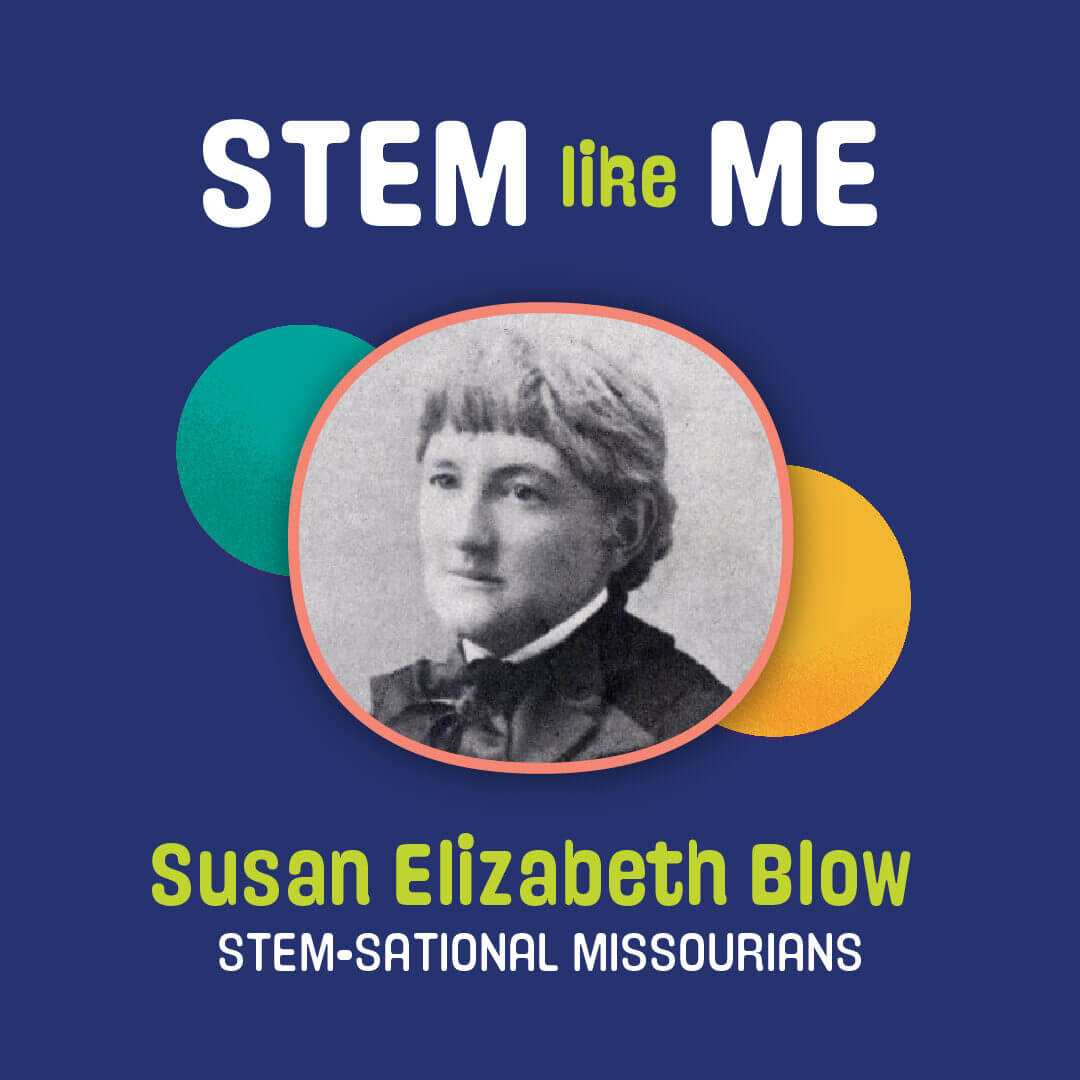
Born in St. Louis, Susan Elizabeth Blow observed a class focused on teaching young children while touring Europe and brought this concept back to America to introduce the first public kindergarten learning program to the United States. She opened this class at the Des Peres School in St. Louis’ Carondelet area for 42 students at no charge.
Blow was the oldest of nine children in her family and benefitted from the family’s social status to receive an education that included private tutors and private schooling — as educational training for women at the time was uncommon. She studied in St. Louis, New Orleans and New York before returning home to teach at the onset of the Civil War. President Ulysses S. Grant named her father, Henry, (who was a former State Senator and U.S. Congressman) the ambassador to Brazil, and Susan joined her father for the 15-month tour as his secretary.
In the early 1870s, Blow traveled to Europe with her family and discovered the teaching methods of German philosopher Friedrich Frobel, who encouraged learning through play and cognitive development for young children. On her way home, she spent a year training with one of Frobel’s disciples, Maria Kraus-Boelte, in New York. She returned to St. Louis in 1873 and opened the kindergarten at Des Peres School, teaching children in the morning and preparing new teachers in the afternoon. Within ten years, every public school operating in St. Louis had opened a kindergarten class, serving more than 9,000 students.
For her contributions, she was inducted into the St. Louis Walk of Fame in 1991.
For more information:
George Washington Carver
A preeminent black scientist and inventor, who created more than 300 products using peanuts, sweet potatoes and other plants (1864 – 1943).
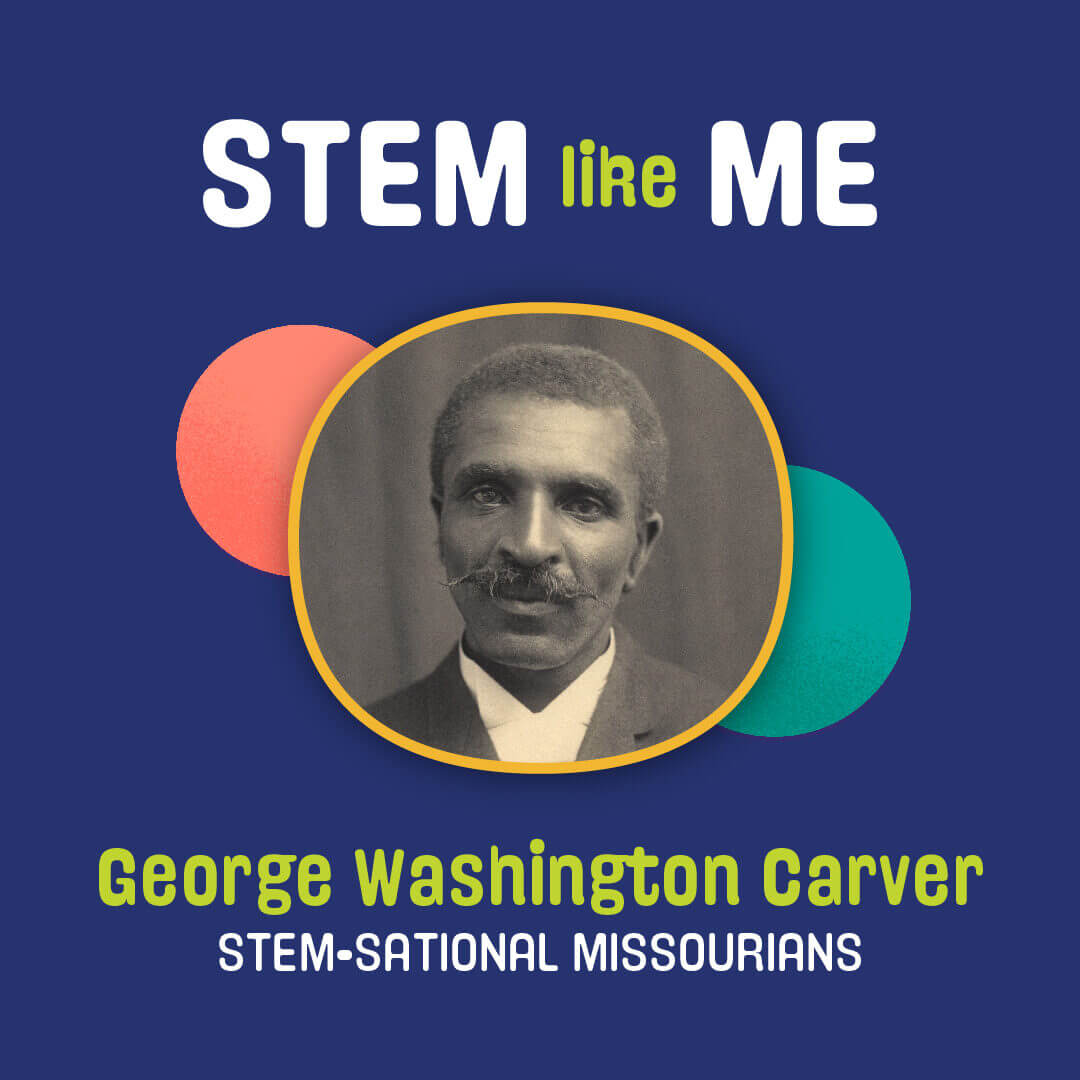
Born in Diamond, Missouri, George Washington Carver sought to improve agricultural practices and the economic status of African Americans and became one of the most important black scientists in the 20th Century. He’s credited with developing techniques that improved soils that had been depleted by decades of cotton planting and inventing hundreds of alternative uses for peanuts, sweet potatoes and other plants.
Born into slavery and raised when it was difficult for black children to receive an education, Carver was recognized for his intellect. At age 13, he moved to Minneapolis, Kansas, and attended a school with greater resources for black students. In his late teens, he was celebrated as “one of the most intelligent colored men in this part of the state” (The Progressive Current, Dec. 22, 1883) and enrolled as the first black student to attend what would become Iowa State University in Ames as a young adult. He earned a Bachelor of Science and a master’s degree from the school before becoming its first African American faculty member.
In 1896, Carver was recruited by Booker T. Washington to head the Agricultural Department at Tuskegee Institute (now Tuskegee University) and remained employed at the school for 47 years. He improved the department’s research center and began the work for which he is recognized. Initially, he taught the importance of crop rotation and adding nutrients back into the depleted soils and then introduced alternative cash crops for farmers to consider while they worked to improve their land. He also introduced a mobile classroom, called his “Jesup Wagon,” where Carver and his students would visit regional farmers to share the findings of their research.
After the success of those programs, he then concentrated his research on experiments to find additional uses for peanuts, sweet potatoes, soybeans, pecans and other crops that could be grown in the southern climate. These products were chosen because of their ability to return nitrogen to the soil that had been removed by years of cotton farming and because they were healthy and sustainable for humans. He and his students developed recipes using these crops to encourage their use and improve nutrition and distributed regular bulletins to share their findings. Carver is recognized as the creator for more than 300 peanut and 100 sweet potato products (including foods, household products, beverages, medicines, cosmetics, dyes and paints, and more — but contrary to common belief, peanut butter is not one of these products).
Carver died after complications from falling down the stairs in his home in 1943 but received numerous honors for his work. Buried next to Washington on the grounds of Tuskegee Institute, he was granted a monument (the George Washington Carver National Monument in Diamond) by President Franklin D. Roosevelt. He was inducted into the National Inventors Hall of Fame.
For more information:
William Lear
Earned more than 140 patents and developed many products that changed the way Americans live (1902 – 1978).
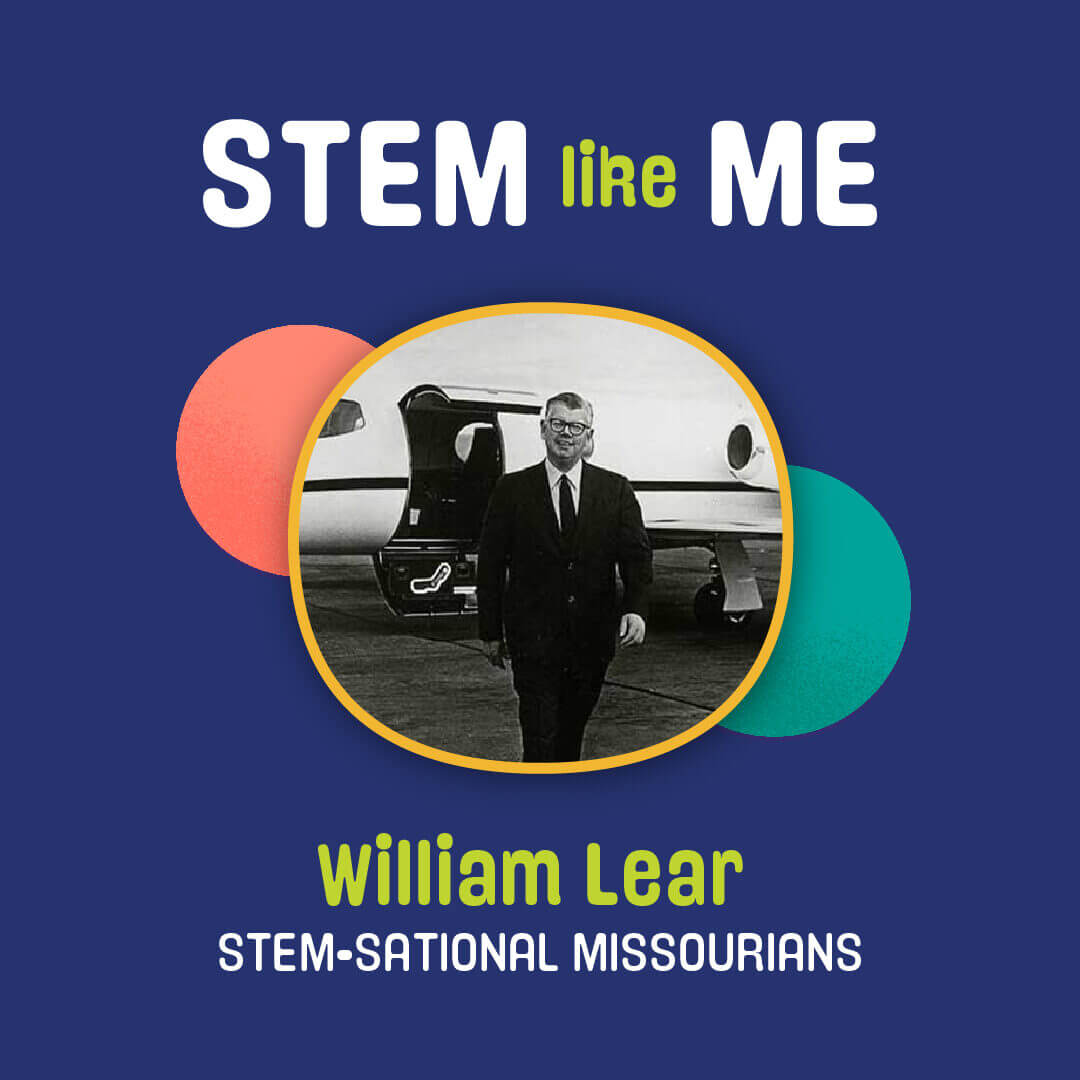
Born in Hannibal, William Powell Lear invented many products in use today and founded the business jet company, Lear Jet. He’s most recognized for his work in aviation — for which he helped produce the first mass-produced private jet airliners, the autopilot system and an automatic landing system — but he also created the first car radio, the 8-track tape cartridge and many more products.
Lear only attended school through the eighth grade and was mostly self-taught. He joined the U.S. Navy at age 16, having lied about his age during recruitment, and attended the Great Lakes Naval Training Station, where he focused on radio electronics and engineering. After leaving the Navy, he worked to complete his high school education in just one year but was dismissed before finishing. He then founded his first company, Lear Radio Laboratories, where he invented the first car radio and the first radio remote control. After that, he invented the “Lear-o-Scope” that allowed pilots to navigate planes using radio and other aeronautical navigational devices.
In 1945, the company had become Lear, Incorporated, and focused on products for the home and aeronautics industries. His Learrecorder product was called “the most versatile home musical reproduction machine ever built” by the New York Times, but the market for these home products was not a moneymaker for the company. It instead focused on aeronautics, and Lear then developed the autopilot system to help make flying safer. In 1962, he experienced disagreements with the board of directors for the company and was forced out.
He started the Lear Jet Corporation in 1964 in Wichita, Kansas, and built his first lightweight, luxurious aircraft designed for small passenger loads or business use. The first flight of that aircraft was in 1963, and the company became publicly traded. Lear continued his tinkering and invented what would become the 8-track tape system and sold his shares in Lear Jet to the Gates Rubber Company. He then focused on developing automobiles that could run on steam power combustion engines but was not successful with this.
William Lear died of leukemia in 1978. He has been inducted into the National Aviation Hall of Fame, the National Inventors Hall of Fame and the International Air and Space Hall of Fame.
For more information:
Subjects