The Saint Louis Science Center envisions an equitable and inclusive society where people are passionate about science and use it to improve lives, transform communities and empower future generations. Through exposure to STEM concepts and recognition of contributions made by members of various communities, we aim to inspire and empower individuals from all backgrounds to pursue and thrive in STEM fields.
This month, as we celebrate Women’s History Month, we recognize a few STEM-sational individuals who’ve inspired us all to make an impact.
Dr. Rosalind Franklin – Made fundamental contributions to understanding how DNA, RNA and viruses are structured (1920 – 1958)
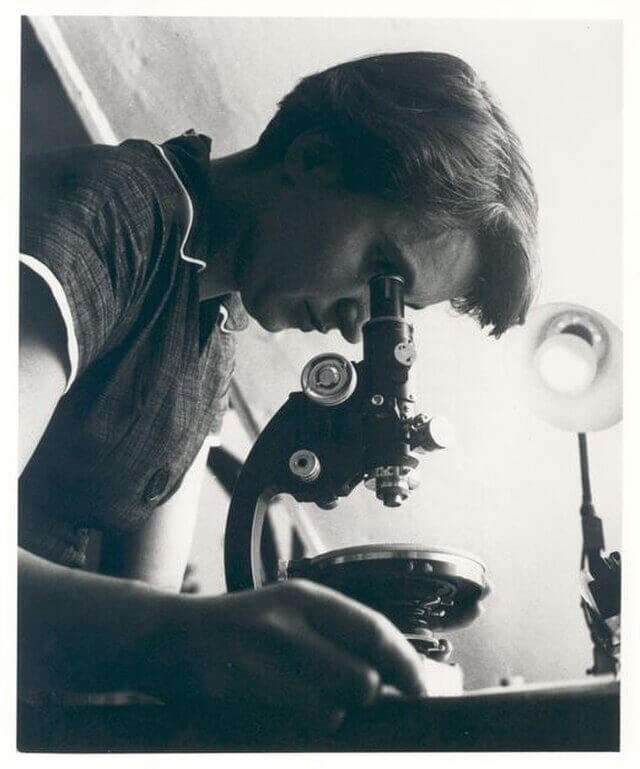
A British chemist and X-ray crystallographer, Dr. Rosalind Franklin made fundamental contributions to how scientists understand the molecular structure of DNA, RNA, viruses, coal and graphite.
- She pioneered the use of high-resolution, X-ray diffraction images, using crystallography to study the structure of extremely small molecules.
- Her seminal work project called “Photo 51” revealed the double helix structure for DNA.
- She uncovered the existence of DNA in two forms: a dry/crystalline “A” and a wet “B”.
- She developed the system to classify coal and predict its performance as an effective fuel source.
Born to a prominent London family devoted to education and service, Dr. Franklin chose science as her lifelong path at an early age. She attended private preparatory and boarding schools as a child and entered Newnham College — one of the two schools open to women at Cambridge University — where she studied chemistry. She was awarded “second-class honours” which at the time was equivalent to earning a bachelor’s degree for women from the university. Her research into the system for classifying coal served as the basis for her PhD thesis, which earned Franklin a doctoral degree from Cambridge in 1945.
Because of anti-Semitism against her Jewish faith and biases against women, Dr. Franklin faced difficulties in access to education, career opportunities and recognition for her work. These difficulties carried forward when she did obtain work as it contributed to strained relationships with colleagues. An example of this was her not receiving proper credit for her contribution to the discovery of the DNA double helix, as Photo 51 and her research data were shared with Francis Crick and James Watson by a colleague without Franklin’s knowledge. Because she was not included in published papers on this finding and because of her premature death at age 37 due to ovarian cancer, she was not awarded the Nobel Prize in Chemistry like the other scientists involved received. (Nobel rules state that the prize cannot be awarded posthumously or shared by more than three individuals.)
Although Dr. Franklin did not receive proper credit for her contributions during her life, she has been recognized in many ways after her passing. Many of the techniques that she introduced are still in use today and influence modern study. Numerous scientific and educational institutions around the globe have been renamed or have placed commemorative decorations on their campuses in her honor, and the Rosalind Franklin Society was formed to recognize the contributions of women in science. A 2020 Time publication named her to its list of 100 Women of the Year for her contributions in 1953. Lastly, a variety of scientific items have been named after Dr. Franklin, including an ExoMars rover launched by the European Space Agency, a satellite and a new bacterial genus.
For more information:
Tu Youyou – Discovered artemisinin which revolutionized the treatment of malaria and became the first Chinese person to earn a Nobel Prize in Physiology or Medicine (1930-Present)
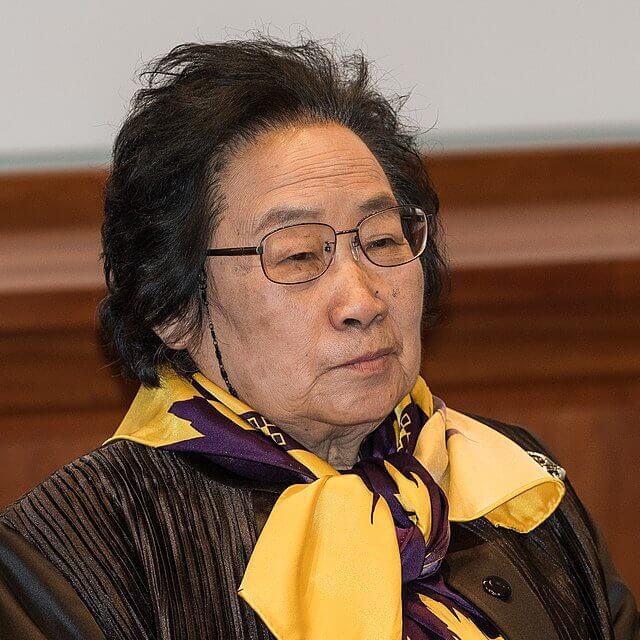
Tu Youyou is a Chinese pharmaceutical chemist who revolutionized malaria treatment through her discovery of artemisinin.
- Volunteering as the first human test subject for this treatment and building off techniques proposed through traditional Chinese medicine, she discovered that artemisinin (qinghaosu), a drug made from sweet wormwood, could be used to treat malaria, a life-threatening, mosquito-borne disease caused by parasites.
- She then created dihydroartemisinin, which is a more potent and successful form of the original drug.
- Her findings have saved millions of lives across southern China, Southeast Asia, Africa and the Americas.
- For this, she, earned the 2015 Nobel Prize in Physiology or Medicine, becoming the first Chinese Nobel Laureate in that category.
Stricken with tuberculosis as a teenager, Tu saw her high school education put on hold but developed an inspiration for medical research as a result. She attended Beijing Medical College after high school and graduated from the School of Pharmacy. She continued her studies at the Chinese Academy of Chinese Medical Sciences, focusing on the research of traditional herbal medicines. This study was the source for her discovery of the malarial treatment, as artemisinin had been used by the ancient Chinese as a fever reducer (fever is a main symptom of malaria infection).
Her findings are considered among the most significant medical breakthroughs in the 20th Century, which is especially rewarding because of the skepticism the work faced from the international scientific community downplaying the use of ancient remedies versus modern treatments. Beyond that, these drugs continue as the World Health Organization’s recommended treatment for this disease that infects nearly 300 million people each year. Additionally, scientists are now researching, approving and implementing new methods of treating many other diseases that were first proposed as traditional methods.
For More Information:
Dr. Maryam Mirzakhani – first woman and first Iranian to win the Fields Medal, the highest honor in mathematics (1977 – 2017)
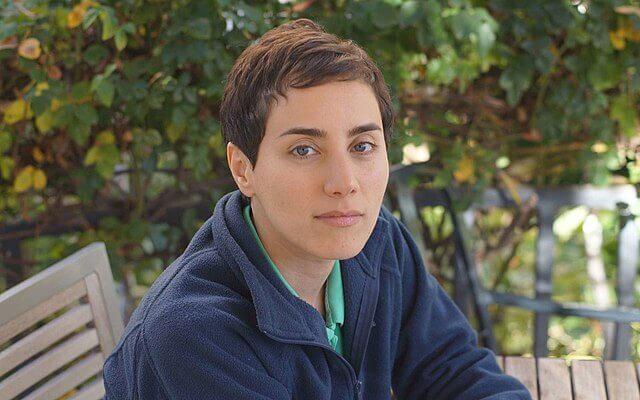
Dr. Maryam Mirzakhani was an Iranian mathematician and professor at Stanford University.
- She became the first woman, and first Iranian, to win the Fields Medal, the highest honor in mathematics, in 2014.
- She was a world leader in the fields of hyperbolic geometry, topology and dynamics, cited by the Fields committee for excellence in “the dynamics and geometry of Riemann surfaces and their moduli spaces.”
- In 1994, she became the first Iranian woman to compete for the nation and win gold medals in the International Mathematical Olympiad.
Considered one of the greatest mathematicians of her time, Dr. Mirzakhani loved math but dreamed of being a writer, which helped her to illustrate the solutions of the complex mathematical problems she faced. She attended an all-girls high school, the Tehran Farzanegan School, in Iran. During her junior and senior years, she won the mathematics gold medal in the Iranian National Olympiad and was the first woman to compete for Iran in the International Mathematical Olympiad – winning a gold medal and earning 41 of a possible 42 points her first year and winning gold after earning a perfect score in her second year at the competition. After earning a Bachelor of Science from Sharif University of Technology in Tehran, she moved to the United States and earned a PhD from Harvard University. Her thesis resulted in scholarly papers that were published in the top three mathematical journals: the Annals of Mathematics, Inventiones Mathematicae and the Journal of the American Mathematical Society. After earning her doctoral degree, she became a professor at Princeton University and then Stanford University.
The Fields Medal is considered equivalent to a Nobel Prize but is only awarded every four years to up to four mathematicians aged 40 or younger. Dr. Mirzakhani was the first woman to receive this distinction and is one of only two women to have ever earned the award.
A wife and mother, Dr. Mirzakhani was diagnosed with breast cancer in 2013, a few months before she received her Fields Medal, and died in 2017 at the age of 40 after the cancer spread throughout her body. To honor her contributions, the International Council for Science declared May 12 (her birthday) as International Women in Mathematics Day, and the United Nations Entity for Gender Equality and the Empowerment of Woman (UN Women) named her one of seven female scientists who have shaped the world.
For More Information:
Subjects