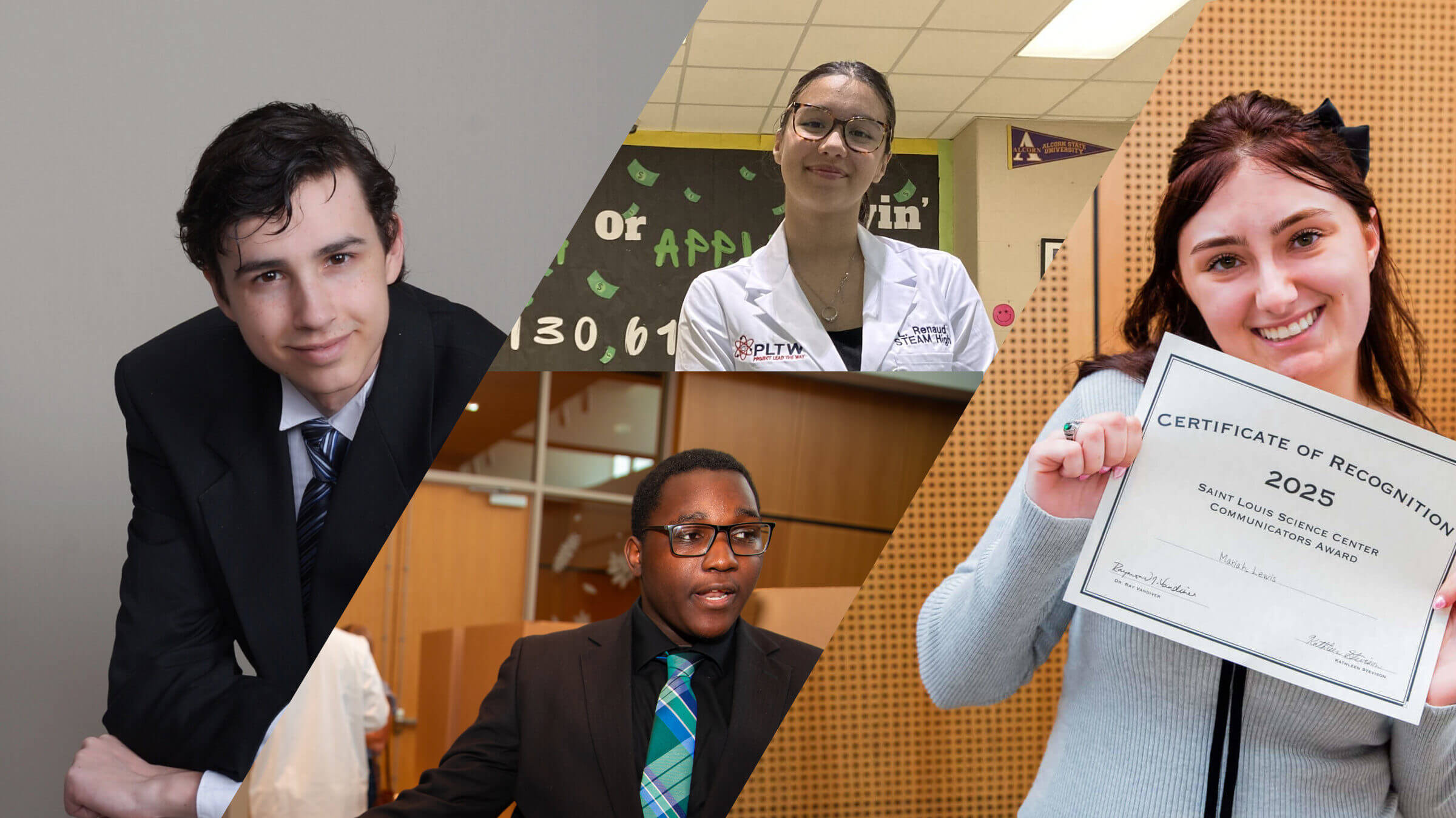
The Saint Louis Science Center proudly celebrated outstanding student achievement in science communication at the annual STEM STL Project Lead the Way Showcase on Friday, April 25. Each spring, the event invites high school seniors to exhibit capstone projects from their Project Lead the Way courses in engineering and biomedical science.
Bringing together the brightest young minds in St. Louis, the STEM STL Project Lead the Way Showcase celebrates innovation, creativity, and problem-solving in STEM. This year’s event was no exception, featuring inspiring projects from students who tackled real-world challenges with ingenuity. The Saint Louis Science Center awarded three projects and the students behind them with the Science Communicator Award, after judging the projects on criteria including layout, clear language, and delivery.
- Mariah Lewis from Fort Zumwalt North High School
- Jonathan Rayford, Ludivine Renaud, and Selena Thomas from STEAM Academy at McCluer South Berkeley
- Mason Schulte from Holt High School
From cutting-edge technology to sustainable solutions, these students demonstrated the future of STEM—and their work is worth highlighting. Join us as we shine a spotlight on their award-winning science fair projects and the brilliant ideas that set them apart!
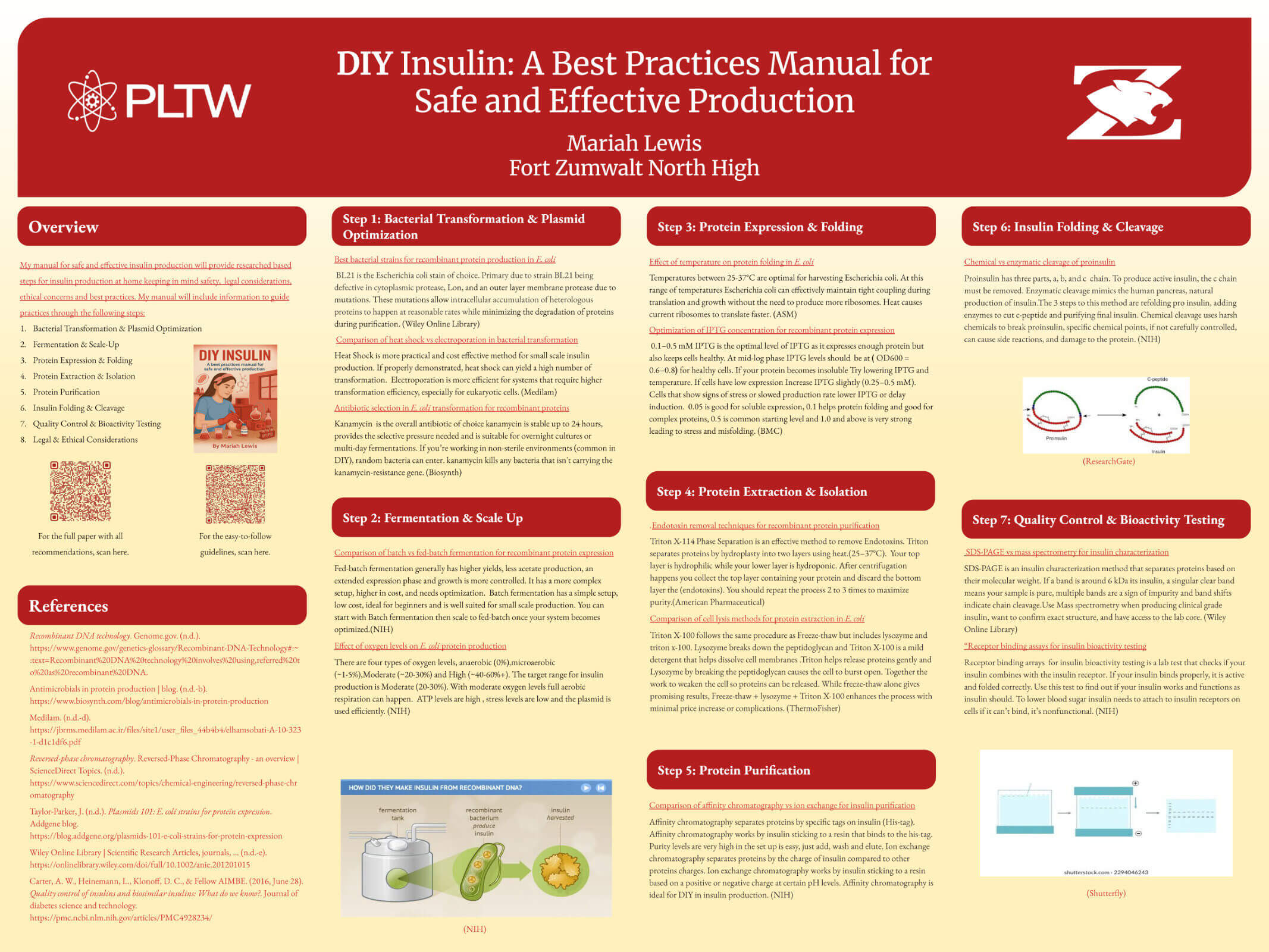
Mariah Lewis
DIY Insulin: A Best Practices Manual for Safe and Effective Production
Overview
My manual for safe and effective insulin production will provide researched based steps for insulin production at home keeping in mind safety, legal considerations, ethical concerns and best practices. My manual will include information to guide practices through the following steps:
- Bacterial Transformation & Plasmid Optimization
- Fermentation & Scale-Up
- Protein Expression & Folding
- Protein Extraction & Isolation
- Protein Purification
- Insulin Folding & Cleavage
- Quality Control & Bioactivity Testing
- Legal & Ethical Considerations
 Click/Tap to view or download the full PDF
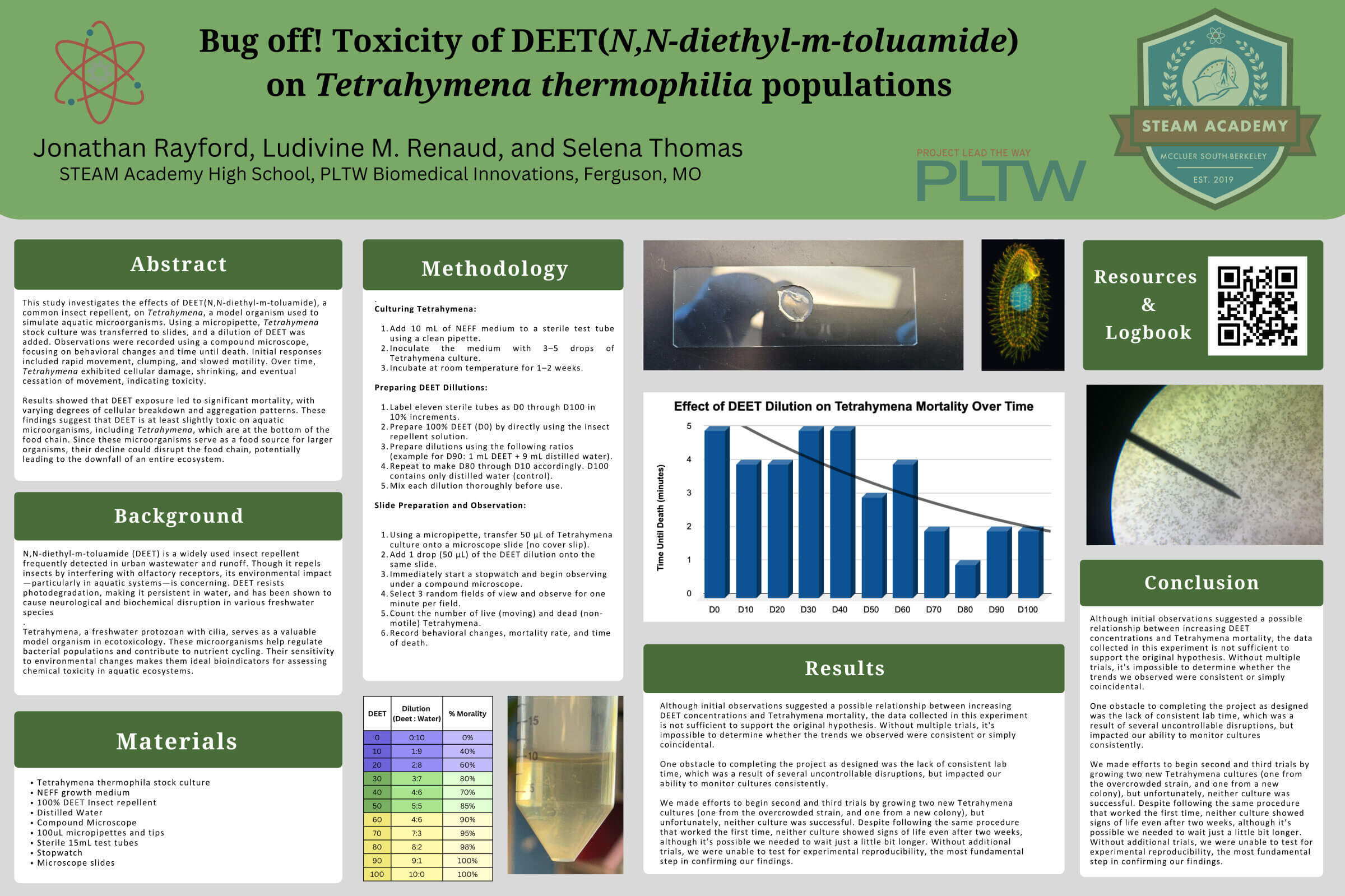
Jonathan Rayford, Ludivine Renaud, and Selena Thomas
Bug off! Toxicity of DEET(N,N-diethyl-m-toluamide) on Tetrahymena thermophilia populations
Overview
This study investigates the effects of DEET(N,N-diethyl-m-toluamide), a common insect repellent, on Tetrahymena, a model organism used to simulate aquatic microorganisms. Using a micropipette, Tetrahymena stock culture was transferred to slides, and a dilution of DEET was added. Observations were recorded using a compound microscope, focusing on behavioral changes and time until death. Initial responses included rapid movement, clumping, and slowed motility. Over time, Tetrahymena exhibited cellular damage, shrinking, and eventual cessation of movement, indicating toxicity.
Results showed that DEET exposure led to significant mortality, with varying degrees of cellular breakdown and aggregation patterns. These findings suggest that DEET is at least slightly toxic on aquatic microorganisms, including Tetrahymena, which are at the bottom of the food chain. Since these microorganisms serve as a food source for larger organisms, their decline could disrupt the food chain, potentially leading to the downfall of an entire ecosystem.
 Click/Tap to view or download the full PDF
Mason Schulte
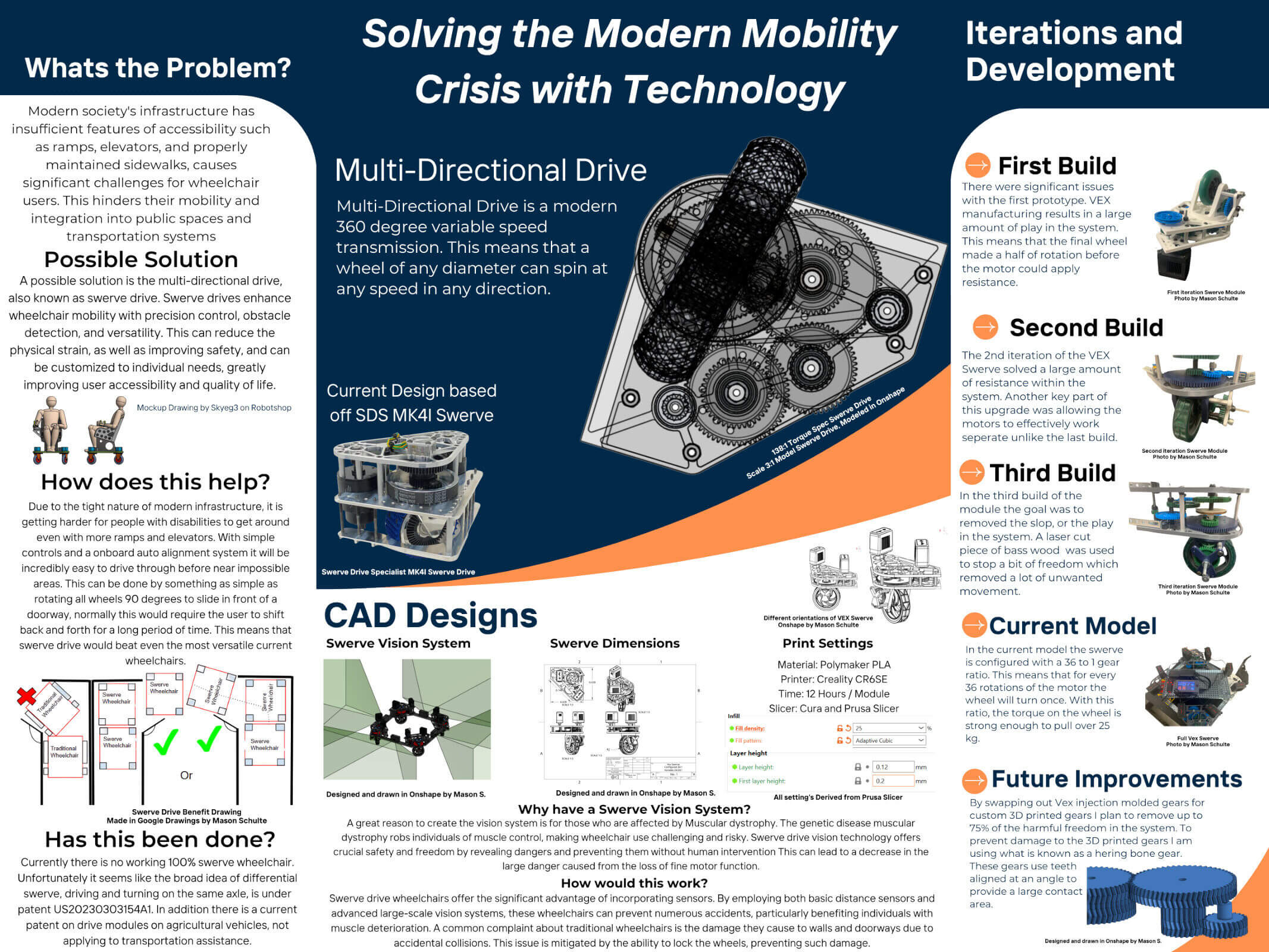
Solving the Modern Mobility Crisis with Technology
Overview
Modern society’s infrastructure has insufficient features of accessibility such as ramps, elevators, and properly maintained sidewalks, causes significant challenges for wheelchair users. This hinders their mobility and integration into public spaces and transportation systems.
A possible solution is the multi-directional drive, also known as swerve drive. Swerve drives enhance wheelchair mobility with precision control, obstacle detection, and versatility. This can reduce the physical strain, as well as improving safety, and can be customized to individual needs, greatly improving user accessibility and quality of life.
 Click/Tap to view or download the full PDF
About Project lead the way
Project Lead the Way is a national curriculum that offers a Teacher-Empowered Curriculum for a STEM Driven World for elementary, middle, and high school students. PLTW describes its curriculum as activity-project and problem-based (APB) instruction which helps students understand how the knowledge and skills they develop in the classroom may be applied in everyday life. Through their classes, students are exposed to areas of study like engineering and biomedical sciences which provide them with a strong foundation to enter the STEM Field, whether it be college, workforce, or other training program.