The Saint Louis Science Center envisions an equitable and inclusive society where people are passionate about science and use it to improve lives, transform communities and empower future generations. Through exposure to STEM concepts and recognition of contributions made by members of various communities, we aim to inspire and empower individuals from all backgrounds to pursue and thrive in STEM fields.
This June, as we celebrate Pride Month, we’re recognizing a few STEM-sational individuals who’ve inspired us all to make an impact.
Dr. Alan Hart – Pioneered the use of X-rays in detecting tuberculosis; underwent the first documented sex reassignment surgery in the United States (1890-1962)
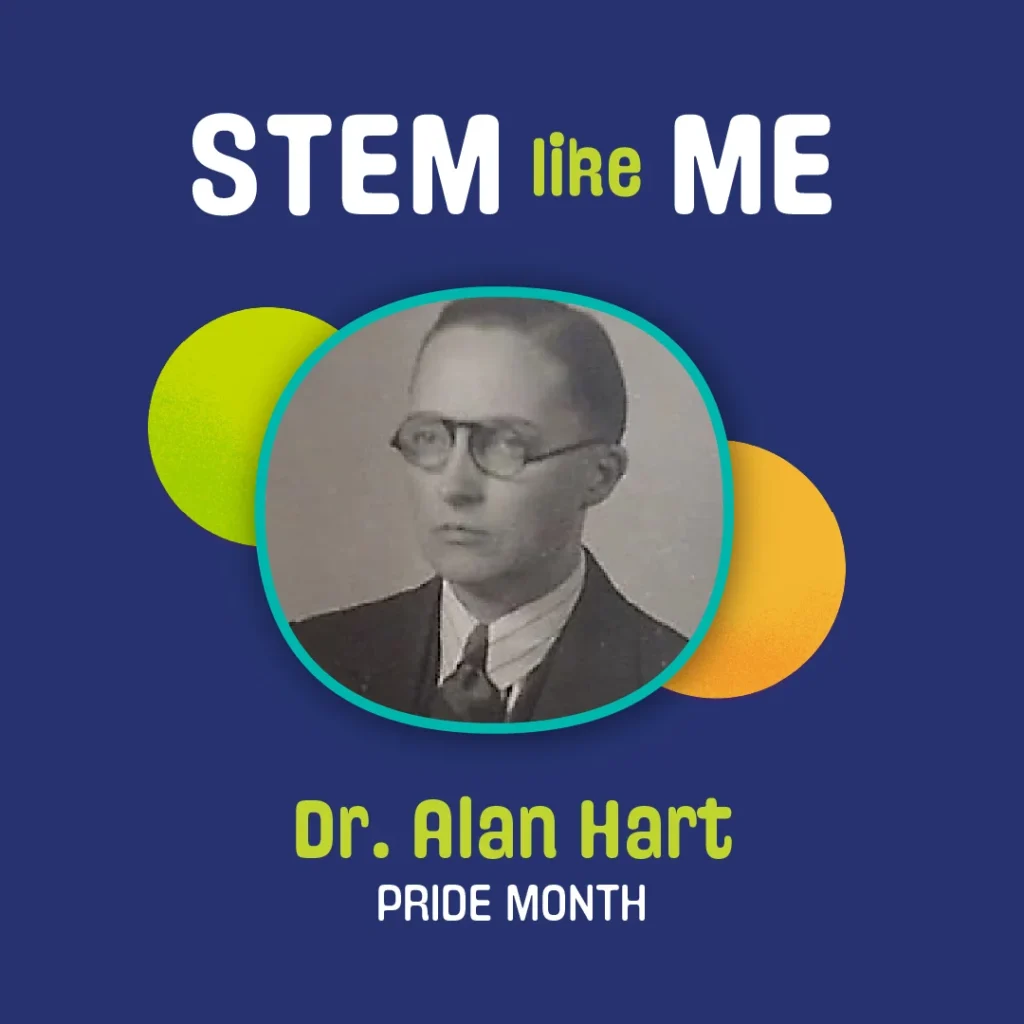
Devoted to medicine, Dr. Alan Hart both practiced and wrote about the craft as a groundbreaking radiologist and accomplished author. His pioneering usage of X-ray radiology in detecting tuberculosis before symptoms developed — a practice still used today — both reduced transmission and improved treatment. Born Alberta Lucile Hart in Kansas in 1890, Hart also served as a pioneer in LGBTQ+ history, as the first documented case of female-to-male gender transition surgery in the United States.
The Hart family moved to Oregon in 1892 after the death of Alan’s father, a move that allowed him to present as a male at a young age. He attended Albany College (later known as Lewis and Clark College) in Portland and Stanford University in California before graduating from Albany in 1912. He later earned a Doctor of Medicine degree from the University of Oregon (graduating first in the class and becoming the first woman to receive the Saylor medal, given to the individual with the highest standing across all departments) and took additional courses at Stanford. He expressed disappointment that this degree was issued in his birth name, which limited opportunities to practice medicine with a male name, but a supportive member of the Oregon staff helped by listing his graduation records under both names.
Dr. Hart focused his research into the medical treatment of tuberculosis, the biggest killer of Americans at the time. He’s credited among the first physicians to record how the bacteria spread. Although they’d only been introduced to medicine as a means for detecting bone fractures in 1895, Hart discovered that X-rays could also detect tuberculosis infections before symptoms developed. This allowed doctors to isolate infected individuals to reduce the spread of disease and begin treatment before the illness advances. In the 1930s and early 40s, Hart became Idaho’s Tuberculosis Control Officer, creating fixed-location and mobile screening clinics throughout the state. In 1948, he became the Director of Hospitalization at the Connecticut State Tuberculosis Commission, where he remained for the rest of his career, and earned a master’s degree in public health from Yale University.
Identifying as male throughout his life, Dr. Hart sought assistance from psychiatry professor Dr. J. Allen Gilbert, one of his professors at the University of Oregon. After trying hypnosis to revert his sexuality, Hart then asked doctors to perform a hysterectomy — becoming the first in the United States to undergo female-to-male transition surgery. Following the procedure in 1918, he cut his hair, obtained a full male wardrobe and started a new life. He eloped with Inez Stark, and they moved throughout the Pacific Northwest to treat tuberculosis patients. In the early 1920s, the couple divorced, but Hart met Edna Ruddick later that year and married her. He remained married to Edna until his death in 1962.
Beyond medical practice, Dr. Hart enjoyed a second career as an author. He wrote numerous articles in local and school publications early in life, using the pseudonym, Robert Allen Bamford Jr., and published several short stories and five novels under his own name (including the best seller Doctor Mallory in 1935).
For more information:
Sophie Wilson – computer scientist who co-developed the ARM processor (1957-Present)
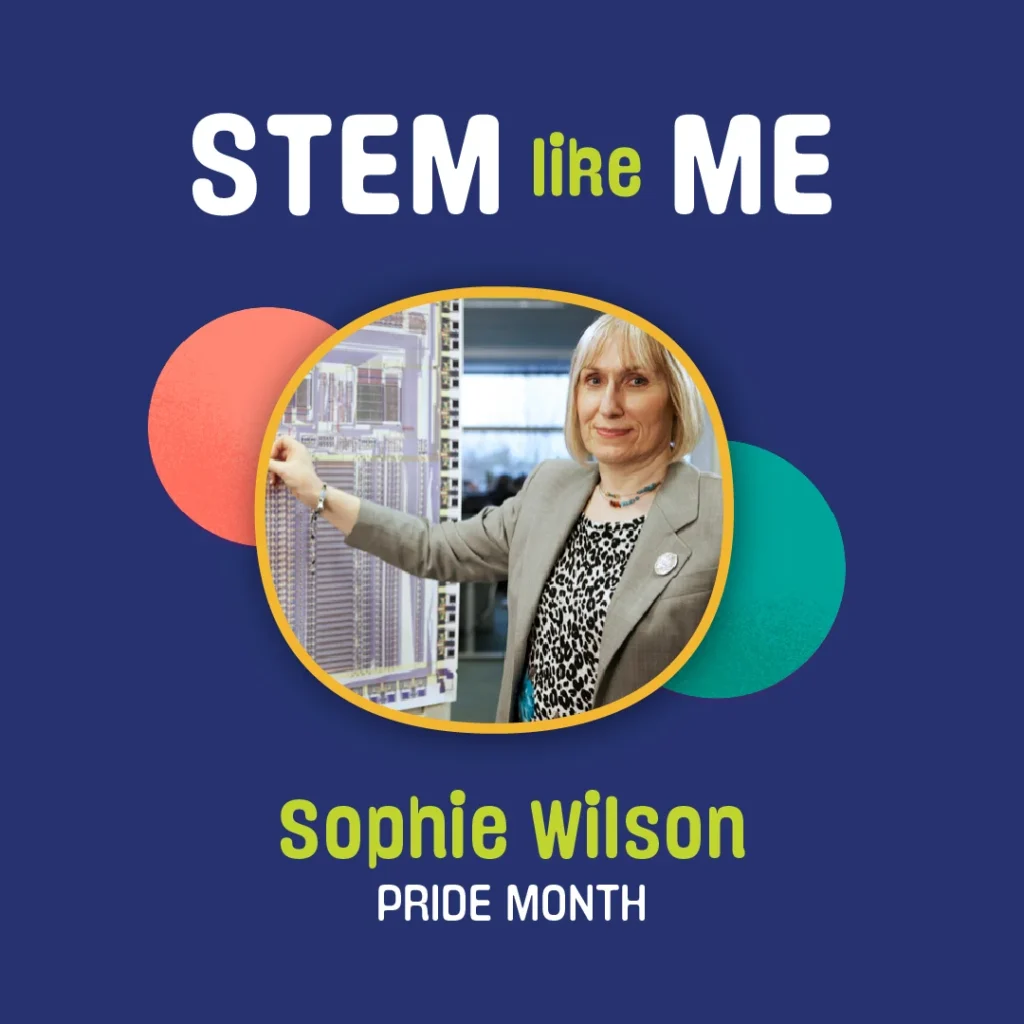
Until individuals like Sophie Wilson developed smaller and cheaper processing units, computers were massive devices that could only be owned and operated by a small few. Wilson’s team developed the Acorn RISC Machine (ARM) that improved computer processing speeds, making them faster, more efficient, and cheaper to produce and operate. Now, the ARM processor can be found in billions of smartphones, laptops, tablets and personal computers around the world.
Born Roger Wilson in Leeds, England, Wilson’s career has earned her a ranking among “The 15 Most Important Women in Tech History” by Maximum PC magazine in 2011 and the title of Commander of the Order of the British Empire (a step below knighthood) in 2019. Wilson earned a Bachelor of Arts degree in Computer Science and Mathematics from Selwyn College, a part of the University of Cambridge, and built a microprocessor-driven, electronically controlled cow feeder as a project during summer vacation after graduating. In 1979, a team led by Wilson introduced the Acorn Micro-Computer, the first of many computers sold by what would become a multi-billion-dollar company.
The ARM processor is highly successful in lower weight, portable, battery-powered devices that operate on lower power consumption and lower heat generation. Billions of ARM chips have been produced since the start of the 21st century, and these processors can be found in smartphones, smart watches, digital televisions and cameras, electric vehicles, mobile computers and more — it’s estimated that about 35 percent of the world’s electronic devices use ARM processor chips.
Wilson underwent medical transition in 1994 and continues to inspire LGBTQ+ individuals within STEM fields by celebrating the benefits of inclusion and diversity. She was given the Royal Society Mullard Award in 2016 for contributions to helping all Britains prosper and was elected a Fellow of the Computer History Museum.
For more information:
Dr. Alexander Bond – ornithologist studying health impacts of plastic pollution on seabirds and other marine life
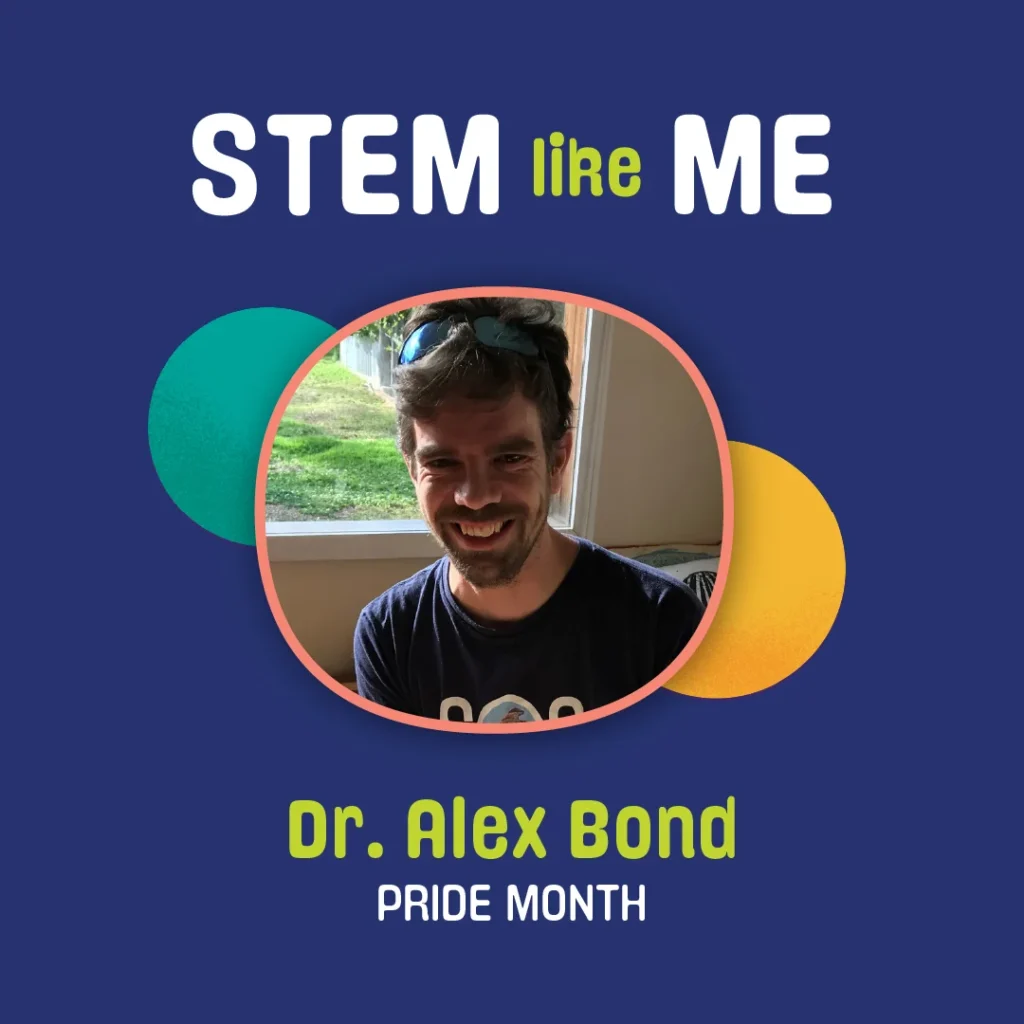
The Principal Curator in Charge of Birds at the Natural History Museum in the United Kingdom, Dr. Alexander Bond studies the effect of plastic pollution on seabirds and other marine life. His love for the outdoors drove his pursuit for studying the environment, but his interest in stopping the spread of marine debris and invasive species focused his specialty. His research identified a condition called plasticosis, the permanent scarring of the digestive tract in seabirds caused by the ingestion of plastic waste, the reduces stomach function, harms the kidneys and causes infections.
Born in Canada, Bond earned a Bachelor of Science in biology (With Honours) from Mount Allison University in New Brunswick, a Master of Science at the University of New Brunswick, and a Ph. D from Memorial University in Newfoundland. He completed a post-doctoral fellowship at the University of Saskatchewan, serving on the Natural Sciences and Engineering Research Council of Canada (NSERC). He later performed as a visiting fellow with Environment and Climate Change Canada as a part of the NSERC program. After completing the fellowships, he became the senior conservation scientist with the Centre for Conservation Science with the Royal Society for the Protection of Birds and was an adjunct professor at the University of Saskatchewan. In 2017, he joined the Natural History Museum.
In 2020, Dr. Bond was awarded the Royal Society Athena Prize for contributions to the diversity in STEM. In 2022, he was awarded the Marsh Award in Ornithology from the Marsh Charitable Trust for efforts to study, promote and preserve birds throughout the United Kingdom.
In addition to ornithology, Dr. Bond is a non-fiction author and presents workshops on the inclusion of LGBTQ+ individuals and principles in STEM.
For more information:
Subjects