
The Saint Louis Science Center envisions an equitable and inclusive society where people are passionate about science and use it to improve lives, transform communities and empower future generations. Through exposure to STEM concepts and recognition of contributions made by members of various communities, we aim to inspire and empower individuals from all backgrounds to pursue and thrive in STEM fields.
This month, as we celebrate Black History Month, we’re recognizing a few STEM-sational individuals who’ve inspired us all to make an impact.
Dr. Patricia Bath – Invented the Laserphaco Probe, used to eliminate cataracts (1942 – 2019)
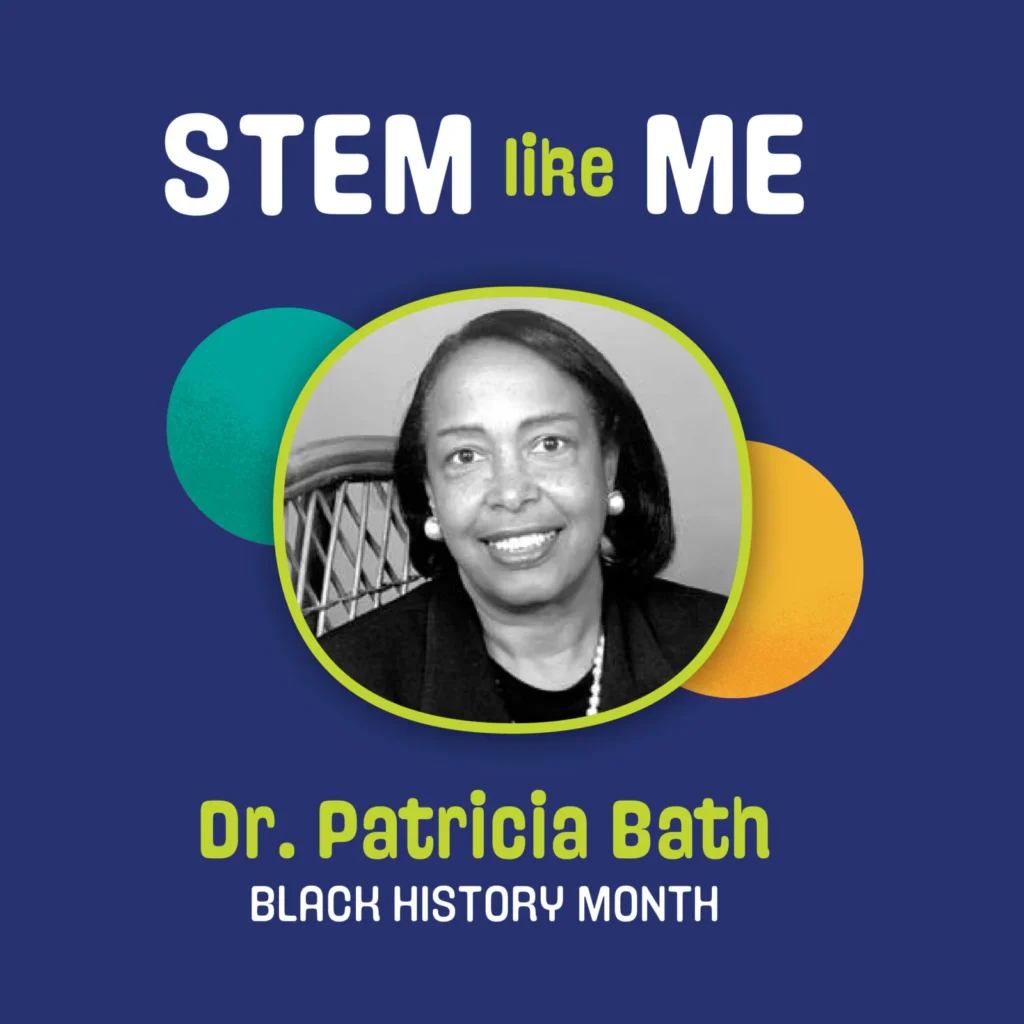
A pioneer in the world of ophthalmology, Dr. Patricia Bath invented the Laserphaco Probe (a combination of the words laser photoablative cataract surgery) to quickly and painlessly eliminate cataracts, a device recognized by the U.S. Patent and Trademark Office as “one of the most important developments in the field” that “helped restore or improve vision to millions of patients worldwide.” She’s also credited with developing the community ophthalmology concept, becoming the first woman to chair an ophthalmology residence program in the United States and founding the American Institute for the Prevention of Blindness.
Born in Harlem, New York, in 1942, Dr. Bath became engaged in science when her parents gifted her a chemistry set as child. She excelled in school and found interest in biology as a high school student, earning numerous science awards and a selection for the National Science Foundation’s summer program. She graduated high school in just 2.5 years and earned a bachelor’s degree in chemistry from Hunter College in New York City. Following that, she graduated from the Howard University School of Medicine (in Washington D.C.) and interned at Columbia University and Harlem Hospital in New York City.
During her internship, she discovered that black patients were two times as likely to suffer vision loss and have an eight-times higher prevalence for glaucoma than white patients in similar environments — publishing the first scientific research paper on the topic. Her research determined that the cause of this problem was a lack of quality care. She convinced her professors and colleagues to offer free services in black-populated communities, the onset to her foundation of community ophthalmology and the cofounding of the American Institute for the Prevention of Blindness. This effort led to the first eye surgeries ever performed at Harlem Hospital and Dr. Bath was a part of the surgery team for the initial procedure.
In 1975, she moved across the country to become a part of the University of California at Los Angeles faculty (becoming the first female at UCLA’s Jules Stein Eye Institute). In 1983, she was promoted to chair of the Ophthalmology Residence Training Program — the first woman ever to hold this title at a hospital in the United States. During this time, she also invented her method of breaking up cataracts using a laser probe instead of the traditional surgical removal of the clouded lens and its replacement with an artificial one. She introduced the Laserphaco Probe in 1986 and became the first African-American woman to hold a patent for a medical device. This device remains in use throughout the globe today.
Dr. Bath retired from practice in 1993 but continued advocacy efforts after retiring. She was named to the American Medical Women’s Association Hall of Fame in 2001, the National Inventors Hall of Fame in 2022 and the National Women’s Fall of Fame in 2024. She was a Fellow of the American College of Surgeons and held five U.S. patents during her career. Dr. Bath died from cancer complications in 2019.
For more information:
Dr. Charles Drew – A pioneer in blood transfusion techniques (1904-1950)
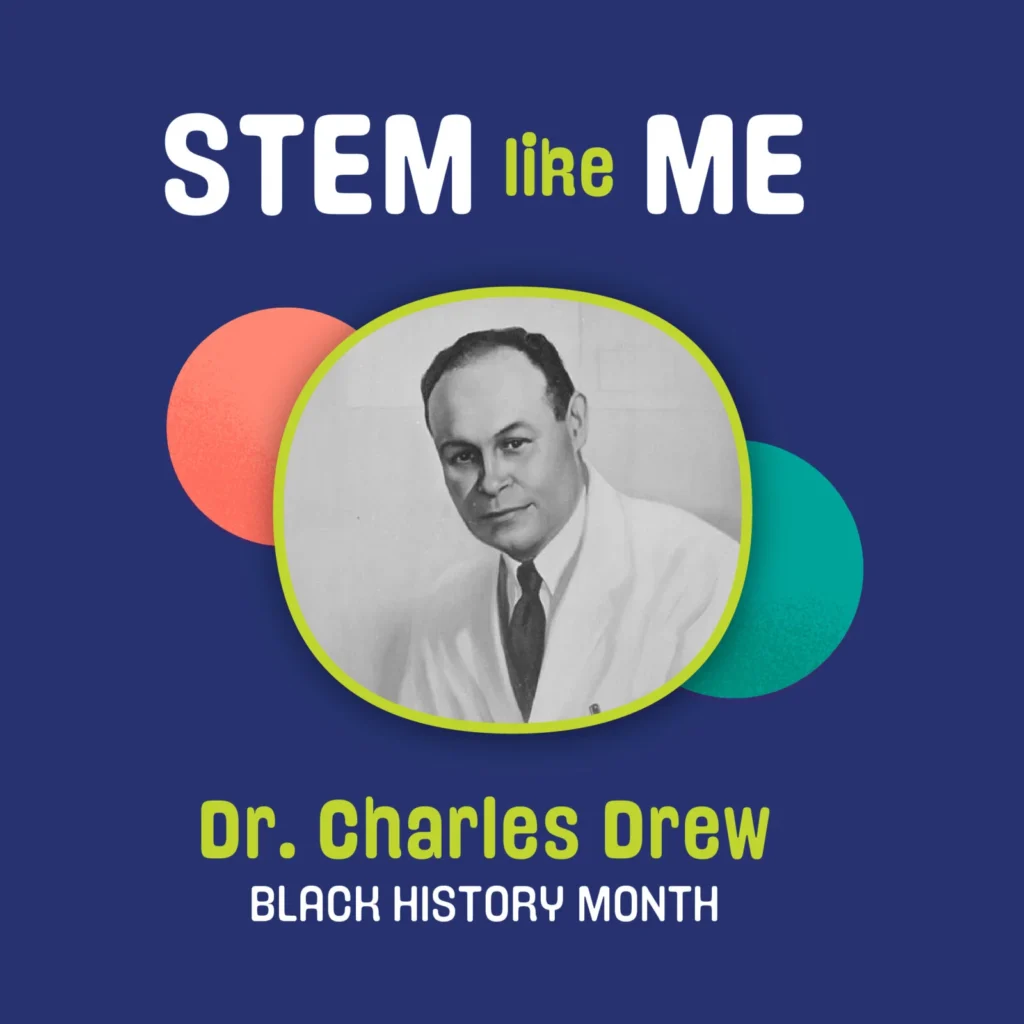
After discovering that plasma had a more stable and longer shelf life that blood itself, Dr. Charles Drew changed the procedure for transfusions and saved millions of lives as a result. He improved techniques for storing blood and developed large-scale blood banks early in World War II, creating the Blood for Britain project — a centralized location that collected and tested plasma in the United States and shipped more than 5,000 liters of it to soldiers in Europe. He’s also widely recognized for his legacy in teaching, training and advancing opportunities for Black medical students and surgeons.
Born in Washington D.C., in 1904, Dr. Drew excelled in athletics and academics. After graduating from D.C.’s Dunbar High School, he earned an athletic scholarship to Amherst College in Massachusetts, playing football and competing in track and field. He aspired to attend medical school after Amherst and served as a professor of chemistry and biology (and the athletic director and football coach) at Morgan College (now Morgan State University) to earn money. He then attended medical school at McGill University in Montreal, Quebec, studying blood transfusions while earning medical doctorate and master of surgery degrees. He moved back to the United States and worked on the faculty at Howard University’s Freedman Hospital in Washington D.C. and then Columbia University in New York City (from which he became the first African-American individual to earn a medical doctorate).
His doctoral thesis at Columbia was titled “Banked Blood: A Study on Blood Preservation.” During this research, he discovered that blood could be stored up to two months longer and without contamination when liquid was removed from cells and then reconstituted at a later time. Because of this expertise, he was recruited to run the Blood for Britain program and then the American Red Cross Blood Bank. With the Red Cross, he invented the concept of “bloodmobiles” that were mobile donation stations. However, he also learned of the policy to reject or segregate blood according to race and resigned from this position in protest. He returned to Freedman’s Hospital after that and continued his devotion toward training and providing opportunities to future Black medical students and medical professionals.
Dr. Drew suffered a severe car accident while traveling to a clinic in Tuskegee, Alabama. Due to the severity of the injuries from that accident, he died in 1950 at age 45. Despite his short, but profound career, Dr. Drew earned a great deal of recognition. He became the first African-American surgeon selected for the American Board of Surgery and was awarded the Spingarn Medal by the NAACP for his work. In addition, his birthplace has been designated as a National Historic Landmark and numerous schools, health facilities and landmarks have been named in his honor.
For more information:
Raye Montague – First person to design a ship using computer software (1935 – 2018)
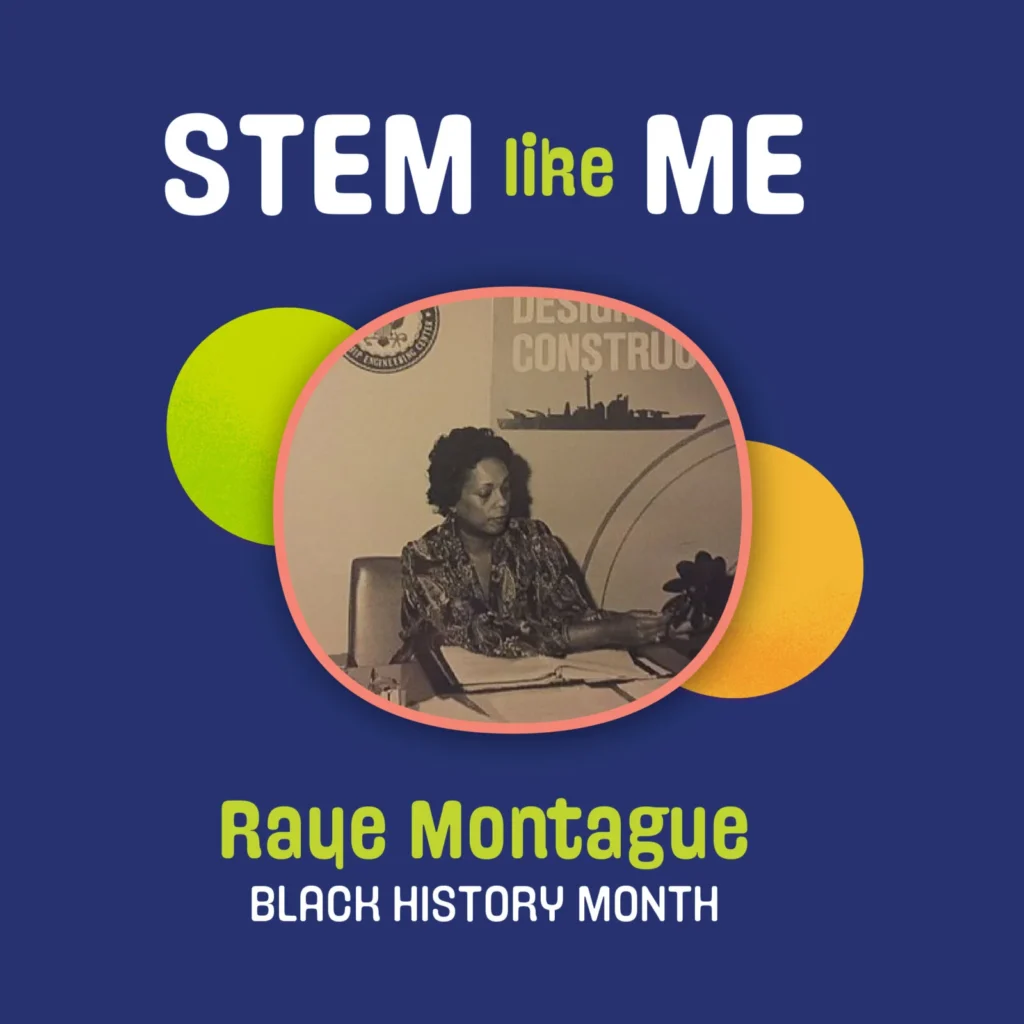
An American naval engineer, Raye Montague was the first person to design a U.S. Navy ship using a computer – completing the initial design for the Oliver Hazard Perry-class frigate. She was also the Navy’s first female program manager of ships and later worked to design vessels like the Seawolf-class submarine and the U.S.S. Dwight Eisenhower aircraft carrier.
Inspired by her family to become anything she wanted and born with a gift in understanding mathematics, Montague was driven toward naval engineering by a visit with her grandfather at age 7 to view a German submarine that had been captured off the South Carolina coast during World War II. She used that drive to earn a business degree from Arkansas Agricultural, Mechanical and Normal College (now the University of Arkansas – Pine Bluff) because the University of Arkansas did not admit Black students to its engineering program that was her first choice.
After college, she joined the Navy and worked alongside the UNIVAC I computer team. She took computer programming classes during night school and continued to learn on the job before being named as a computer systems analyst at the Naval Ship Engineering Center and the program director for the Naval Sea Systems Command.
In 1971, her department was challenged to create a ship design within 30 days using the new Computer-Aided Design and Computer-Aided Manufacturing (CAD/CAM) system (a task that others had failed to complete over the previous several years). After making modifications to the computer’s hardware and software, Montague developed a program that created the frigate design in less than 24 hours – becoming the first person to ever use a computer to design a ship. She continued with the Navy for 33 years before retiring in 1990. Prior to her death in 2018, she was given the Meritorious Civilian Service Award by the Navy, the National Computer Graphics Association Award for the Advancement of Computer Graphics and the Award of Achievement from the Society of Manufacturing Engineers and was elected to the Arkansas Women’s Hall of Fame in 2018.
For more information:
Subjects