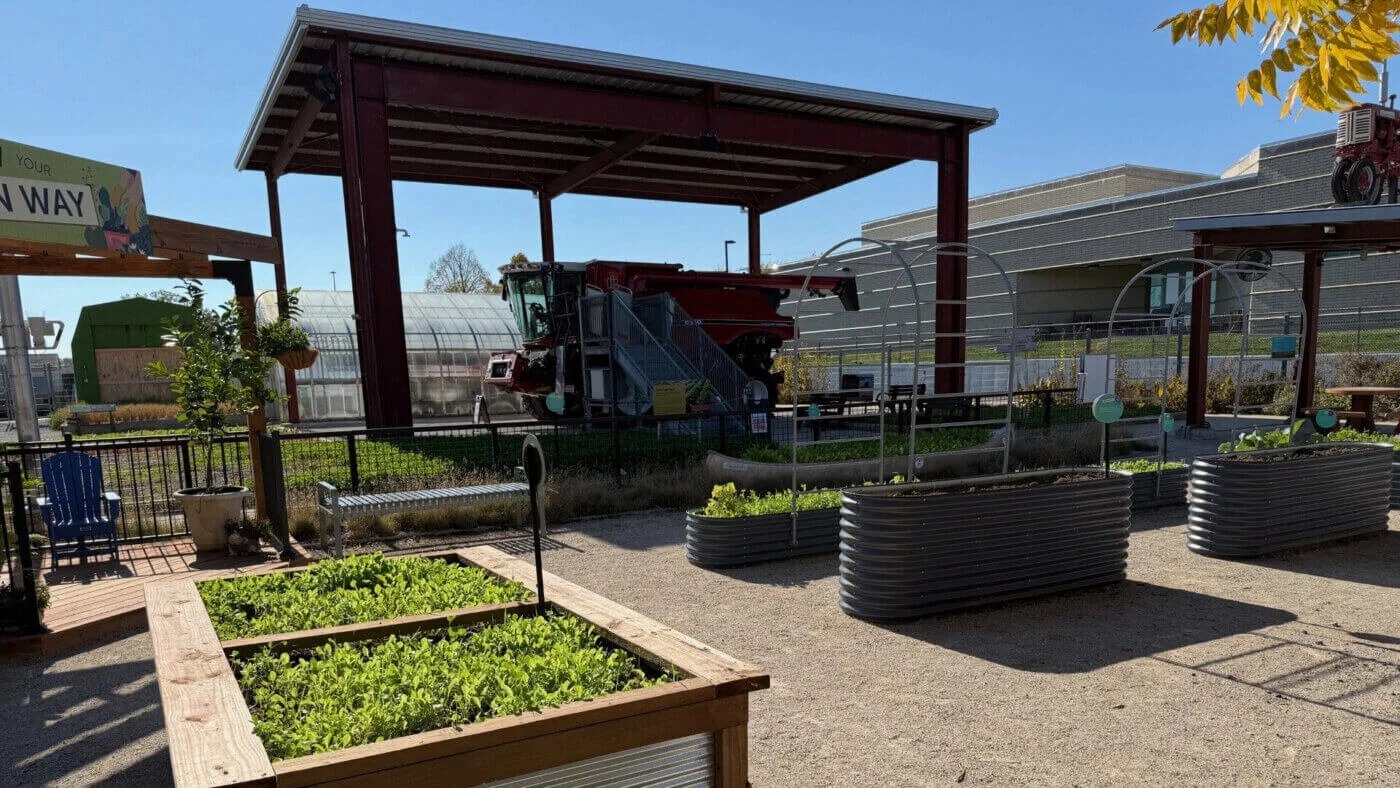
In anticipation of the GROW Gallery and Pavilion’s 10th anniversary in 2026, the Science Center’s Science and Education and Exhibits teams have made some exciting updates. The “GROW Your Own Way” exhibit, which opened in Fall 2025, allows guests to explore how plants and food can be grown in whatever space is available.
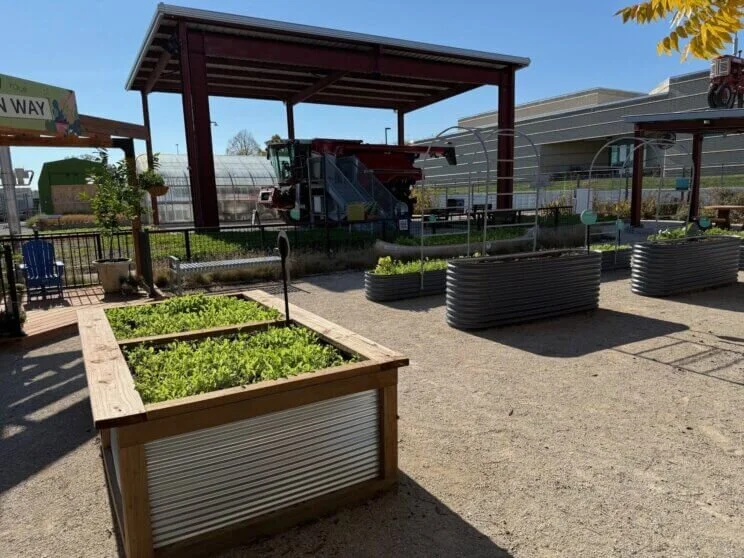
Located in the former “Tractor Run” area, the revamped space shows guests how to grow plants in various Do-It-Yourself ways, whether in a large backyard, on a small deck or patio, or even in just a windowsill. Raised gardening beds, various sized container gardens, and multiple hanging pots illustrate how food can be grown in almost any sort of container
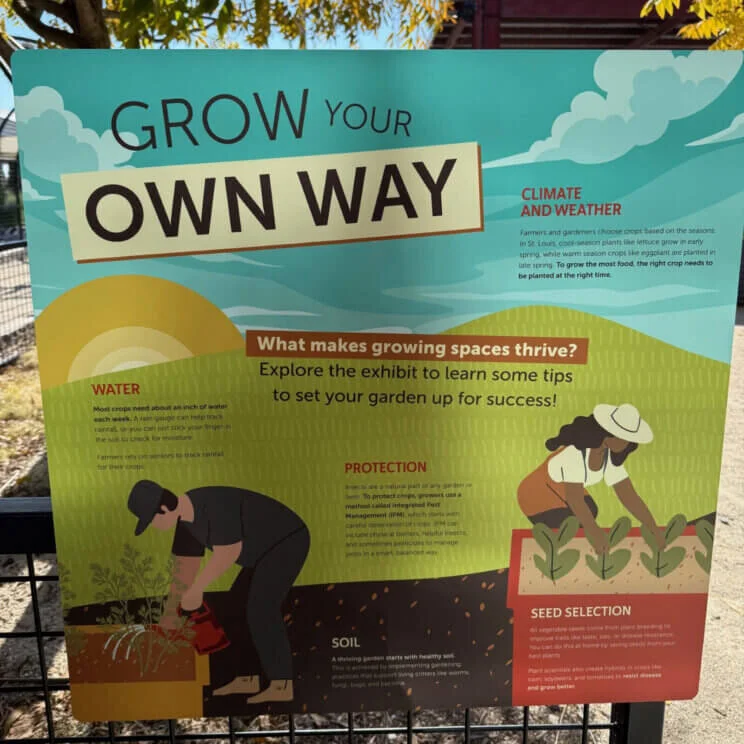
Collaborations with local companies and individual contributors help to answer questions like “How do you pick the right seeds to plant?”, “What does healthy soil look like?”, and “Where and when should certain crops be planted?”. Collaborators include Seed St. Louis, a local nonprofit supporting community gardens in the area; Agrela, an agriculture startup that developed a precision technology tool to collect data points like soil moisture in fields; and the Jackie Joyner-Kersee Foundation for their advances in collard research.
Grow Your Own Way features two hands-on, interactive displays built by the Science Center’s Science and Education and Exhibits teams.
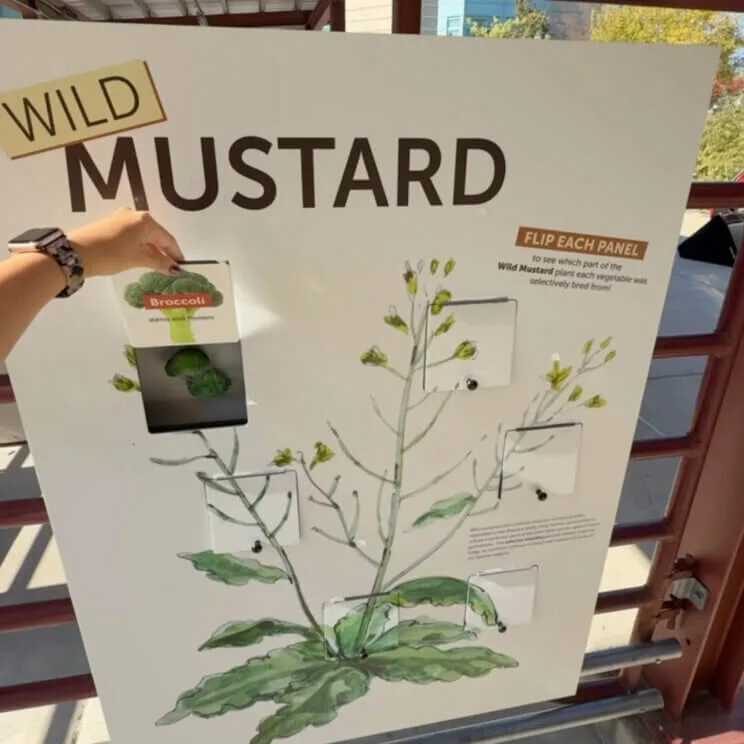
The first, “Wild Mustard,” is a deep dive into selective breeding—the scientific process of changing plant characteristics to produce desired traits. Over thousands of years, the selecting breeding of wild mustard (Brassica oleracea) resulted in many of the vegetables that people know and enjoy today, such as kale, broccoli, and cauliflower. In one activity, guests can view a representation of a wild mustard plant, flipping open panels to discover which parts of wild mustard were used to create these new plants.
The second interactive display, “Catch the Rain,” focuses on soil health and management. Learning about how water interacts with soil and affects which crops grow in a given area, guests explore different soil management practices (such as adding compost and cover cropping) that can be put into place. And they can even test three soil samples to see which absorbs the most water.
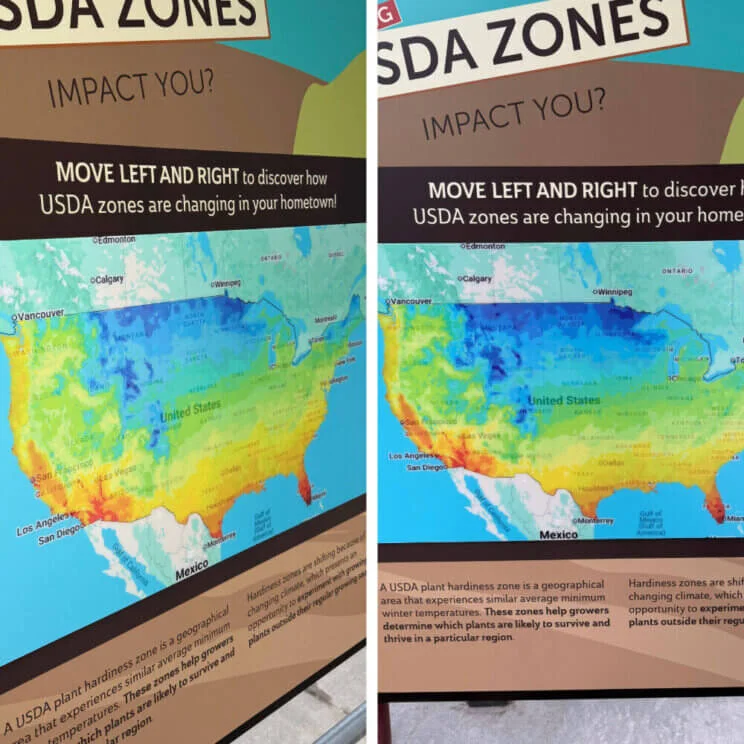
Another activity invites guests to learn about USDA “plant hardiness zones.” These geographical areas experience similar average winter temperatures and help growers determine which plants are likely to survive in a particular region.
Using a special graphic courtesy of Parallax Lenticular Printing, guests can explore these USDA zones and move side-to-side to witness how changes in climate are impacting these zones across the United States.
Learn more about the GROW Gallery and stop by on your next Science Center visit to check out GROW Your Own Way and learn more about the science of food and agriculture.