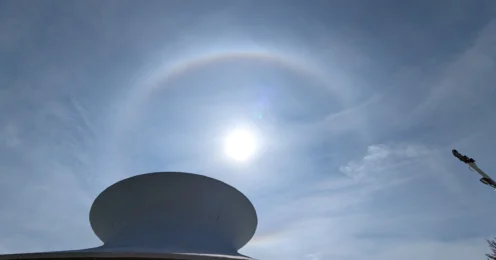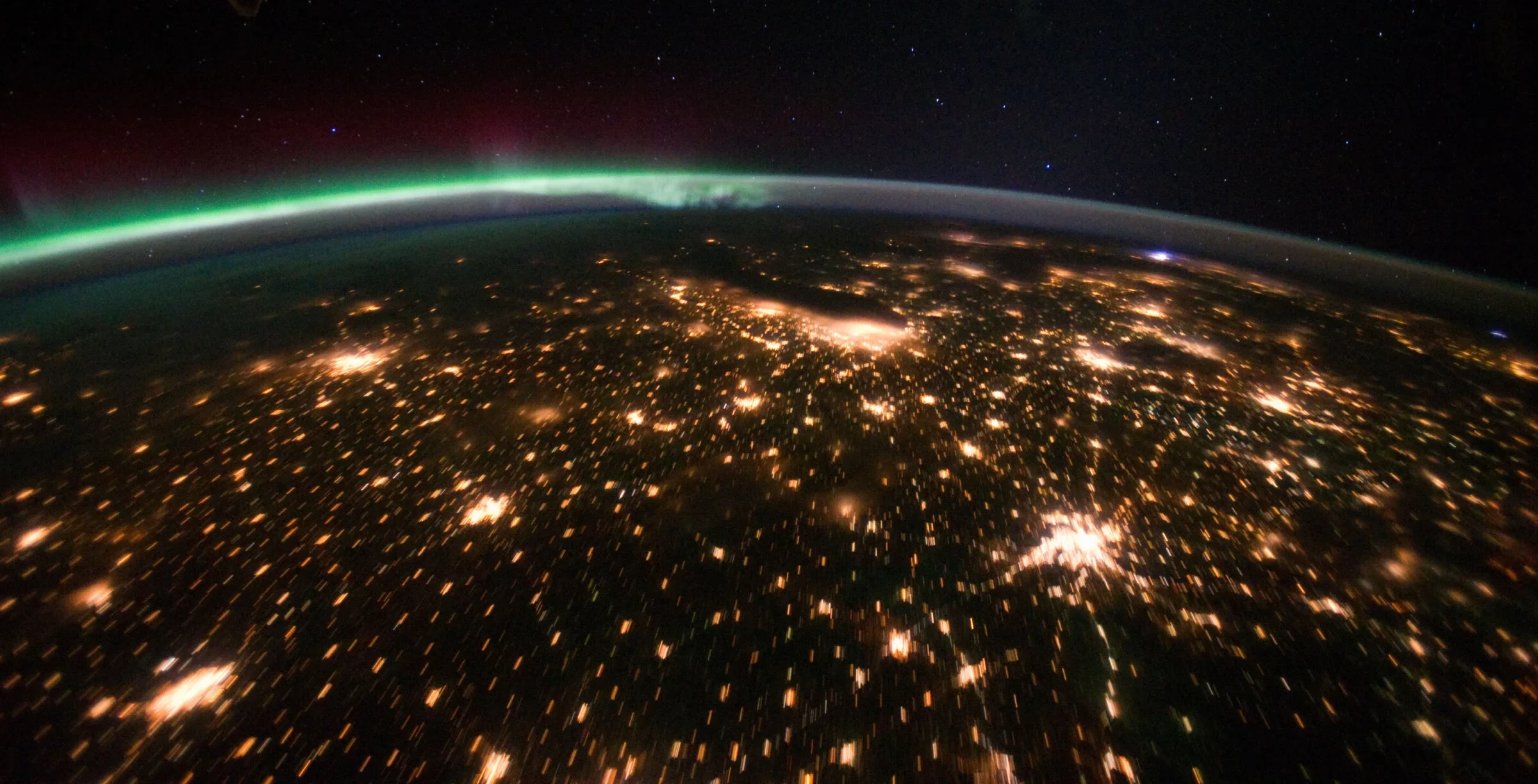
This is the Saint Louis Science Center’s NIGHT SKY UPDATE for the week of Tuesday, August 18, 2026
Information updated weekly or as needed.
Times given as local St. Louis time this week will be in Central Daylight Time (CDT). For definitions of terminology used in the night sky update, click the highlighted text. If relying on times posted in Universal Time (UT), St. Louis is -5 hours when CDT. Times posted in the Night Sky Update are in the 24-hour format.
Join us for our next star party, Friday, September 4, 2026, held in association with the St. Louis Astronomical Society. For details, see the information at the bottom of this page or visit https://www.slsc.org/explore/mcdonnell-planetarium/public-telescope-viewings/
Observing Highlight
On August 27/28, 2026, a partial lunar eclipse will be visible from Greenland down through the Americas and from Africa up through Europe. This will be a deep partial eclipse which starts at 20:38 CDT and ends at 02:01 CDT. The entirety of the eclipse is visible for the eastern half of North America and those in the west will see the partial eclipse underway when the Moon rises. No equipment is necessary to observe the eclipse however binoculars and telescopes can enhance the experience.
An eclipse is a type of syzygy involving the Sun, Earth and Moon. While the Sun, Earth and Moon reach syzygy twice every month at new and full moon, the alignment is not always precise enough to produce an eclipse. Solar and lunar eclipses occur when the Moon is seen at a crossing node which is when it appears to cross Earth’s ecliptic. The Moon goes through its two crossing nodes every 27.2 days in what is called a draconic month. Due to this being shorter than the moon phase cycle (synodic), the crossing nodes usually do not line up with new and full moons.
When conditions are right for new and full moon to line up with the draconic month, typically two eclipses will occur; a solar and a lunar. Eclipses occur in pairs forming an eclipse season. On some occasions, a third eclipse will occur in a season allowing for a maximum of seven eclipses in a year depending on when the eclipse seasons occur. While this is possible, most years only see four to five eclipses.
On August 12, 2026, the first eclipse of this season occurred. It was a total solar eclipse which was best seen from Europe. Portions of North America saw partial phases of the eclipse while totality was visible from parts of Spain, Portugal, Iceland and Greenland.
The lunar eclipse occurring on August 27/28, 2026, is a partial eclipse that will see 96% of the Moon in Earth’s umbral shadow. This is a deep enough partial eclipse that it might be possible to see portions of the Moon exhibit a reddening similar to a total lunar eclipse. If viewing the eclipse from the St. Louis area, the timings are as follows.
- Penumbral Eclipse begins: August 27, 2026, at 20:23
- Partial Eclipse begins: August 27, 2026, at 21:33
- Maximum Eclipse: August 27, 2026, at 23:12
- Partial Eclipse ends: August 28, 2026, at 00:51
- Penumbral Eclipse ends: August 28, 2026, 02:01
While no equipment is necessary to view a lunar eclipse, there are some items I would recommend. First and foremost is a reclining chair. These are long events, a reclining chair if you have one will ease some of the stress of looking up for long periods. Binoculars and telescopes allow you to see Earth’s shadow passing over surface features. While they are not necessary, they will provide you more to look at. Lastly, being that it is August, you might need some bug spray to stay sane as the mosquitoes could be a nuisance.
The long range weather forecast looks promising as of this writing, but the forecast is apt to change as we get closer to the eclipse. Smoke from wildfires may also impact how the Moon appears during the eclipse. Total lunar eclipses vary in color depending on the state of the atmosphere. If wildfire smoke is prominent where you are viewing, it will likely impact the Moon’s appearance. You can find an updated smoke forecast at https://firesmoke.ca/
The James S. McDonnell Planetarium is hosting a viewing event for the partial eclipse on August 27/28, 2026. If you would like information on this event you can find that at the link below.
McDonnell Planetarium Lunar Eclipse Event
If you miss this eclipse, the next decent lunar eclipse visible from St. Louis will not be until June 26, 2029. There are a few penumbral eclipses along with a partial eclipse with less than 1% of the Moon in Earth’s umbral shadow, but these eclipses will not show much change in the Moon’s appearance. If you would like to see upcoming solar and lunar eclipses go here.
T CrB Nova Update 8/18/2026
If you are still interested in seeing the recurrent nova T Coronae Borealis, there is still hope. The nova has not yet occurred meaning we are in a waiting game. If you are still interested, the part of the sky the nova will appear in is found high in the west by the time it is dark. The star system T Coronae Borealis is found in the constellation Corona Borealis which looks like a small U-shape of stars next to the constellation Boötes. By 10 pm the location of T CrB will be overhead. If you cannot observe the sky directly, you can track the behavior of T CrB by checking current magnitude estimates posted at AAVSO here or by visiting spaceweather.com. Current magnitude estimates of the system show it at 10th magnitude.
The Sun and Moon
Sun
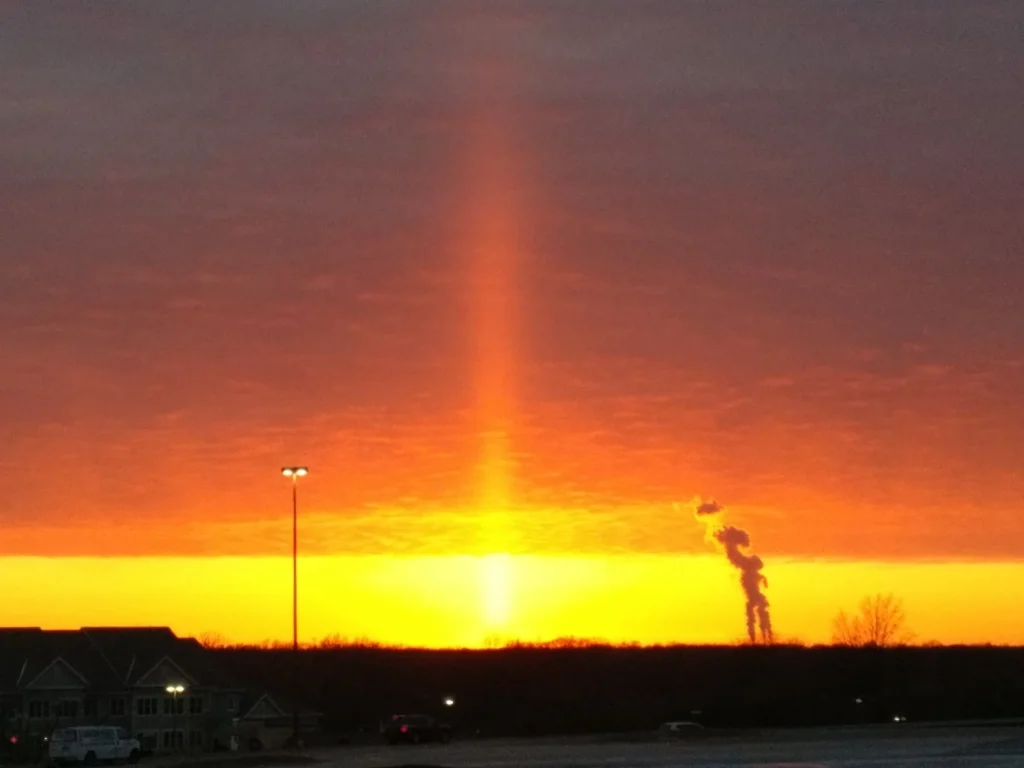
Sunrise on Tuesday, August 18 is at 6:18 and sunset is at 19:51 providing around 13.5 hours of daylight. Even after sunset, light from the Sun will dimly illuminate our sky for about 1 hour and 40 minutes. This period is called twilight, which ends around 21:29 this week. For those with a sundial, local noon occurs around 13:04 on Aug 18, 2026.
| Day | Sunrise (CDT) | Sunset (CDT) |
| 18-Aug | 6:18 | 19:51 |
| 19-Aug | 6:18 | 19:49 |
| 20-Aug | 6:19 | 19:48 |
| 21-Aug | 6:20 | 19:47 |
| 22-Aug | 6:21 | 19:45 |
| 23-Aug | 6:22 | 19:44 |
| 24-Aug | 6:23 | 19:42 |
| 25-Aug | 6:24 | 19:41 |
| 26-Aug | 6:25 | 19:40 |
| 27-Aug | 6:26 | 19:38 |
| 28-Aug | 6:26 | 19:37 |
Moon
Moonrise for Tuesday, August 18, was at 12:44 and moonset occurs at 22:43. On August 18, 2026, the Moon will exhibit a waxing crescent phase with 38% disk illumination. By August 28, 2026, the Moon will exhibit a waning gibbous phase with 99% disk illumination. First quarter moon occurs on August 19, 2026, at 21:46. Full moon occurs on August 27, 2026, at 23:19.
International Space Station (ISS) Observing
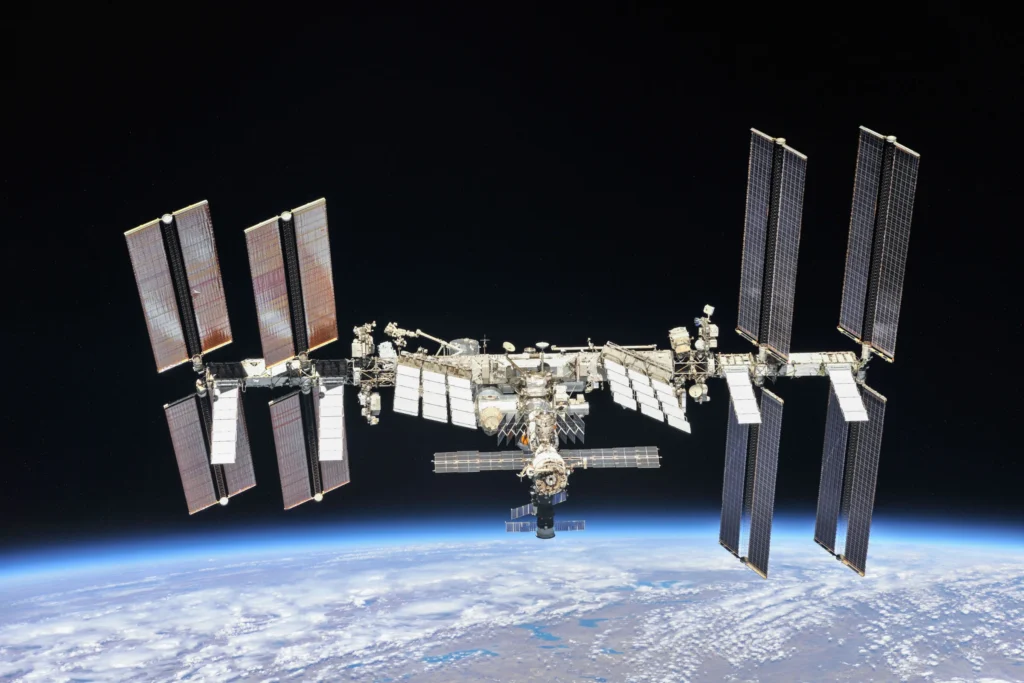
Visible passes of ISS from St. Louis for the week of August 18 occur during morning hours. The best of these occur on August 19 and 22. You can find information about these and other satellite passes at https://heavens-above.com. If you are not viewing from the St. Louis area, make sure to change your viewing location for your local times.
Visible Planets
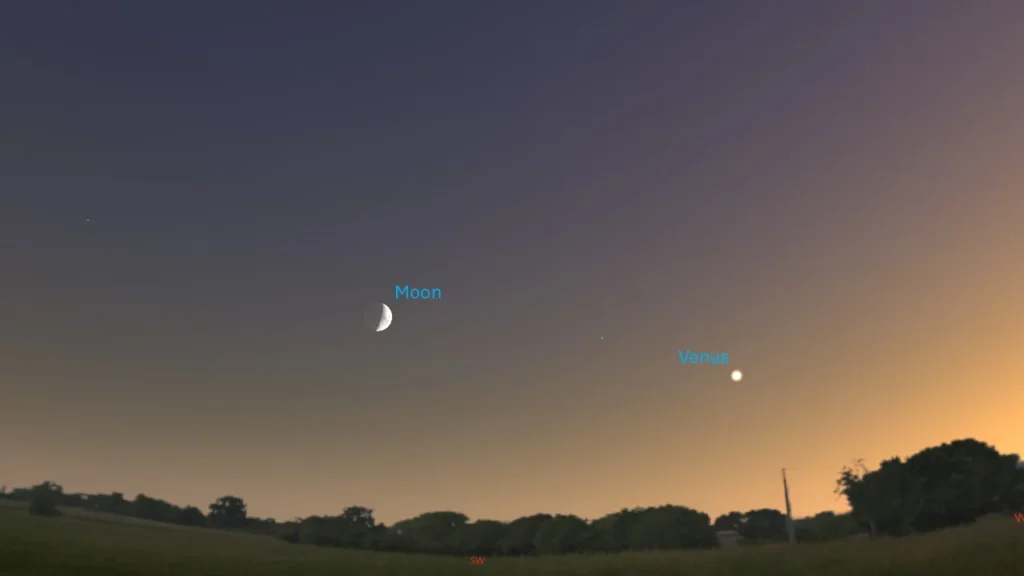
View looking southwest on August 18, 2026, at 20:10. Image created using Stellarium
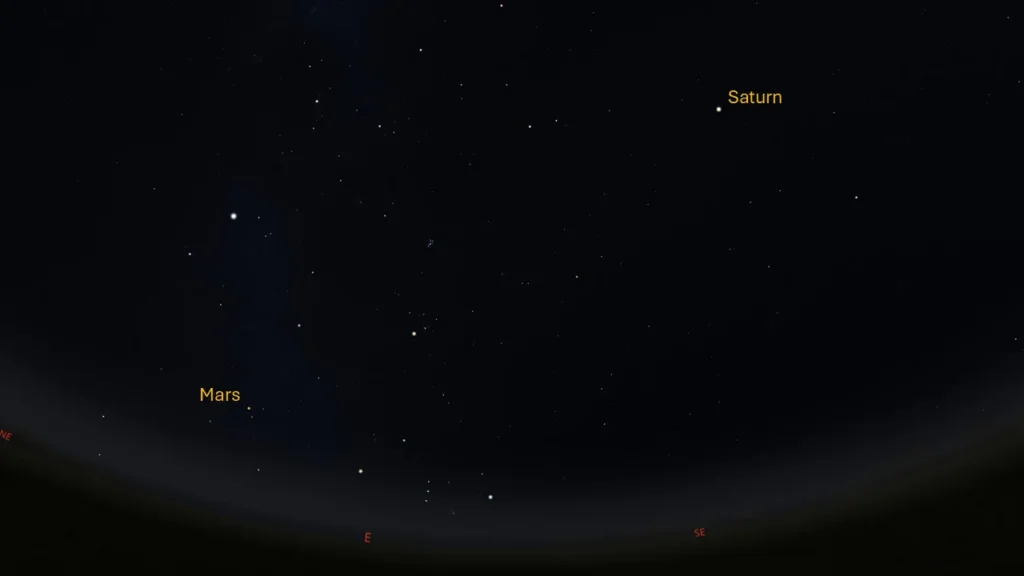
View looking east on August 19, 2026, at 03:30. Image created using Stellarium
Three naked eye planets will be visible this week. Venus is found in the west after sunset. Saturn and Mars are visible in the south and east before sunrise.
Venus
Venus is visible in the west after sunset setting by 21:31. View of Venus will become challenging by mid-September as trees may interfere. Venus reaches inferior conjunction on October 23, 2026.
Mars
Mars rises around 02:11 this week clearing the 15° mark by 03:30. This apparition of Mars is not the best as it is an aphelic apparition. ALPO’s guide for the Mars 2026-2027 aphelic apparition shows October 14, 2026, as the beginning of the apparition for those using telescopes between 4 and 8 inches. This is the time frame in which most observers can start seeing the surface of Mars through their telescope. Mars reaches opposition on February 19, 2027.
Saturn
Saturn can be found rising in the east around 22:18 clearing the 10° mark by 22:50. Saturn will continue to rise earlier each week until it reaches opposition on October 4, 2026.
Our next Star Party will be held on Friday, September 4, 2026 from 6:30 pm to 9:30 pm.
On the first Friday of each month, the St. Louis Astronomical Society and the Saint Louis Science Center will set up a number of telescopes outdoors and be on hand to answer your questions. Telescope viewing begins once it is dark.
The St. Louis Astronomical Society helps host the monthly Star Parties at the Saint Louis Science Center. In addition to our nighttime viewings, they also help facilitate our daytime event called Solar Sundays. These daytime viewing sessions occur every Sunday through Labor Day. After Labor Day they occur on the 3rd Sunday each month. Visit SLAS’s website linked above to learn about other telescope events SLAS hosts around the St. Louis area.
James S. McDonnell Planetarium
Night Sky Update for August 18, 2026
Subjects