This is the Saint Louis Science Center’s NIGHT SKY UPDATE for the week of Saturday, May 4, 2025.
Information updated weekly or as needed.
Times given as local St. Louis time this week will be in Daylight Saving Time. For definitions of terminology used in the night sky update, click the highlighted text. If relying on times posted in Universal Time (UT), St. Louis is -5 hours when CDT. Times posted in the Night Sky Update are in the 24-hour format.
Join us for our next star party, Friday, June 6, 2025, held in association with the St. Louis Astronomical Society.
Observing Highlight of the Week
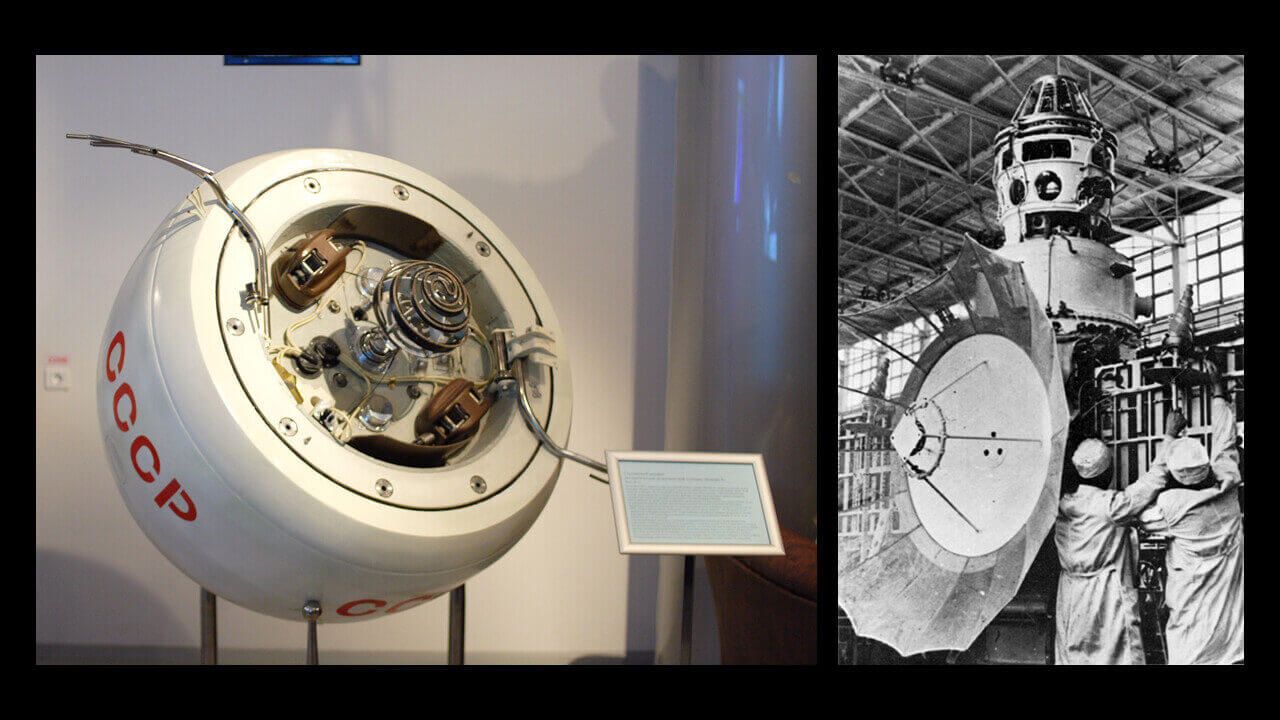
The image on the left is a model of the Venera 4 landing probe. This was similar to the probe that was part of the Venera 8 mission. Image credit: Rave; Memorial Museum of Astronautics.
The image on the right shows Soviet engineers assembling the Venera 8 spacecraft. Image credit: Lavochkin / Roscosmos.
This week’s observing highlight is a satellite called Kosmos 482. This satellite is the lander module from a failed Soviet Venera mission launched in 1972 called Venera 8. Since the mission failure, Kosmos 482 has been orbiting Earth in a slowly decaying orbit for 53 years.
Recent observations from the satellite tracking station, SatTrackCam Leiden, indicate that Kosmos 482 will reenter Earth’s atmosphere somewhere near May 10, 2025. Scientists Dr. Marco Langbroek and Dominic Dirkx of Delft Technical University have developed a reentry model for Kosmos 482 using the TU Delft Astrodynamics Toolbox (TUDAT). As we approach the window of reentry, the forecast should improve. As of May 4, 2025, the model shows reentry occurring on May 10, 2025, at 23:06 UTC +/-1.8 days.
Because the orbit of Kosmos 482 is continually changing, the forecasted date and time of reentry will continue to change. You can track the changing reentry forecast for Kosmos 482 at the SatTrackCam blog posted by Dr. Marco Langbroek here. One of the factors that will make forecasting the time of reentry difficult is solar activity. If solar activity increases before Kosmos 482 reenters, the increased flux of energy dumping into our atmosphere will cause it to swell increasing the amount of drag on the spacecraft.
Currently, it is still unknown where the probe will reenter. Dr. Langbroek states that the 51.95° orbital inclination of Kosmos 482’s orbit makes it possible for reentry to occur any where between 52° north and 52° south latitude. With most of the planet covered with water, chances are it will occur somewhere over the ocean.
When the spacecraft reenters, it is possible some components could survive reentry. Most objects reentering Earth’s atmosphere burn up upon reentry. The Venera 8 probe now known as Kosmos 482 was designed to survive entering Venus’s atmosphere which is about 90 times denser than Earth’s. After 53 years in space, it is hard to predict the condition of the spacecraft. If components of the probe survive reentry Dr. Langbroek estimates they will be traveling about 150 mph after atmospheric breaking.
While we wait for reentry, there are a few dates we can see the satellite passing over St. Louis. Visible passes of Kosmos 482 over St. Louis are currently occurring in morning hours. The table below lists the dates and times of these visible passes. Keep in mind that times posted for these passes will continue to change as Kosmos 482 approaches reentry. For updated times, visit https://heavens-above.com. If you do not live in St. Louis, Missouri, make sure to change your viewing location on the website.
T CrB Nova Update 5/4/2025
If you are still interested in seeing the recurrent nova T Coronae Borealis, there is still hope. The nova has not yet occurred meaning we are in a waiting game. It could happen this year or it could happen next year. We will have to wait and see. If you are still interested in this event, the part of the sky the nova will appear in is rising earlier each night. By midnight, the constellation Corona Borealis will be found high in the eastern sky. Spaceweather.com is still posting magnitude estimates from the AAVSO. This is the resource I recommend following to keep up with any changes in the star’s brightness. Current magnitude of the system is 10.2.
The Sun and Moon
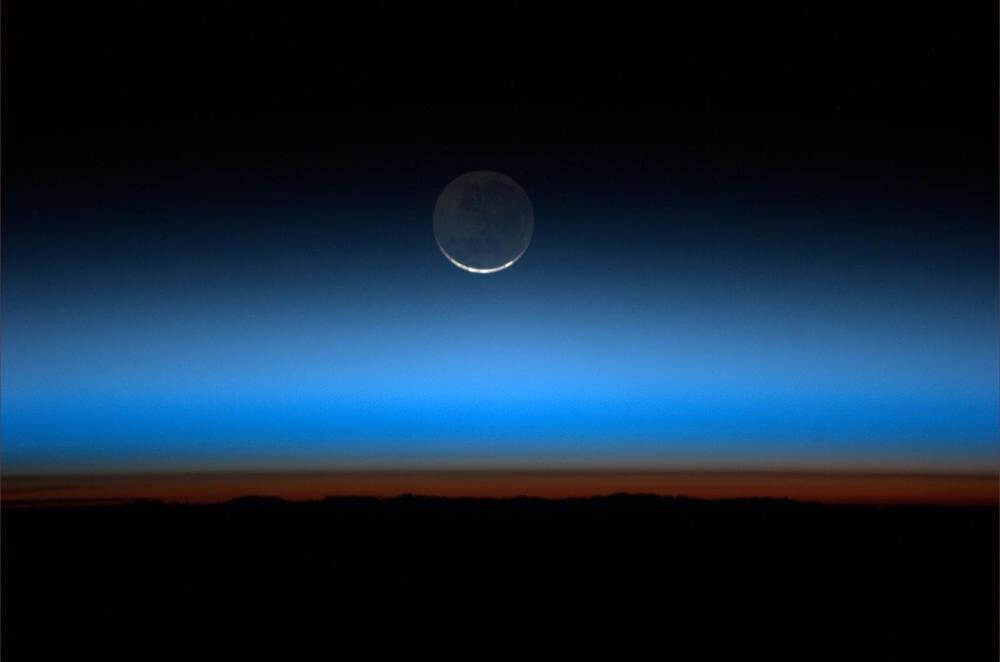
The Moon as seen from the International Space Station, on July 31, 2011.
Credit: NASA
Sun
Sunrise is at 06:00 on Sunday, May 4 and sunset is at 19:56 providing about 14 hours of daylight. Even after sunset, light from the Sun will dimly illuminate our sky for about 1 hour and 40 minutes. This period is called twilight, which ends around 21:39 this week. For those with a sundial, local noon occurs around 12:58 on May 4, 2025.
Moon
Moonrise for Sunday, May 4, was at 12:25 and moonset occurs at 02:49 the following morning. On May 4, 2025, the Moon will exhibit a waxing gibbous phase after it reaches first quarter around 08:52. After the Sun sets, the lunar disk will be roughly 53% illuminated. By the end of the week the Moon will reach its full moon phase. Full moon occurs on May 12, 2025, at 11:56 CDT.
International Space Station (ISS) Observing
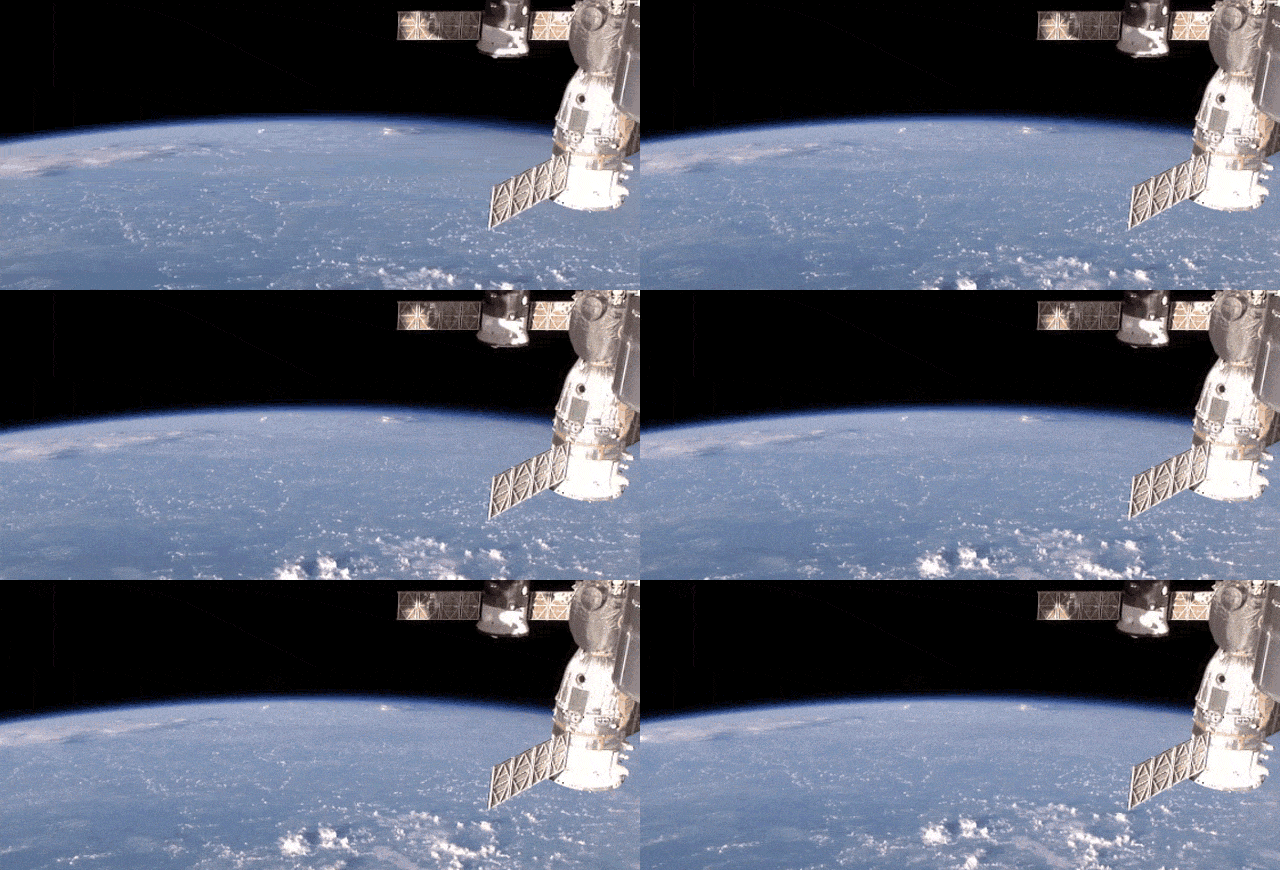
Visible passes of ISS from St. Louis for the week of May 4 occur during morning and evening hours. The table below lists the best of these passes. If you do not live in the area, you can use https://heavens-above.com/ to set your viewing location and get times for where you are.
Magnitude (Mag): The Measure of brightness for a celestial object. The lower the value is, the brighter the object will be.
Altitude (Alt): The angle of a celestial object measured upwards from the observer’s horizon.
Azimuth (Az): The direction of a celestial object, measured clockwise from an observer’s location with north being 0°, east being 90°, south being 180° and west being 270°.
Detailed information regarding all unmanned exploration of our universe, missions past, present, and planned, can be found at Jet Propulsion Laboratories
The Visible Planets
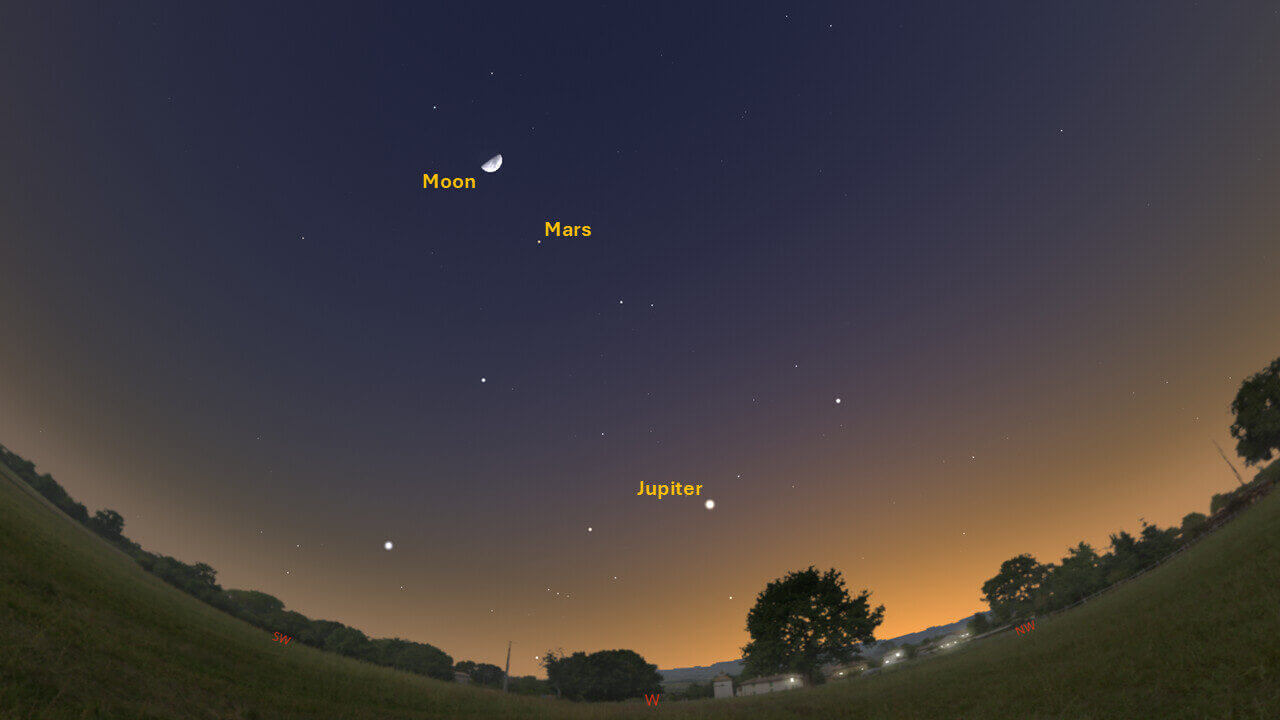
Looking west at 20:30 on May 4, 2025. Credit: Stellarium, EG
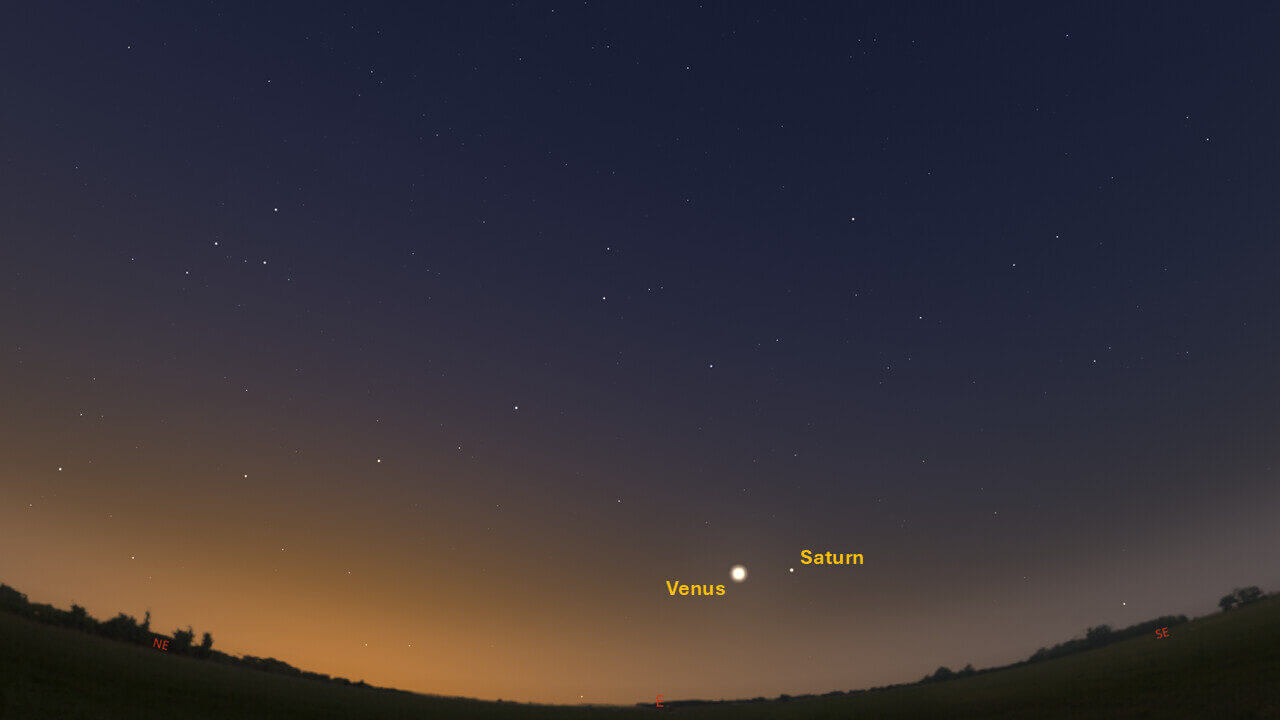
Looking east at 05:15 on May 5, 2025. Credit: Stellarium, EG
Four naked eye planets will be visible this week. Mars and Jupiter are still visible after sunset once it is dark. Venus and Saturn have returned to morning views becoming visible just before sunrise in the east.
Venus
Venus has begun a morning apparition. Venus will be visible in the east before sunrise for the rest of the year. Look for Venus about 45 minutes before sunrise in the east.
Mars
Look for Mars overhead high in the western sky after sunset. Mars has shifted into the constellation Cancer. The current apparition of Mars will continue throughout the rest of 2025. Watch for the Red Planet as it shifts westward through the year. Mars sets a little before 02:00 this week.
Jupiter
Jupiter will be visible in the west not long after sunset. Jupiter sets by 22:52, remaining visible up to 22:00. Jupiter reaches superior conjunction on June 24, 2025.
Saturn
Saturn has returned to morning visibility rising just before the Sun. Look for the planet in the east about 45 minutes before sunrise. Saturn now appears about 4.5° south of Venus
Our next Star Party will be held on Friday, June 6, 2025, from 6:30 pm until 9:30 pm
On the first Friday of each month, the St. Louis Astronomical Society and the Saint Louis Science Center will set up a number of telescopes outdoors and be on-hand to answer your questions. Telescope viewing begins once it is dark. Regardless of the weather on June 6, join us indoors in our planetarium theater for a monthly lecture.
The St. Louis Astronomical Society helps host the monthly Star Parties at the Saint Louis Science Center. In addition to our nighttime viewings, they also help facilitate our daytime event called Solar Sundays. These daytime viewing sessions occur on the 3rd Sunday of each month. Visit SLAS’s website linked above to learn about other telescope events SLAS hosts around the St. Louis area.
James S. McDonnell Planetarium
Night Sky Update: May 4-12, 2025
Subjects