This is the Saint Louis Science Center’s NIGHT SKY UPDATE for the week of Monday, November 10, 2025.
Information updated weekly or as needed.
Times given as local St. Louis time this week will be in Central Standard Time (CST). For definitions of terminology used in the night sky update, click the highlighted text. If relying on times posted in Universal Time (UT), St. Louis is -6 hours when CST. Times posted in the Night Sky Update are in the 24-hour format.
Join us for our next star party, Friday, December 5, 2025, held in association with the St. Louis Astronomical Society.
For details, see the information at the bottom of this page or visit: https://www.slsc.org/explore/mcdonnell-planetarium/public-telescope-viewings
Observing Highlight
Last week many observers in the St. Louis area were treated to an optical phenomenon in the atmosphere called a lunar halo. Because of this, this week is a good time to revisit the topic of atmospheric optics. There are a variety of atmospheric optical phenomena that result from the interaction of light with water drops, dust or ice crystals in our atmosphere. Ice halos, coronae and rainbows are examples of what can happen as light interacts with components of our atmosphere.
Now that we are in the later half of fall with winter just around the corner, the type of atmospheric optics we are likely to see are ice halos. These optical displays occur due to light reflecting and refracting through ice crystals. The shape and orientation of the crystals lead to a variety of displays. The most common type of ice halo is a 22° halo. This is what people in St. Louis saw last week around the Moon. Other common displays are sundogs, pillars, tangent arcs, circumscribed halos, perihelic circle and others. The variety of displays depends on what type of ice crystals are present.
When to look for these optical displays is determined by what kind of clouds are present. If you look outside and see high altitude clouds such as cirrostratus, cirrus or cirrocumulus clouds you should be aware that atmospheric optics may be visible. Additionally, those planning trips to ski resorts or other snowy destinations may be treated to displays cause by snow crystals blowing off fields or slopes.
Once you learn the conditions apt to produce these optical displays you will notice them frequently. If you remain diligent in observing you will find a few days when rare displays are visible. About a year ago I was lucky enough to observe several types of ice halos one afternoon which included a 22° halo, upper tangent arc, sundogs and a circumzenithal arc. Eventually that same afternoon, I was lucky to see a rare convex parry arc. These ice halos are rare because they require a specific shaped ice crystal which also must be oriented in a precise way. Atmospheric optics expert Les Cowley states on his website that based on 10 years of observation by the German Halo Research Group, you can expect to see on average 100 22° halos in one year and only one parry arc. Needless to say, in many years of looking for atmospheric optics, this was the first time I had seen a parry arc.
I recommend caution when looking for atmospheric optics. While they can be seen near the Moon, they are most often found near the Sun. To safely look for these displays make sure you have a way to block the Sun from view. A book, hat or even your hand will work but you have to make sure you obscure the Sun as looking at it directly can blind you. A sure-fire method is to use a building. If you position yourself in a way that the Sun is behind the building there is no way you can see the Sun.
If you would like to learn more about atmospheric optics I highly recommend Les Cowley’s website, which can be found here. Below you find several pictures of different displays caused by ice crystals.
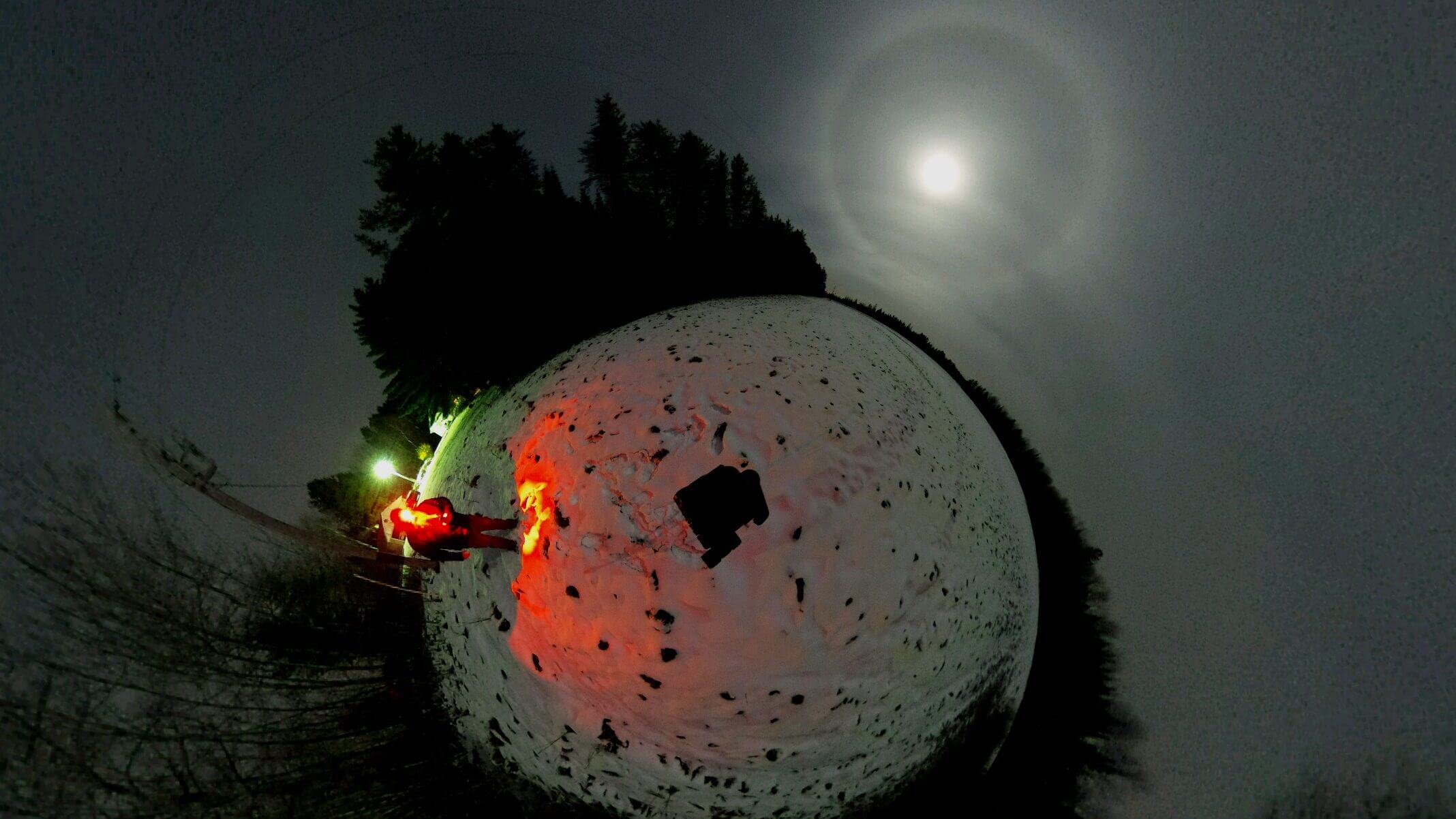
22° halo seen around the Moon in 2017. Image credit: Eric Gustafson
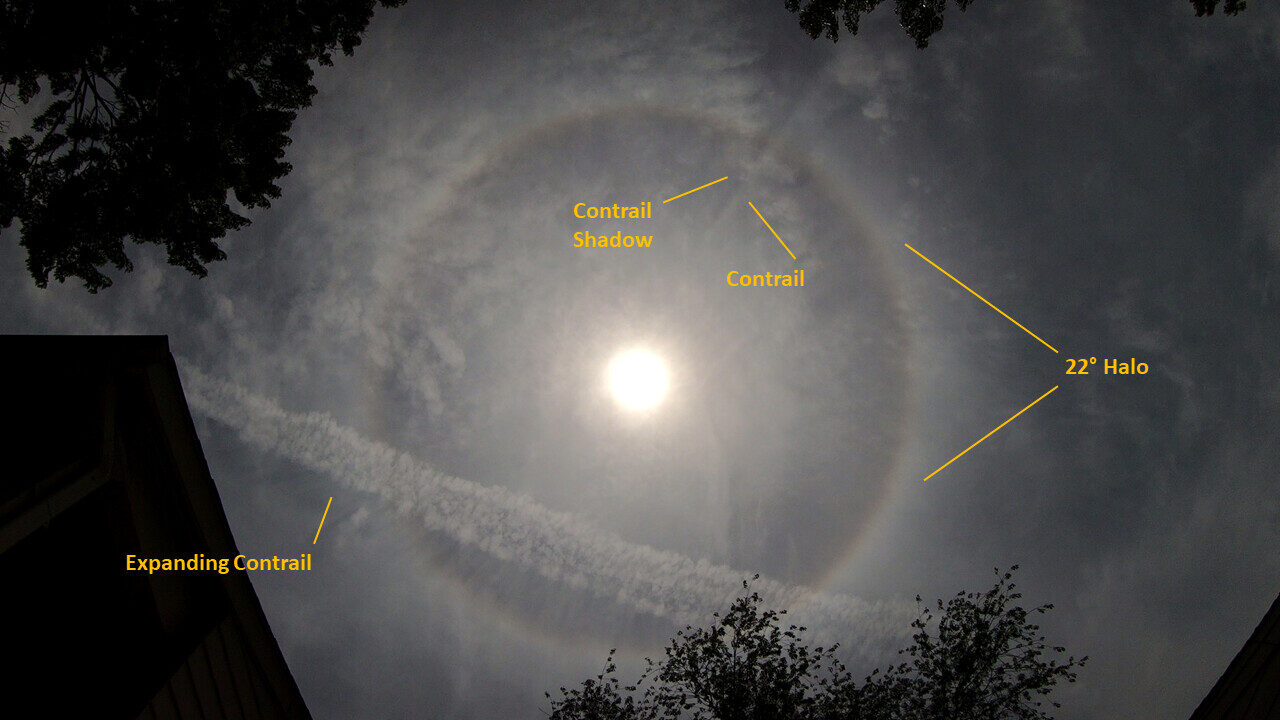
22° halo around the Sun in 2020. Image Credit: Eric Gustafson
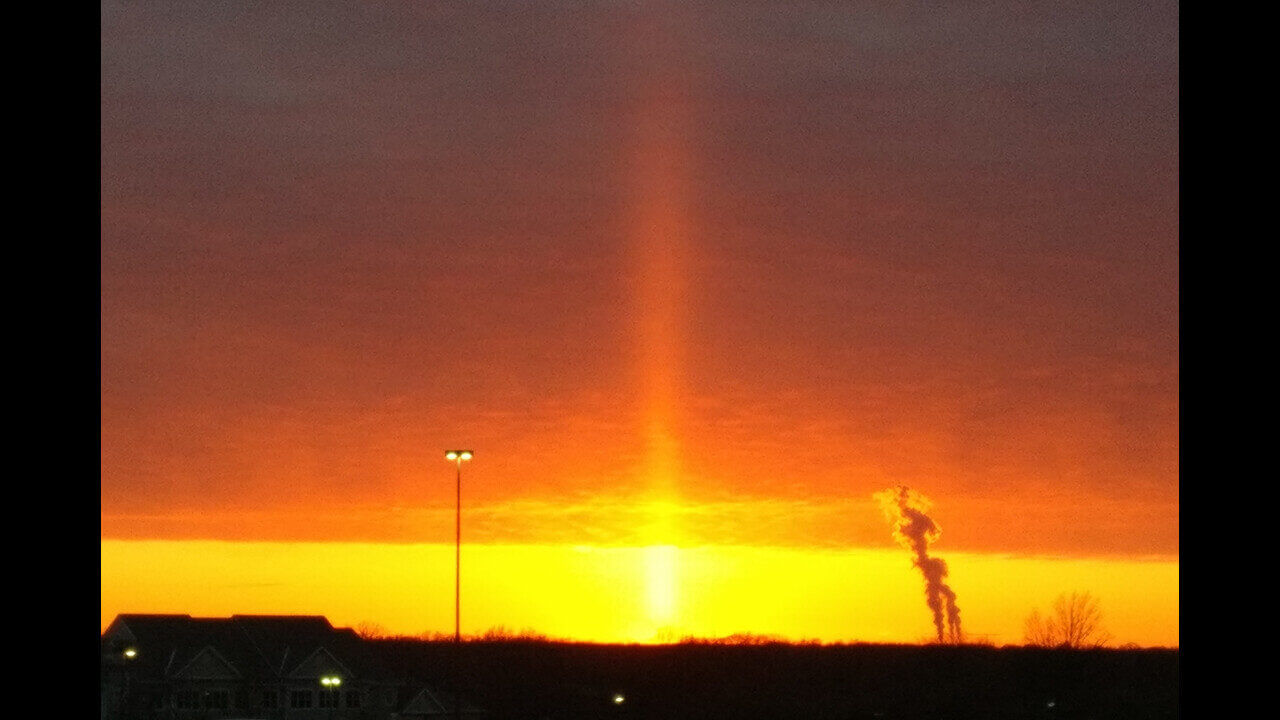
Sun pillar seen as the Sun was setting. Image credit: Eric Gustafson
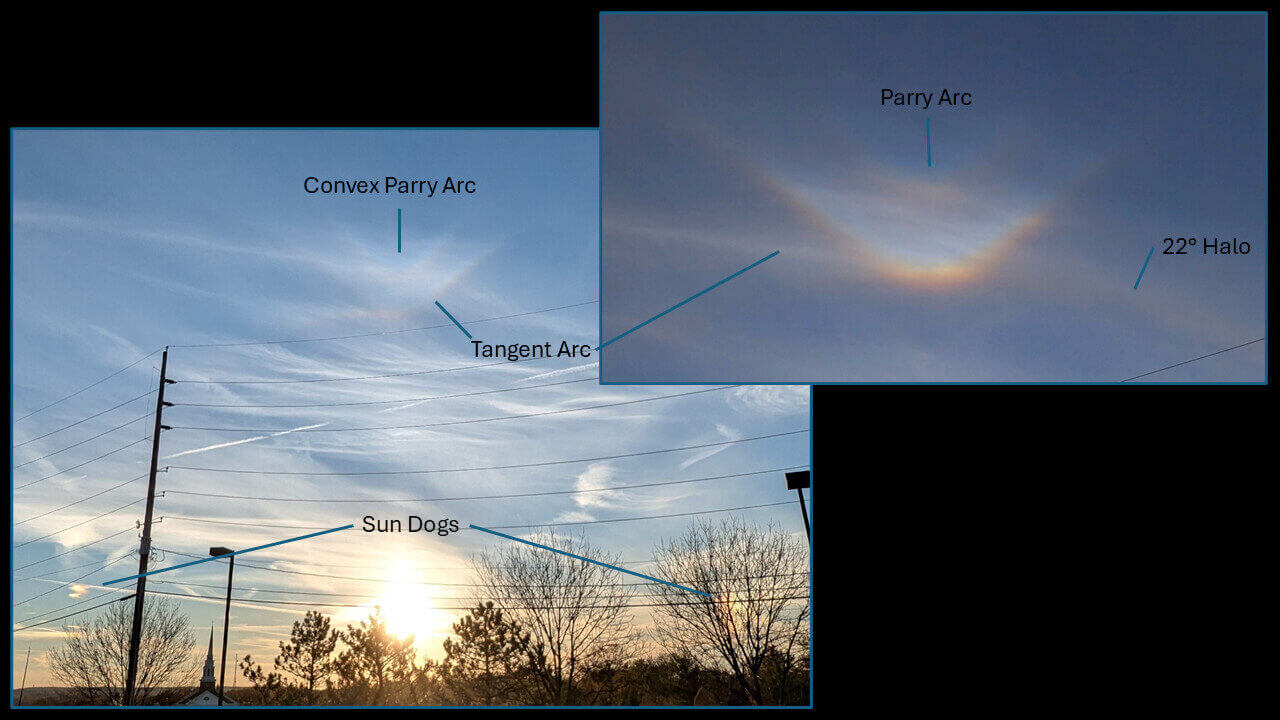
Several ice halos were visible in this display including a rare parry arc. Image credit: Eric Gustafson
T CrB Nova Update 11/10/2025
If you are still interested in seeing the recurrent nova T Coronae Borealis, there is still hope. The nova has not yet occurred meaning we are in a waiting game. It could happen this year or it could happen next year. We will have to wait and see. If you are still interested in this event, the part of the sky the nova will appear in is found low in the west once it is dark. By 18:30, the constellation Corona Borealis will be hard to find due to tree lines or buildings. Spaceweather.com is still posting magnitude estimates from the AAVSO. This is the resource I recommend following to keep up with any changes in the star’s brightness. Current magnitude of the system is 9.7.
The Sun and Moon
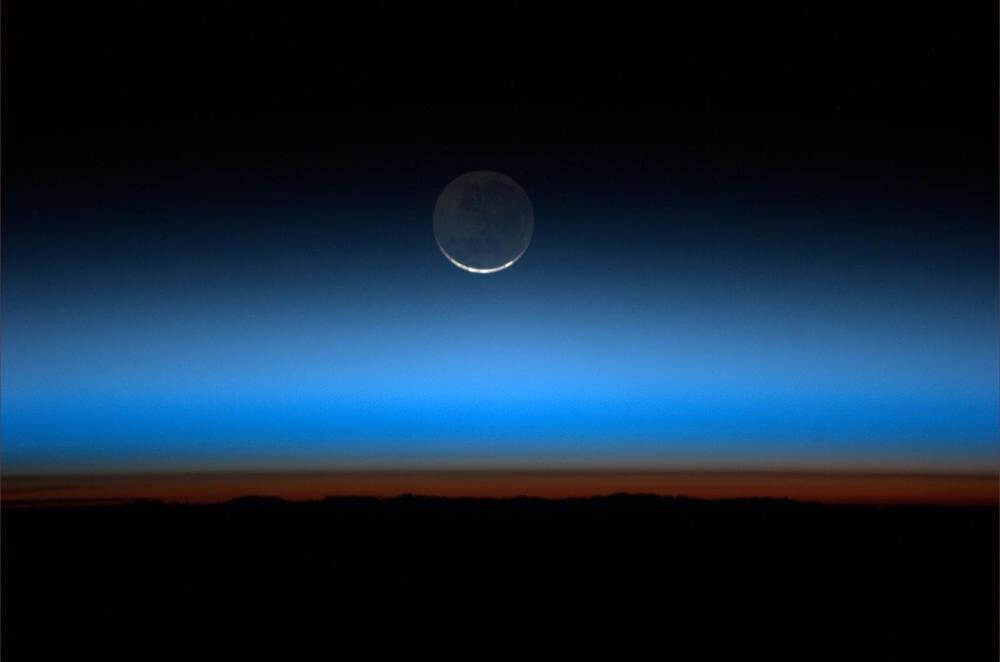
The Moon as seen from the International Space Station, on July 31, 2011.
Credit: NASA
Sun
Sunrise on Monday, November 10 is at 06:38 and sunset is at 16:51 providing roughly 10 hours of daylight this week. Even after sunset, light from the Sun will dimly illuminate our sky for about 1 hour and 30 minutes. This period is called twilight, which ends around 18:23 this week. For those with a sundial, local noon occurs around 11:45 on November 10, 2025.
Moon
Moonrise for Monday, November 10, is at 22:01 and moonset occurs at 12:50 the following day. On November 10, 2025, the Moon will exhibit a waning gibbous phase with 63% disk illumination. By November 24, 2025, the Moon will exhibit a waxing crescent phase with 19% disk illumination. Last quarter moon occurs on November 11, 2025, and new moon occurs on November 20, 2025.
International Space Station (ISS) Observing
Visible passes of ISS from St. Louis for the week of November 10 occur during evening hours. . The table below lists the best of these passes. If you do not live in the area, you can use https://heavens-above.com/ to set your viewing location and get times for where you are.
Magnitude (Mag): The Measure of brightness for a celestial object. The lower the value is, the brighter the object will be.
Altitude (Alt): The angle of a celestial object measured upwards from the observer’s horizon.
Azimuth (Az): The direction of a celestial object, measured clockwise from an observer’s location with north being 0°, east being 90°, south being 180° and west being 270°.
Detailed information regarding all unmanned exploration of our universe, missions past, present, and planned, can be found at Jet Propulsion Laboratories
The Visible Planets
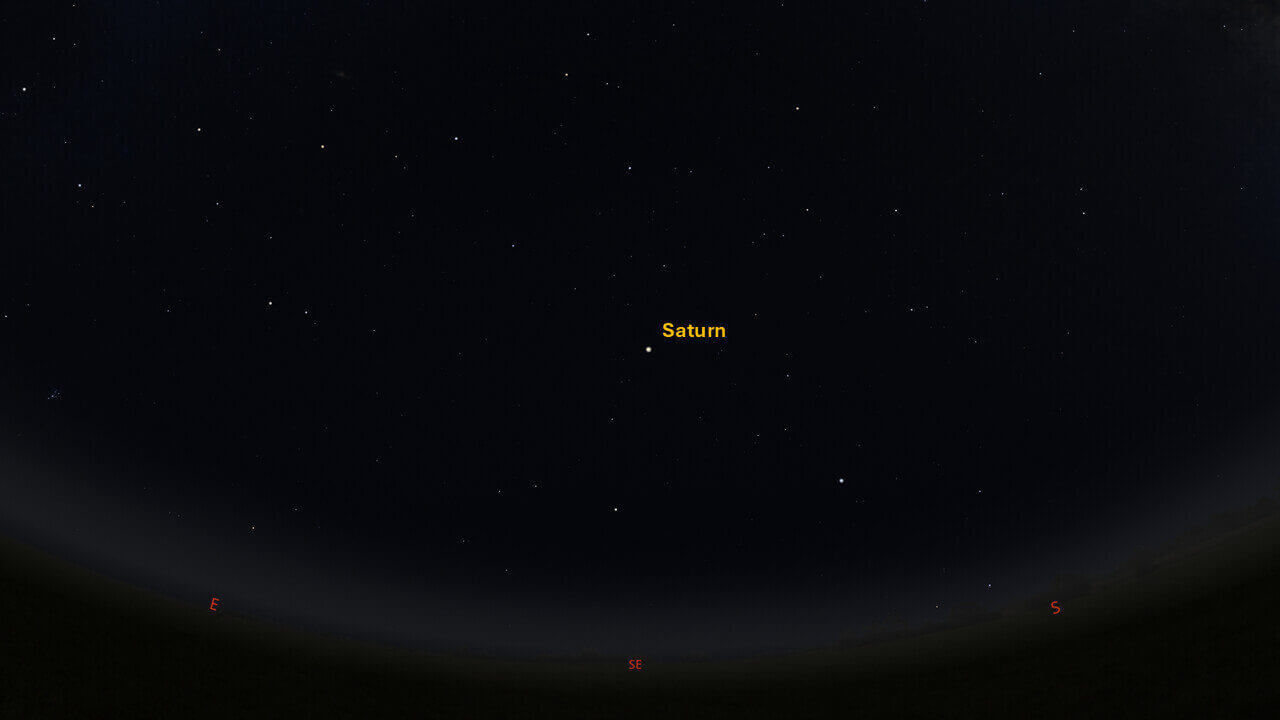
Looking southeast at 18:00 on November 10, 2025. Credit: Stellarium, EG
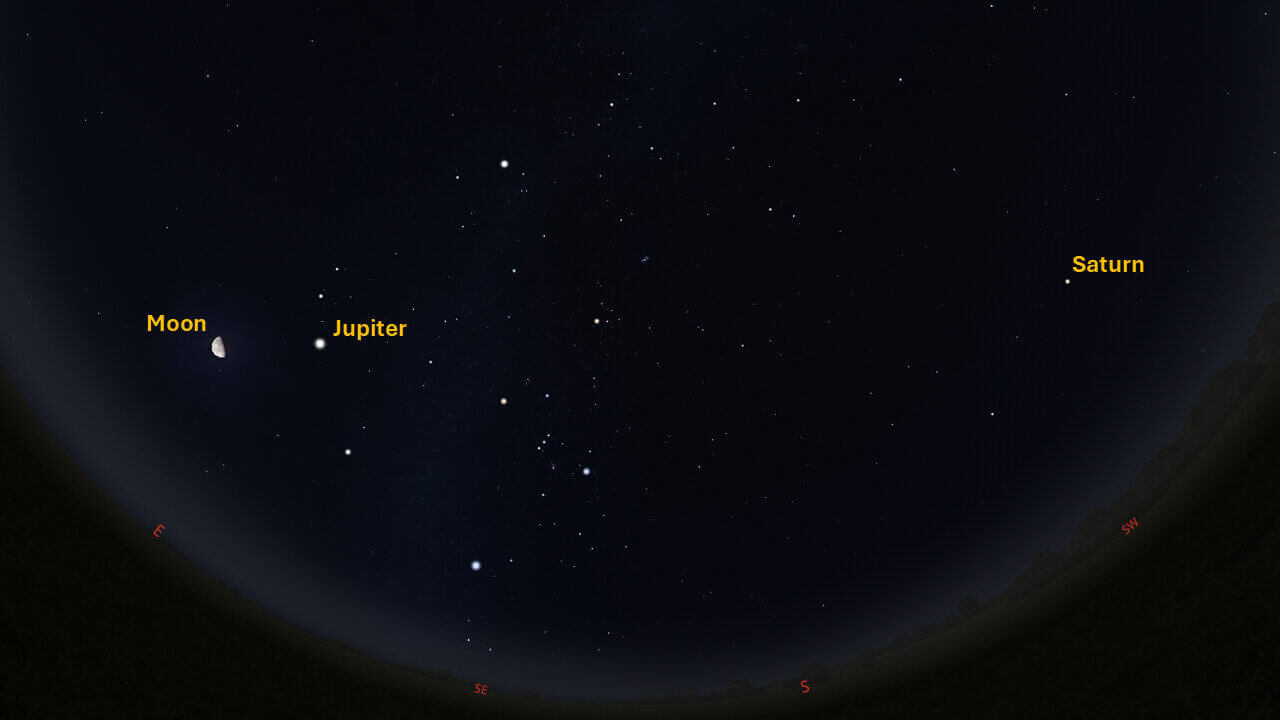
Looking south at 00:00 on November 11, 2025. Credit: Stellarium, EG
Three naked eye planets will be visible this week. Saturn is visible after sunrise in the southeast. Jupiter can be found in the east around 11 pm and Venus will be found low in the east around 6 am. Be careful with Venus as it is appearing closer to the Sun in the sky.
Venus
Venus is getting tougher to find before sunrise. It currently rises around 05:29 and will only appear 13° from the Sun on November 11 and 10° on November 24. Be careful when looking for Venus as the Sun will rise soon after. Venus reaches superior conjunction on January 6, 2026.
Jupiter
This week, Jupiter rises around 21:13. Look for Jupiter in the east around 23:00. Jupiter reaches opposition on January 10, 2026. As we continue towards this date, Jupiter will continue to rise earlier each week.
Saturn
Saturn is now visible after sunset in the southeast once it is dark and sets around 2 am. Saturn reaches solar conjunction on March 12 next year. As we head towards this date, Saturn will be seen more and more west each week.
Our next Star Party will be held on Friday, December 5, 2025, from 5:30 pm until 8:30 pm
On the first Friday of each month, the St. Louis Astronomical Society and the Saint Louis Science Center will set up a number of telescopes outdoors and be on-hand to answer your questions. Telescope viewing begins once it is dark. Regardless of the weather on November 7, join us indoors in our planetarium theater for our free monthly sky lecture.
The St. Louis Astronomical Society helps host the monthly Star Parties at the Saint Louis Science Center. In addition to our nighttime viewings, they also help facilitate our daytime event called Solar Sundays. These daytime viewing sessions occur every third Sunday each month from 11:00-15:00 weather permitting. Visit SLAS’s website linked above to learn about other telescope events SLAS hosts around the St. Louis area.
James S. McDonnell Planetarium
Night Sky Update: November 10-24, 2025
Subjects