This is the Saint Louis Science Center’s NIGHT SKY UPDATE for the week of Wednesday, November 12, 2025.
Information updated weekly or as needed.
Times given as local St. Louis time this week will be in Central Standard Time (CST). For definitions of terminology used in the night sky update, click the highlighted text. If relying on times posted in Universal Time (UT), St. Louis is -6 hours when CST. Times posted in the Night Sky Update are in the 24-hour format.
Join us for our next star party, Friday, December 5, 2025, held in association with the St. Louis Astronomical Society. For details, see the information at the bottom of this page or use the button below.
Observing Highlight Auroras of November 11, 2025
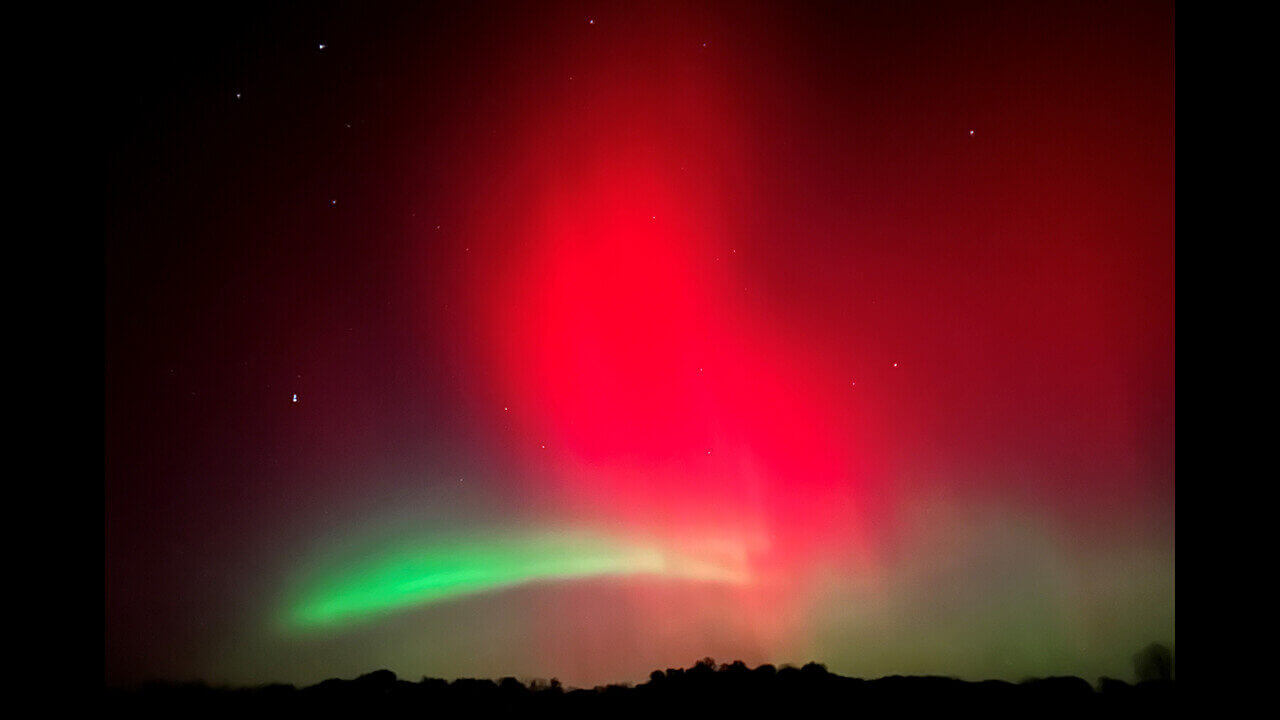
Auroras seen near Vandalia Illinois. Image credit: Randy Harrison
On November 11, 2025, a severe geomagnetic storm triggered auroral displays seen as far south as El Salvador. This unusually strong display was the result of two CMEs striking Earth. From St. Louis, Missouri, red and green auroras were visible along the northern horizon that were bright enough to see without cameras. The geomagnetic storm of November 11, 2025, is a reminder that the current solar maximum is not done with us yet.
The Sun exhibits an 11-year cycle which has a maximum and minimum period of activity. As we approach solar maximum, an increase in sunspot activity increases the chance for solar activity such as solar flares and coronal mass ejections (CME). If these events are pointed at Earth, they have the potential to cause auroras. Additionally, solar activity can cause radio blackouts, disrupt GPS and other communication satellites, and cause ground currents to form which can damage power grids. These are just a few reasons why it is critical that we continue to study and monitor solar activity.
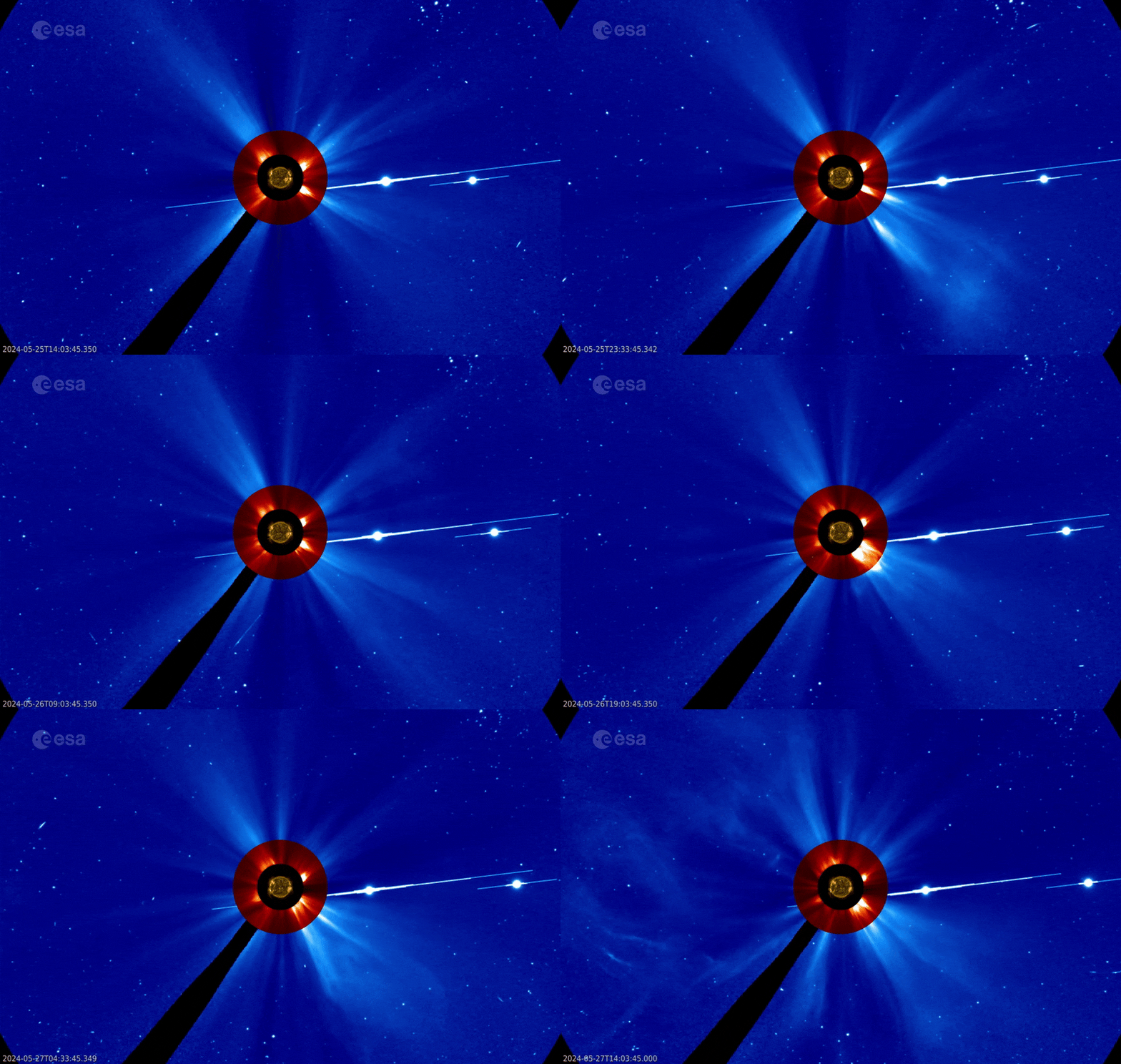
This image shows a solar flare and resulting CME on May 27, 2024, that later caused a sever geomagnetic storm. Image credit: ESA, SOHO
NOAA operates the Space Weather Prediction Center that monitors space weather conditions. This includes monitoring the Sun, tracking any resulting solar activity and forecasting any space weather events. Their website is a valuable resource for those interested in space weather.
The geomagnetic storm on November 11, 2025, was so severe because two CMEs hit Earth at the same time. These CMEs were the product of two powerful X-class solar flares that were produced by sunspot 4274 on November 9 and November 10. The CME that occurred on the 10th was faster, so it eventually caught up to previous one from the 9th. When two CMEs merge like this, they are called a cannibal CME.
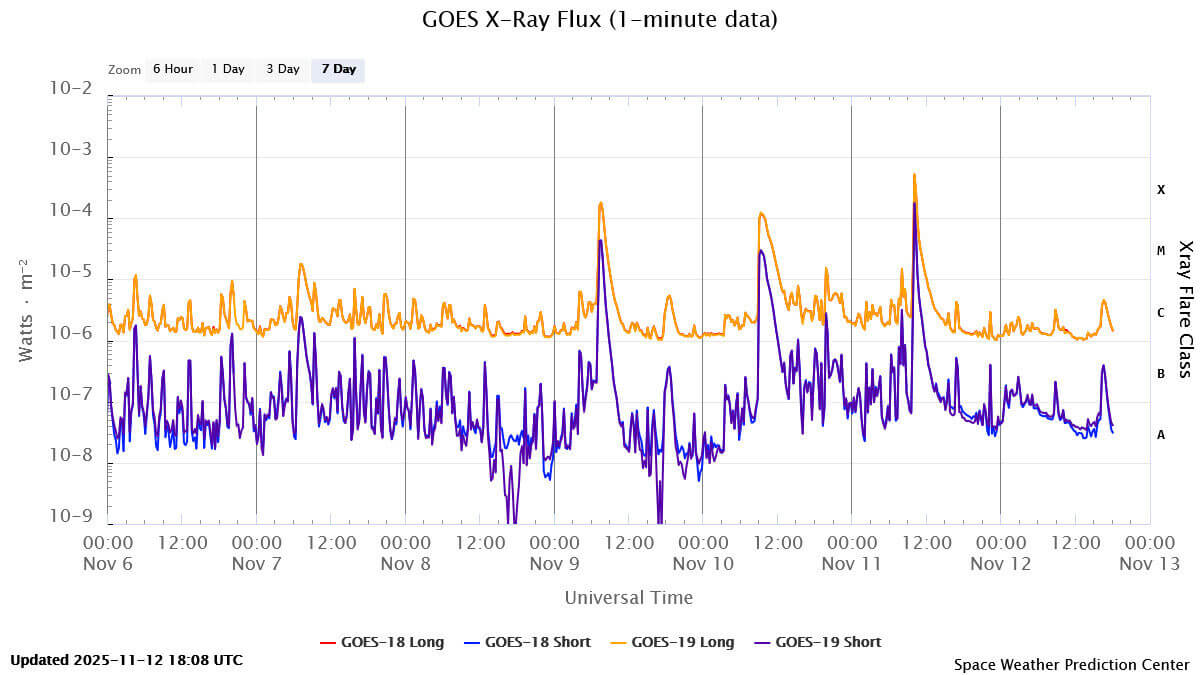
This graph shows the x-ray flux that occurs during a solar flare. The x-rays produced by solar flares arrive at Earth about 8.3 minutes after leaving the Sun. Detectors aboard NOAA’s GOES satellites record the x-ray flux as they encounter this increase in x-rays. The three large peaks on the graph are the solar flares from November 9, 10 and 11, 2025. Image credit: Space Weather Prediction Center
Last night’s geomagnetic storm produced auroras that were visible throughout the St. Louis area. Images from around the area show predominately red auroras and some green. We are more likely to see red auroras when displays are visible in the area because they occur much higher in the atmosphere. As the magnetic flux in Earth’s magnetic field increases during a geomagnetic storm, the auroral oval descends further to the south. Lower latitudes are not likely to be directly under the oval so instead of seeing the auroral display overhead, we see it lower to the northern horizon. This limits our view of the lower altitude displays. The red and green colors are produced when charged particles from the Sun excite atomic oxygen in our atmosphere. Auroras can also appear blue and purple which is the result of molecular nitrogen being excited. These colors are not likely to be seen in St. Louis because they occur much lower in the atmosphere.

Auroras seen near Belleville, Illinois. Image credit: Jessica Amann
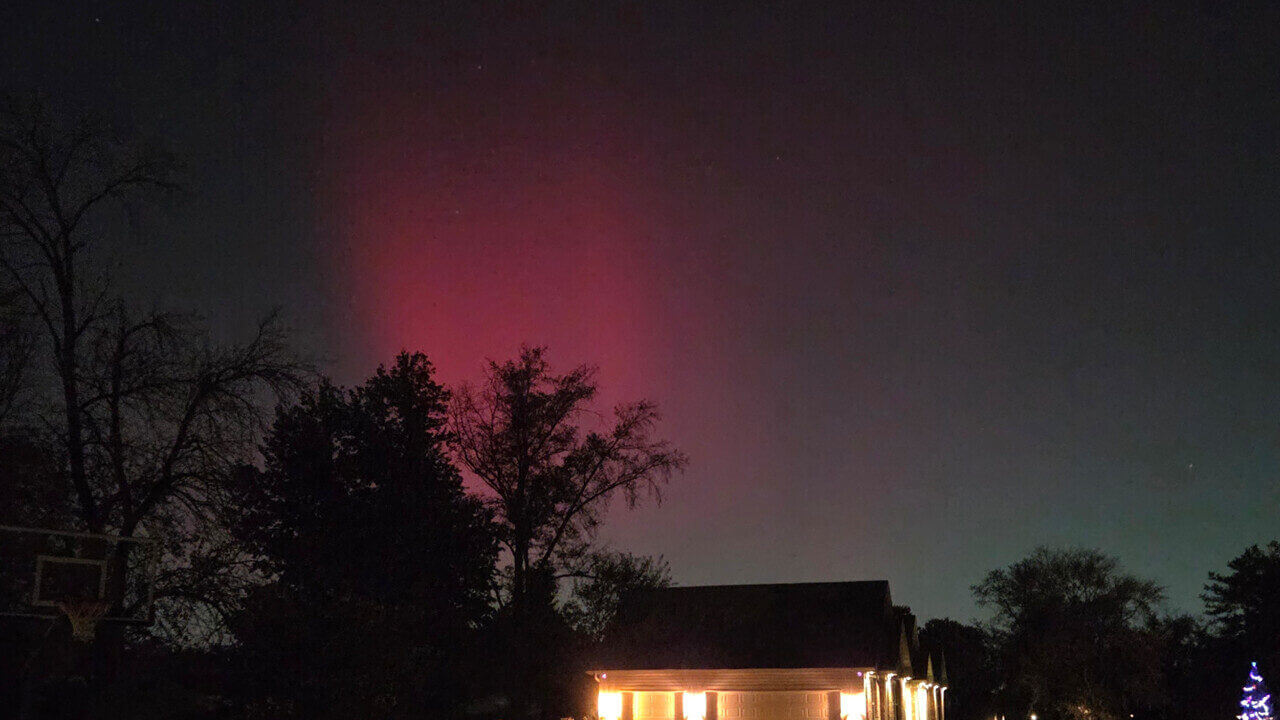
Auroras seen from south St. Louis County, Missouri. Image credit: Dan Ramacciotti
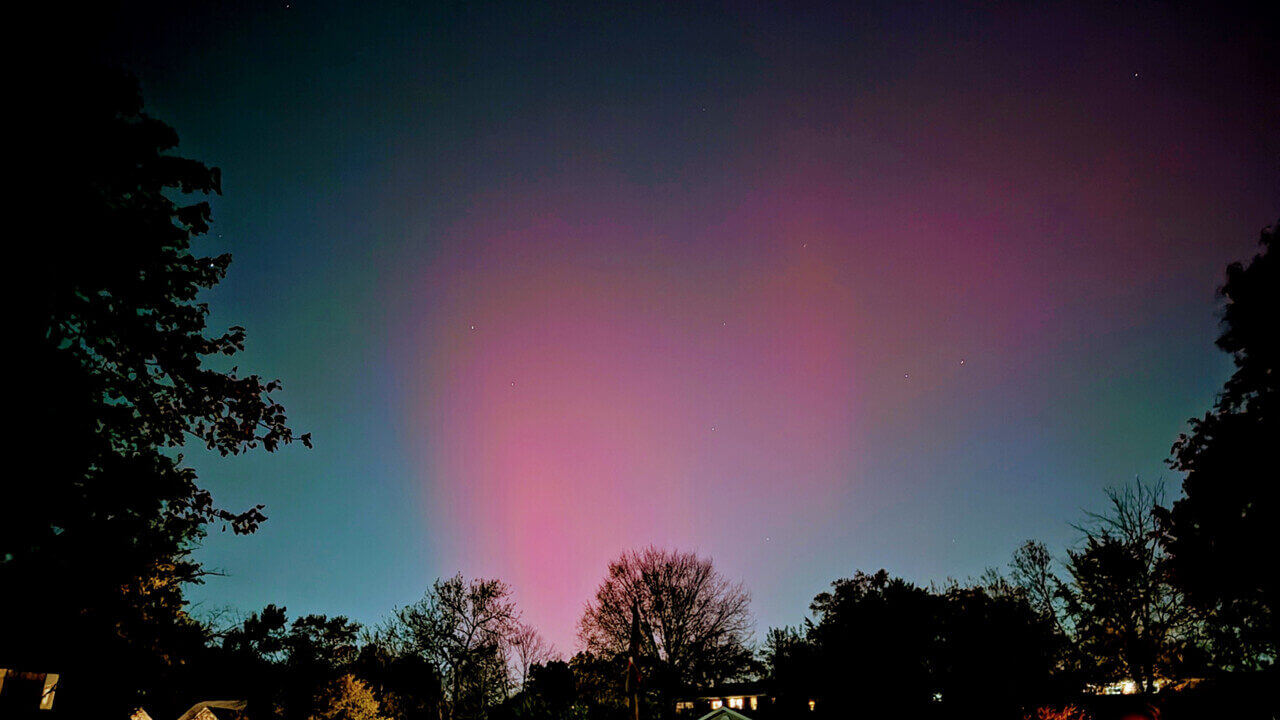
Auroras seen from south St. Louis County, Missouri. Image credit: David Hilgeman.
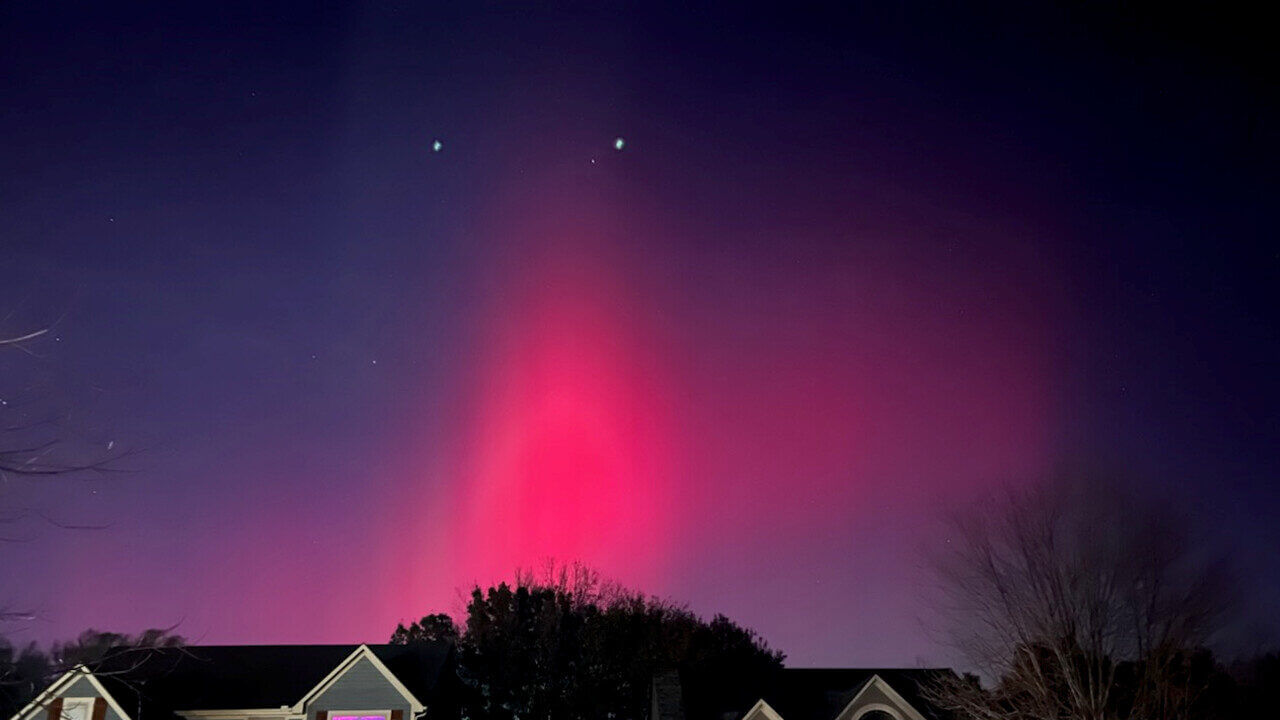
Auroras seen near Lee’s Summit, Missouri. Image credit: Liann Stogsdill.
This same display we saw in St. Louis, produced auroras that were seen as far south as El Salvador which is around 13° north latitude. Auroras seen this far south are quite unusual proving how impressive the event was. This display was so good that it was viewed in urban locations heavily impacted by light pollution. Several of my friends in St. Louis city and a few in Chicago were able to see auroras.
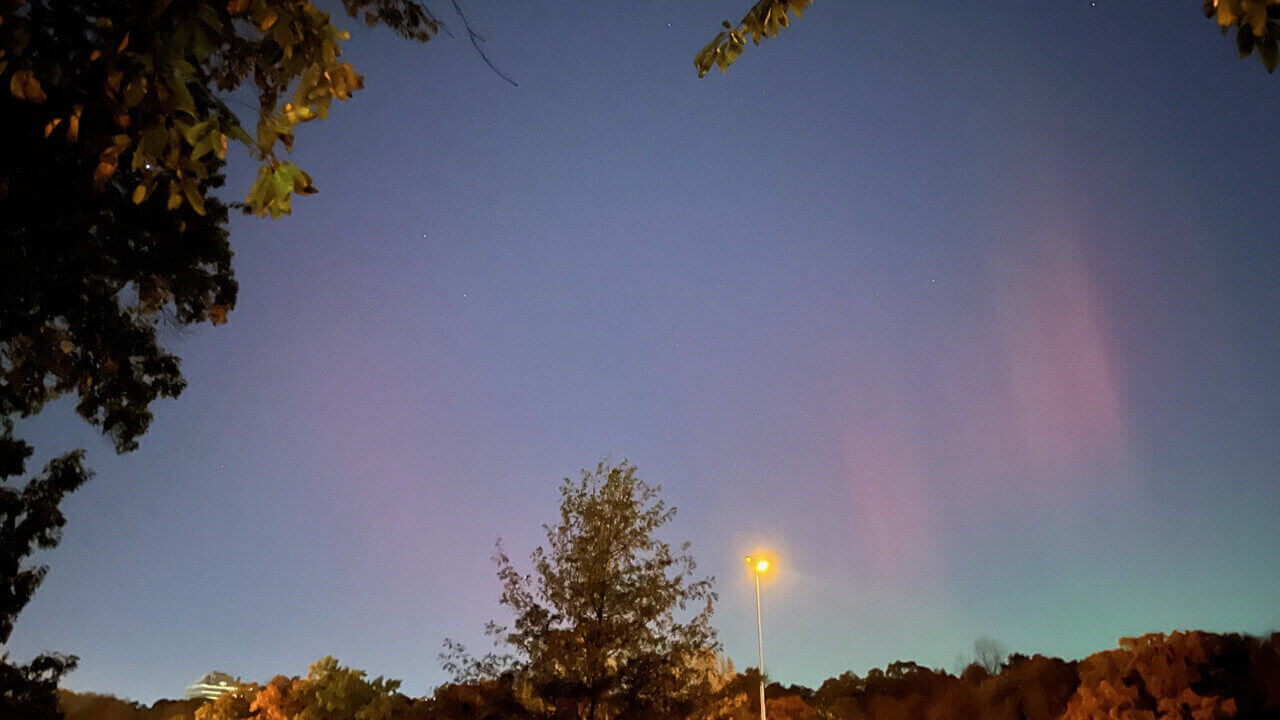
Auroras seen just outside Forest Park in St. Louis, Missouri. Image credit: Mike Malolepszy
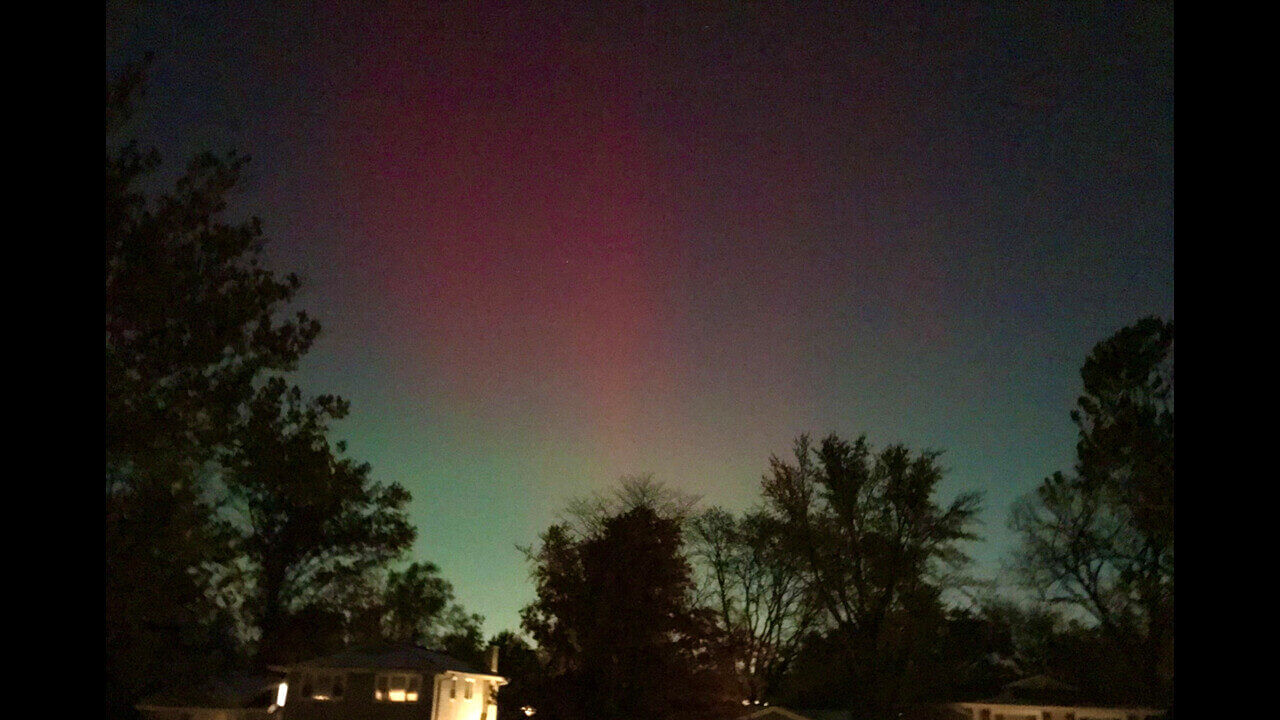
Auroras seen near Chicago, Illinois. Image credit: Terry Dwyer
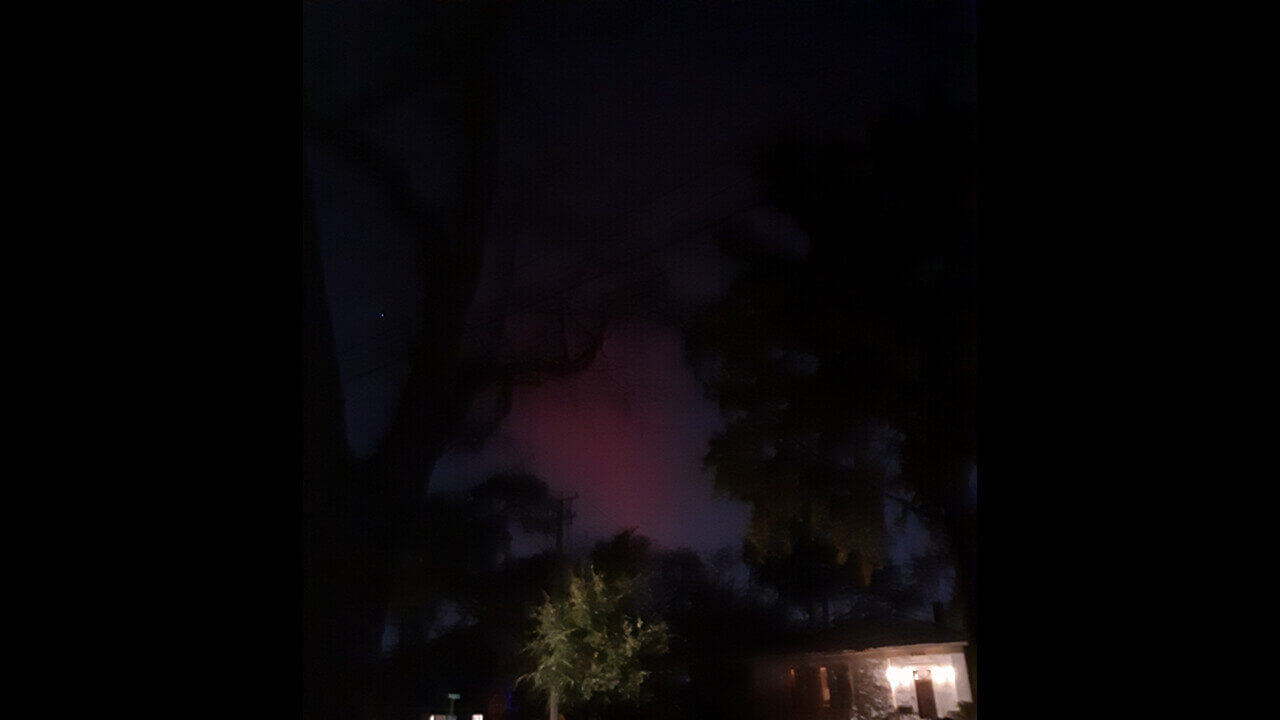
Auroras seen near Chicago, Illinois. Image credit: Bill Kelly
If you missed out on last night’s auroras, there is a chance they could occur again on November 12/13. The same sunspot that produced the flares and CMEs on November 9 and 10, produced an X5 solar flare and an Earth directed CME on November 11, 2025. This solar flare was the strongest solar flare of the current solar cycle. The resulting CME is expected to cause another geomagnetic storm when it reaches Earth on November 12-13, 2025. The Space Weather Prediction Center is predicting the geomagnetic storm will likely be another sever G4 storm.
If you want to learn more about solar activity and space weather, two resources I highly recommend are NOAA’s Space Weather Prediction Center and the website www.spaceweather.com.
T CrB Nova Update 11/12/2025
If you are still interested in seeing the recurrent nova T Coronae Borealis, there is still hope. The nova has not yet occurred meaning we are in a waiting game. It could happen this year or it could happen next year. We will have to wait and see. If you are still interested in this event, the part of the sky the nova will appear in is found low in the west once it is dark. By 18:30, the constellation Corona Borealis will be hard to find due to tree lines or buildings. Spaceweather.com is still posting magnitude estimates from the AAVSO. This is the resource I recommend following to keep up with any changes in the star’s brightness. Current magnitude of the system is 9.6.
The Sun and Moon
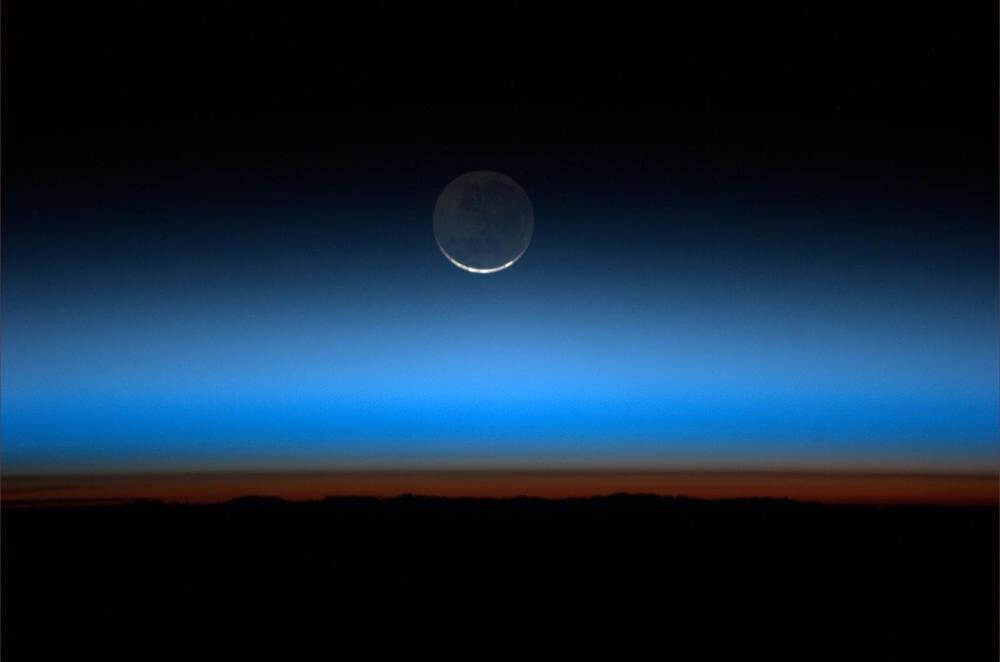
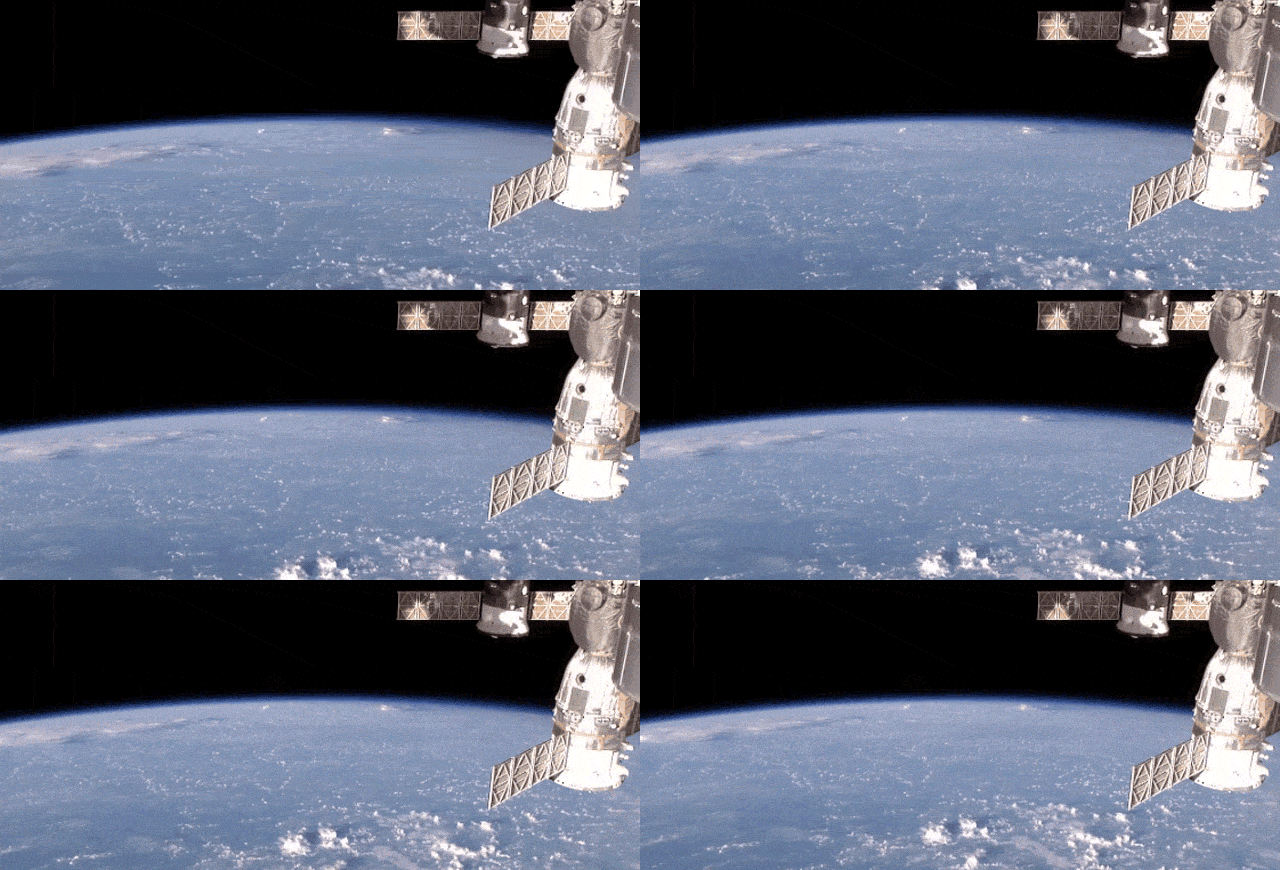
The Moon as seen from the International Space Station, on July 31, 2011.
Credit: NASA
Sun
Sunrise on Monday, November 10 is at 06:38 and sunset is at 16:51 providing roughly 10 hours of daylight this week. Even after sunset, light from the Sun will dimly illuminate our sky for about 1 hour and 30 minutes. This period is called twilight, which ends around 18:23 this week. For those with a sundial, local noon occurs around 11:45 on November 10, 2025.
Moon
Moonrise for Monday, November 10, is at 22:01 and moonset occurs at 12:50 the following day. On November 10, 2025, the Moon will exhibit a waning gibbous phase with 63% disk illumination. By November 24, 2025, the Moon will exhibit a waxing crescent phase with 19% disk illumination. Last quarter moon occurs on November 11, 2025, and new moon occurs on November 20, 2025.
International Space Station (ISS) Observing
Visible passes of ISS from St. Louis for the week of November 10 occur during evening hours. . The table below lists the best of these passes. If you do not live in the area, you can use https://heavens-above.com/ to set your viewing location and get times for where you are.
Magnitude (Mag): The Measure of brightness for a celestial object. The lower the value is, the brighter the object will be.
Altitude (Alt): The angle of a celestial object measured upwards from the observer’s horizon.
Azimuth (Az): The direction of a celestial object, measured clockwise from an observer’s location with north being 0°, east being 90°, south being 180° and west being 270°.
Detailed information regarding all unmanned exploration of our universe, missions past, present, and planned, can be found at Jet Propulsion Laboratories
The Visible Planets
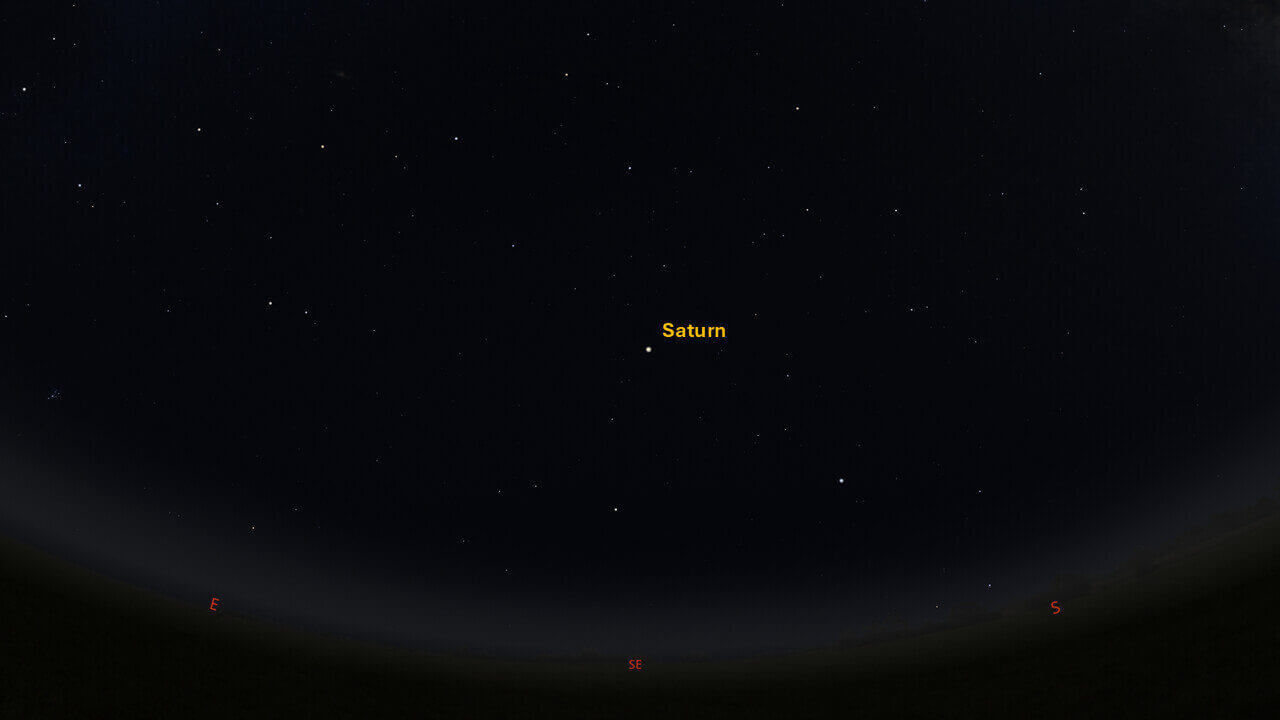
Looking southeast at 18:00 on November 10, 2025. Credit: Stellarium, EG
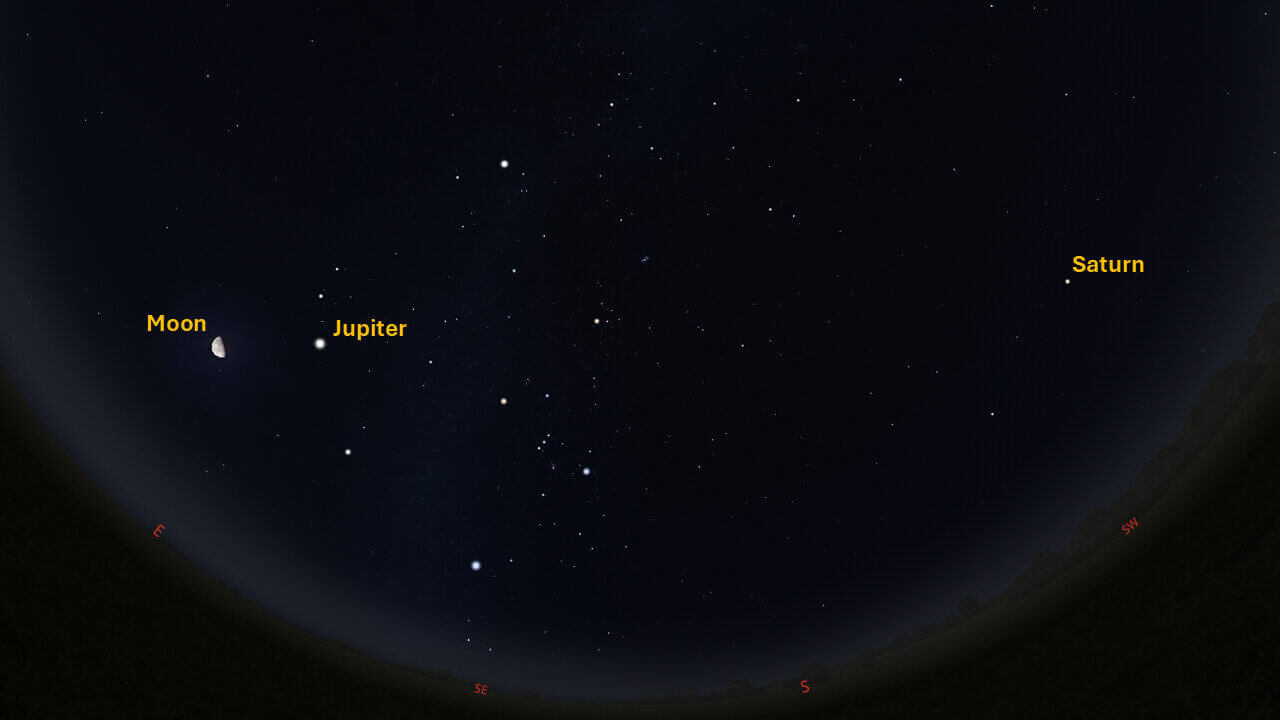
Looking south at 00:00 on November 11, 2025. Credit: Stellarium, EG
Three naked eye planets will be visible this week. Saturn is visible after sunrise in the southeast. Jupiter can be found in the east around 11 pm and Venus will be found low in the east around 6 am. Be careful with Venus as it is appearing closer to the Sun in the sky.
Venus
Venus is getting tougher to find before sunrise. It currently rises around 05:29 and will only appear 13° from the Sun on November 11 and 10° on November 24. Be careful when looking for Venus as the Sun will rise soon after. Venus reaches superior conjunction on January 6, 2026.
Jupiter
This week, Jupiter rises around 21:13. Look for Jupiter in the east around 23:00. Jupiter reaches opposition on January 10, 2026. As we continue towards this date, Jupiter will continue to rise earlier each week.
Saturn
Saturn is now visible after sunset in the southeast once it is dark and sets around 2 am. Saturn reaches solar conjunction on March 12 next year. As we head towards this date, Saturn will be seen more and more west each week.
Our next Star Party will be held on Friday, December 5, 2025, from 5:30 pm until 8:30 pm
On the first Friday of each month, the St. Louis Astronomical Society and the Saint Louis Science Center will set up a number of telescopes outdoors and be on-hand to answer your questions. Telescope viewing begins once it is dark. Regardless of the weather on November 7, join us indoors in our planetarium theater for our free monthly sky lecture.
The St. Louis Astronomical Society helps host the monthly Star Parties at the Saint Louis Science Center. In addition to our nighttime viewings, they also help facilitate our daytime event called Solar Sundays. These daytime viewing sessions occur every third Sunday each month from 11:00-15:00 weather permitting. Visit SLAS’s website linked above to learn about other telescope events SLAS hosts around the St. Louis area.
James S. McDonnell Planetarium
Night Sky Update: November 12, 2025
Subjects