The Saint Louis Science Center envisions an equitable and inclusive society where people are passionate about science and use it to improve lives, transform communities and empower future generations. Through exposure to STEM concepts and recognition of contributions made by members of various communities, we aim to inspire and empower individuals from all backgrounds to pursue and thrive in STEM fields.
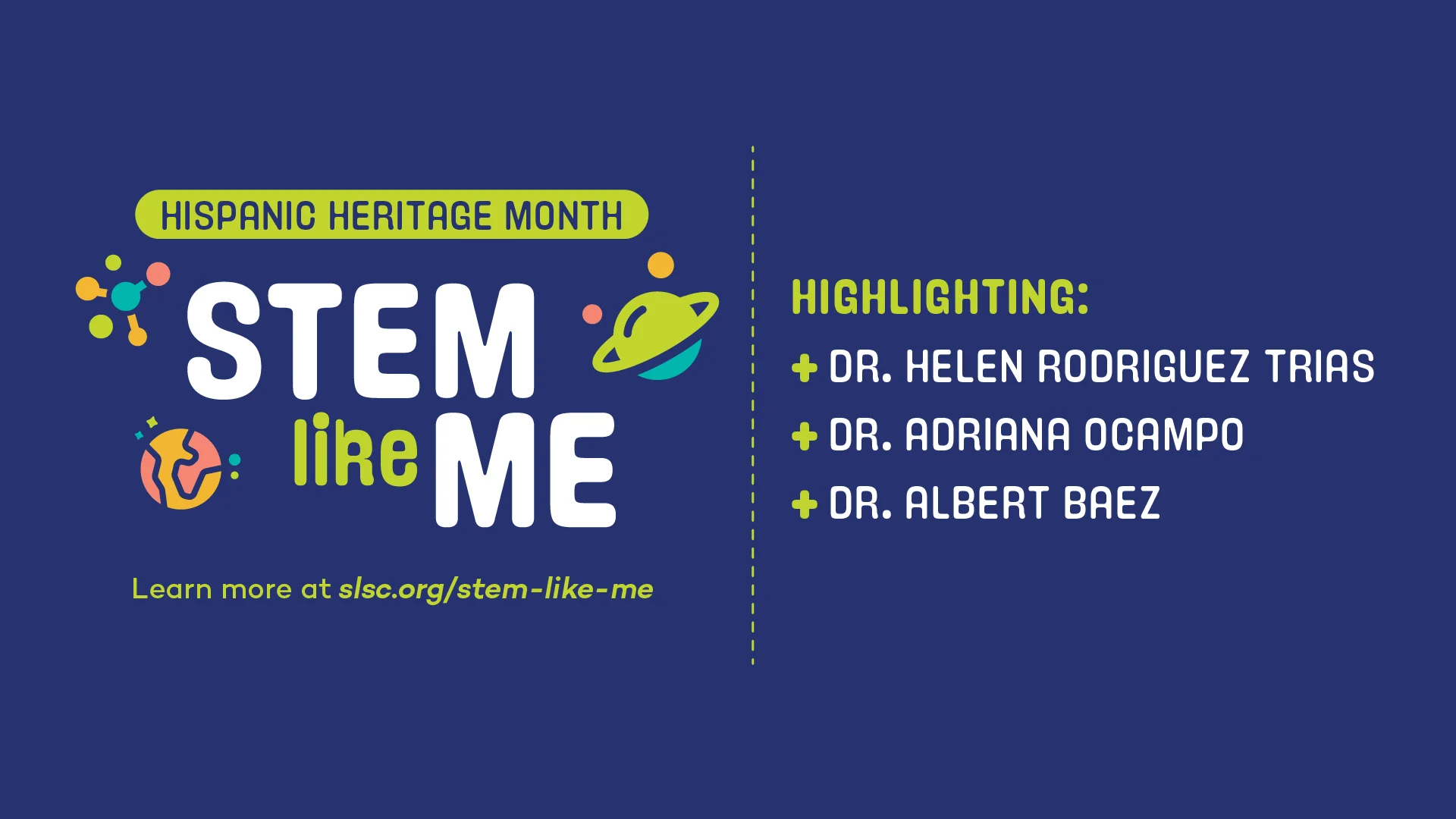
This September and October, as we celebrate Hispanic Heritage Month, we’re recognizing a few STEM-sational individuals who’ve inspired us all to make an impact. Highlighted this month are:
- Dr. Helen Rodriguez-Trias
- Dr. Adriana Ocampo
- Dr. Albert Baez
Dr. Helen Rodriguez-Trias – Advocate for expanded public health services in minority and low-income populations, she was the first Latina elected president of the American Public Health Association (1929-2001)
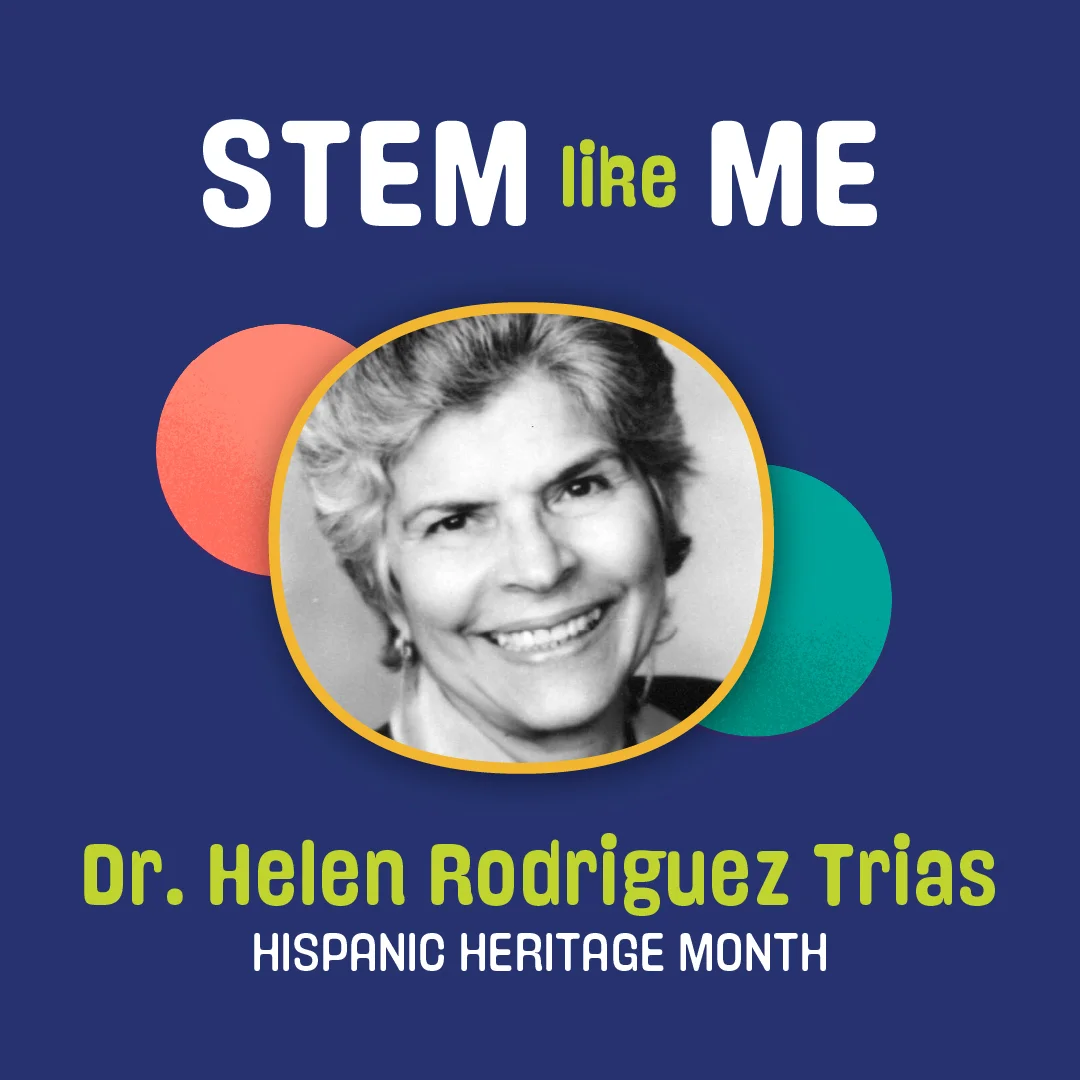
A pediatrician who sought to improve public health services for minority and low-income populations throughout the globe, Dr. Helen Rodgriguez-Trias was the first Latina president of the American Public Health Association (APHA). She was also an advocate for Puerto Rico’s independence and women’s rights.
Born in New York City and raised until age 10 in Puerto Rico, Dr. Rodriguez-Trias found enjoyment in studying science and people. She graduated high school in New York and returned to Puerto Rico to complete her undergraduate and medical school studies at the University of Puerto Rico. At that time, the university student body was active in promoting Puerto Rico’s independence, and she joined the activist movement. After earning her doctorate, she established the first newborn care center in the nation, reducing the San Juan hospital’s infant mortality rate by 50 percent within three years. She also established an independent medical practice, focusing on pediatrics.
Born in New York City and raised until age 10 in Puerto Rico, Dr. Rodriguez-Trias found enjoyment in studying science and people. She graduated high school in New York and returned to Puerto Rico to complete her undergraduate and medical school studies at the University of Puerto Rico. At that time, the university student body was active in promoting Puerto Rico’s independence, and she joined the activist movement. After earning her doctorate, she established the first newborn care center in the nation, reducing the San Juan hospital’s infant mortality rate by 50 percent within three years. She also established an independent medical practice, focusing on pediatrics.
In 1970, Dr. Rodriguez-Trias returned to New York and led the pediatrics department at Lincoln Hospital in the Bronx borough — focusing on the connections between poverty and racism and poor health outcomes. She became involved with the local Puerto Rican community and emphasized that all care workers at the hospital become aware of cultural issues to assist their clients. Inspired by the women’s health movement, she also focused on reproductive health and rights of women and taught medicine at several colleges and universities around the city. In efforts to end programs that promoted sterilization for minority and low-income women as a means for birth control, he was a founding member of the Committee to End Sterilization Abuse and the Committee for Abortion Rights and Against Sterilization Abuse. In the 1980s, she served as medical director for the state of New York’s AIDS Institute and was later elected as the first Latina president for APHA in 1993.
To recognize her efforts on behalf of women and children, President Bill Clinton presented Dr. Rodriguez-Trias with the Presidential Citizen’s Medal (the second-highest civilian award in the United States) in 2001, just a few months before she died of complications from lung cancer that December.
For more information:
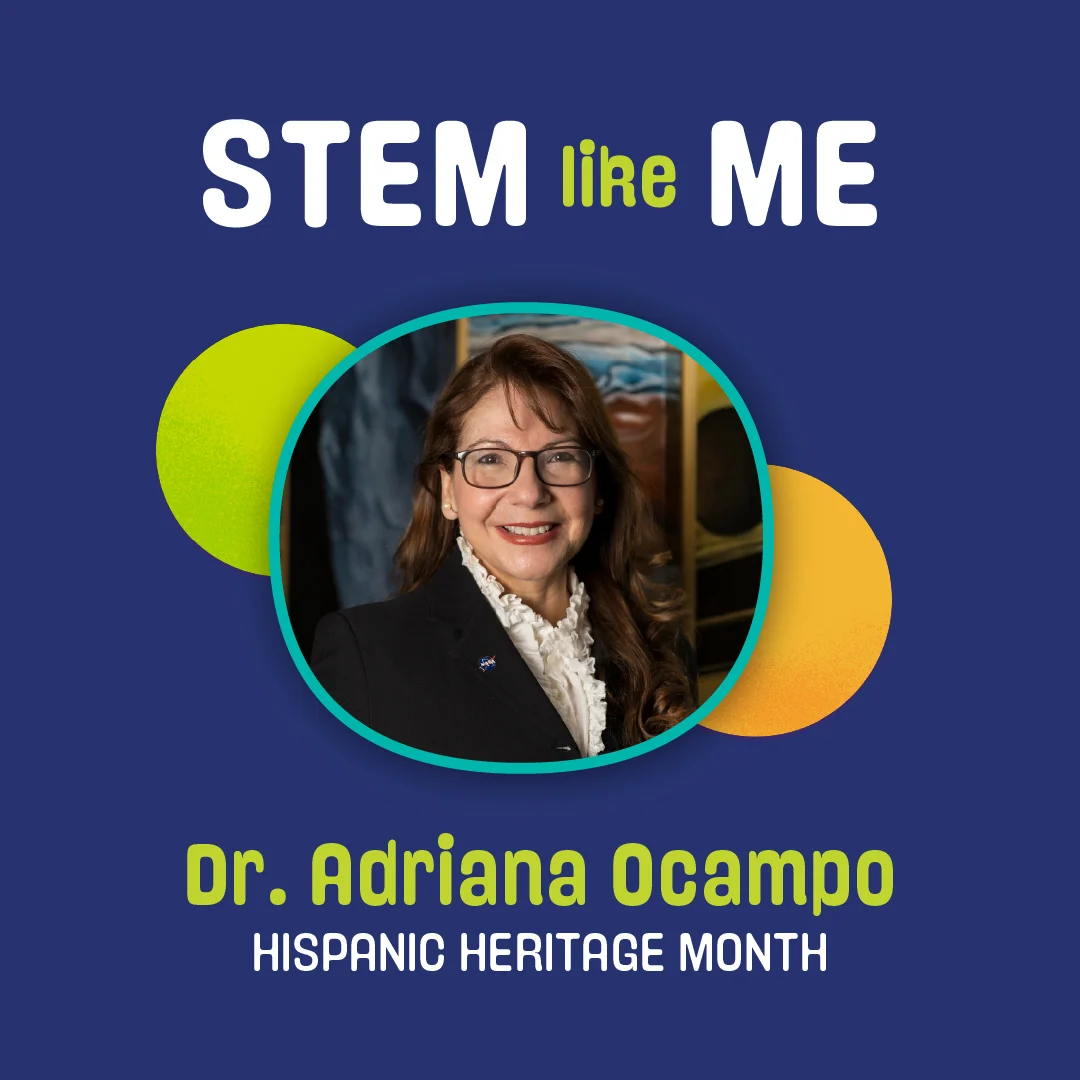
Dr. Adriana Ocampo – Discovered the location of the impact crater formed by the Chicxulub meteor that led to the extinction of the dinosaurs (1955-Present)
A planetary geologist and science program manager at NASA, Dr. Adriana Ocampo used satellite imagery to become the first person to locate the impact site of the Chicxulub crater, which was the asteroid that struck Earth more than 66 million years ago and led to the extinction of dinosaurs.
Born in Colombia and raised in Argentina, Dr. Ocampo and her family moved to the United States during her teenage years. She dreamt of working in space exploration as a child and began working at NASA’s Jet Propulsion Laboratory (JPL) during her junior year of high school. She continued at JPL in college and worked on several exploration missions (including Viking, Mars Observer, Voyager, Galileo and more), while majoring in geology and earning a bachelor’s degree from California Statue University at Los Angeles. She later earned a Master of Science in planetary geology from Cal-State Northridge and a Ph.D. from Vrije Universiteit in Amsterdam, Netherlands.
While at JPL, she was part of a team that used satellite imagery to closely view the surfaces of Mars, Venus and other space objects. Dr. Ocampo and her colleagues used this inspiration to look closely throughout the Yucatan peninsula for possible impact locations for the meteor that impacted Earth 66 million years ago. They hypothesized that several cenotes in the area could actually be that impact location and published their findings in 1991. A closer expedition to the site confirmed the findings and Dr. Ocampo completed her master thesis on this discovery. Since then, additional research has determined that other sites around Mexico and the Western Caribbean are linked to this impact location.
In 2005, she moved to NASA’s Galileo mission team and served as the science coordinator for flight mission operations. Her role was to schedule observations of Jupiter’s moon, Europa, and lead the analysis of data collected by that project. She then moved on to the Juno mission in 2011 to further study Jupiter, and the New Horizons mission in 2015 to study Pluto.
Dr. Ocampo received the Comision Femenil Science Woman of the Year Award in 1992, the Science and Technology Award in 1997 from the Chicano Federation and the National Hispanic Scientist of the Year award in 2016. In 2002, Discover named her one of its 50 Most Important Women in Science.
For more information:
Dr. Albert Baez – Developed the X-ray Reflection Microscope (1912-2007)
An x-ray reflection microscope magnifies objects to allow a closer look at something at its most basic level. Dr. Albert Baez, who invented the device with his partner, Dr. Paul Kirkpatrick, enjoyed taking a closer look at physics and making it accessible to all.
Born in Puebla, Mexico, Dr. Baez and his family moved to the United States (Texas, then New York City) when he was four years old. He considered joining his father, who founded the First Spanish Methodist Church in Brooklyn, in becoming a minister, but an interest in mathematics and physics led him to bachelor’s and master’s degrees in those disciplines. He then taught at Wagner College for several years and developed an interest in making education accessible to all.
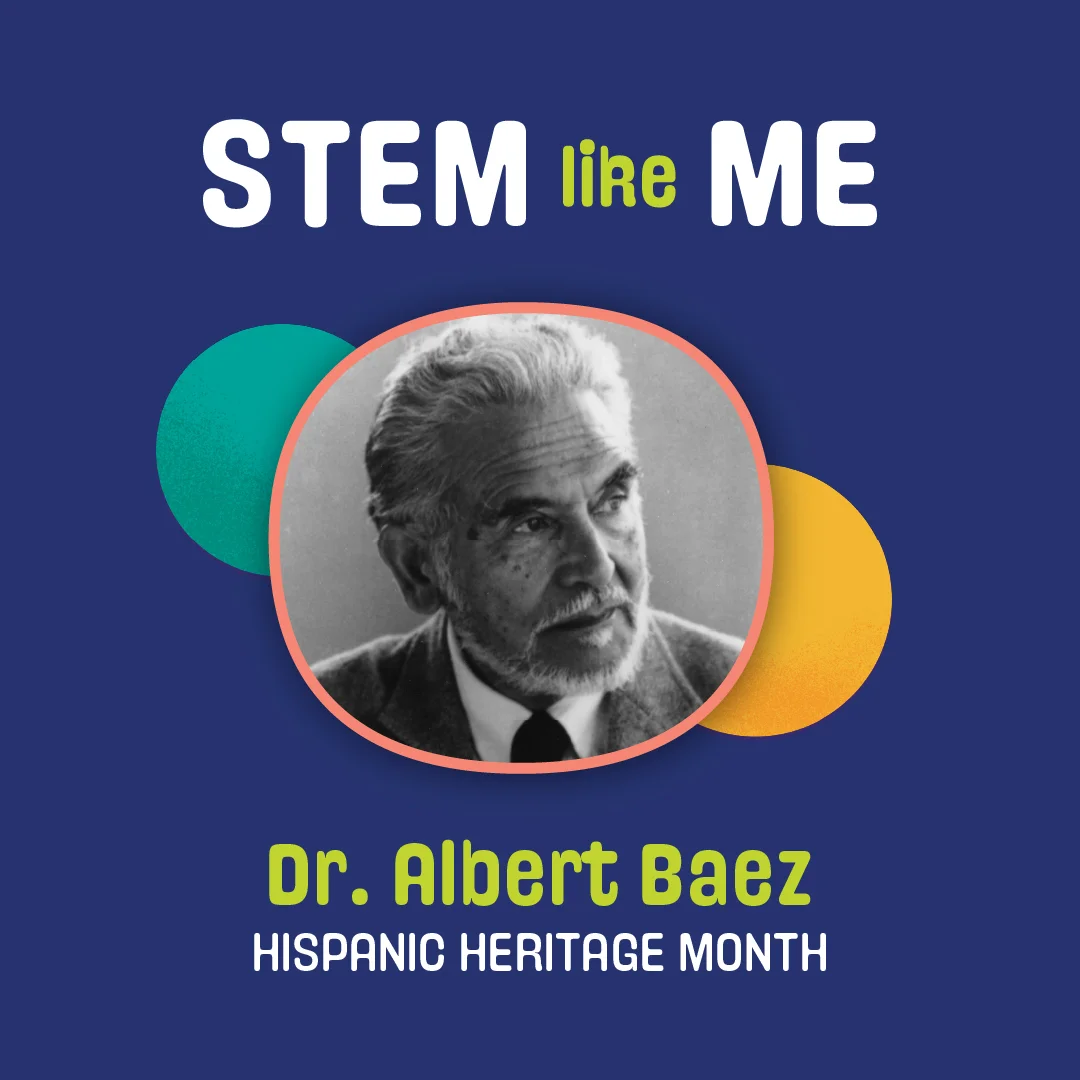
Following the birth of three daughters (one of whom became legendary Rock & Roll Hall of Fame musician Joan Baez), he and his wife, Joan, moved the family to California while Dr. Baez completed his doctoral program at Stanford University. Dr. Kirkpatrick was his doctoral advisor, and the two began researching how mirrors could focus x-rays to magnify images of objects. Their 1948 invention, which is still in use today, highly magnifies objects to make molecules and atoms visible in high resolution for further study. After completing his doctoral thesis on that topic, Baez earned his Ph.D. in physics from Stanford in 1950.
As the 1950s brought forth the escalation of the Cold War, Dr. Baez’ expertise was highly coveted in the defense industry, but his Quaker beliefs and pacifist nature led him toward education and humanitarian causes. He returned to professorship at the University of Redlands in California and worked with the United Nations Education, Scientific and Cultural Organization (UNESCO) to establish the physics, chemistry and biology departments at the University of Baghdad in Iran. He returned to Stanford in 1956 and formed the Physics Science Study Committee that was focused on changing the way that physics was taught in high schools. In 1959, he joined the faculty at the Massachusetts Institute of Technology and continued to improve the education of physics — through the production of educational films. He furthered that effort while teaching in Europe through UNESCO, creating more than 100 films on physics principles for the Encyclopedia Brittanica Educational Corporation, and authoring a physics textbook for college undergraduates.
Dr. Baez retired in the 1980s but continued to share his knowledge through lectures that focused on the importance of “the 3 C’s – curiosity, creativity and compassion” and work to improve educational experiences for youth throughout Mexico. He and Kirkpatrick were presented the Dennis Gabor Award in applied science and technology by the Hungarian Academy of Sciences for their invention, and Dr. Baez was inducted into the Hispanic Engineer National Achievement Awards Corporation, which now bestows the Albert V. Baez Award for Technical Excellence each year.
For more information:
Subjects