This is the Saint Louis Science Center’s DAY SKY UPDATE for the Month of March 2025.
Information updated monthly or as needed.
Times given as local St. Louis time which is Central Standard Time (CST) Through March 8, 2025. Times posted will shift to Central Daylight Time (CDT) on March 9, 2025. For definitions of terminology used in the night sky update, click the highlighted text. If relying on times posted in Universal Time (UT), St. Louis is -6 hours when CST and -5 hours when CDT. Additionally, times will be posted in a 24-hour format.
Join us for our next solar telescope viewing, Sunday, March16, 2025, held in association with the St. Louis Astronomical Society. For details, see the information at the bottom of this page or visit
Daytime Astronomy Primer
For most, astronomy is a hobby that is left to the darkness of night. While most astronomical objects are only visible at night, the day sky can offer a careful observer several astronomical targets along with a multitude of atmospheric phenomena to enjoy. When posted, the DAY SKY UPDATE will explore these possibilities which may include a highlight of the month, cloud observing, sun rise/set times, daytime Moon information, daytime planets and other topics. As always, when viewing during daytime, you must use caution as the Sun is always near.
Aside from solar filters, there are other safety steps that you should consider. Sunscreen, hats and sunglasses are always advisable. Visible light is how we observe the world around us, however, there is light we cannot see. Ultraviolet (UV) and infrared (IR) light are great examples of this. While both are an issue if you are using an optical system, UV light is an issue through exposure. This can be mitigated by using sunscreen, sunglasses and limiting exposed skin. While sunglasses are not safe instruments to view the Sun with, they do protect your eyes from exposure to ultraviolet light that we are susceptible to during the day. If you would like to learn more about UV and its dangers use the buttons below.
Cloud of the Month
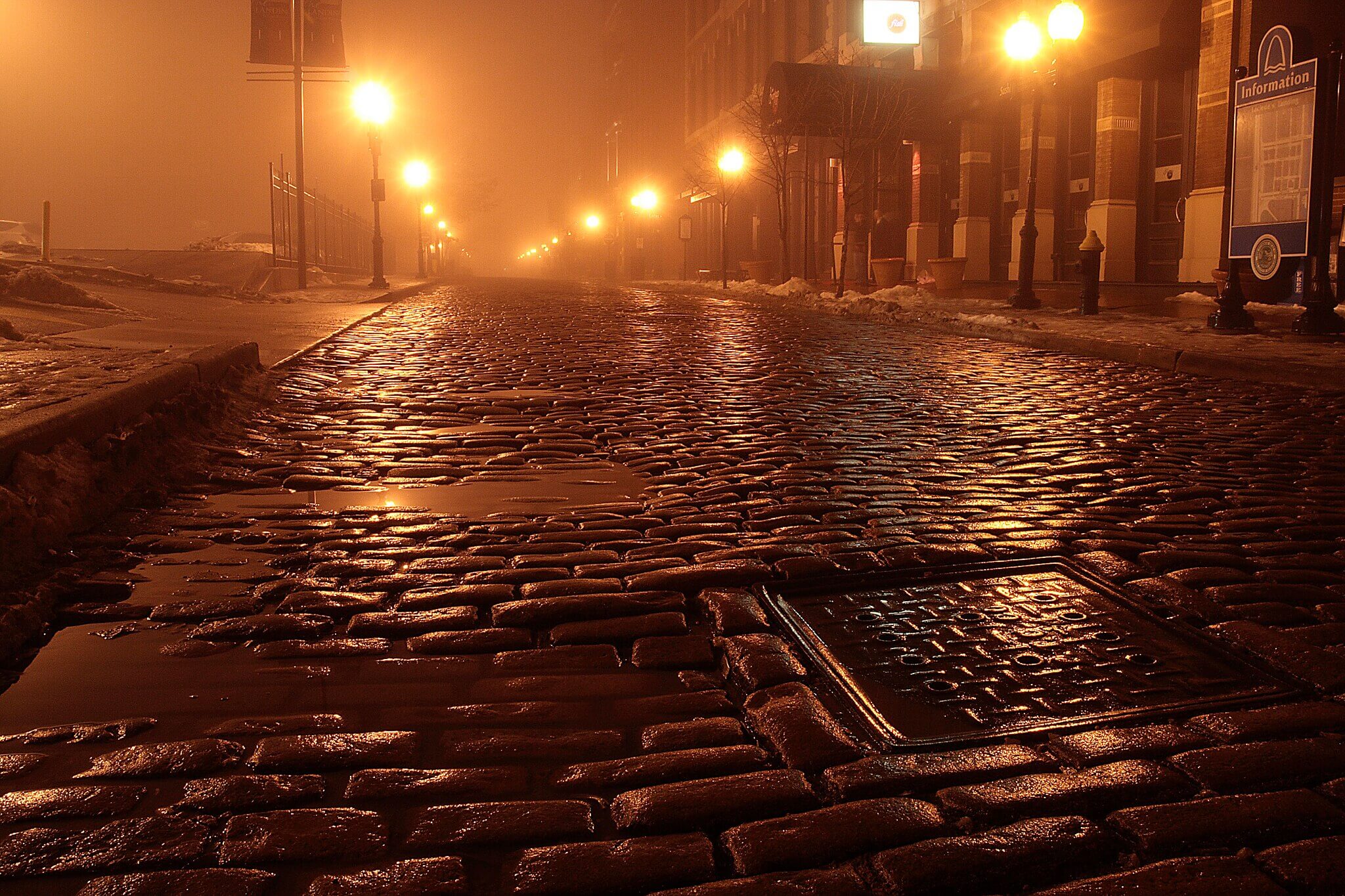
Image showing fog and wet cobblestones on Laclede’s Landing St Louis, Missouri. Image credit: Brock Roseberry
At the start of the year, many in the St Louis area experienced some foggy nights and early mornings. Fog is a beautifully eerie phenomenon, and it really shows how fascinating the atmosphere works. How does fog form, what are the conditions needed, and why have we seen so much fog recently?
How does fog form?
Fog is essentially a cloud that forms at ground level, and it develops in two primary ways:
- Cooling – When air is cooled below its saturation point
- Evaporation and mixing – When water vapor is added to air through evaporation, and moist air mixes with drier air
Once fog forms, it sustains itself as long as the air remains saturated. This is either through continuous cooling or the ongoing mixing of moist and dry air. Depending on the surrounding conditions, fog will form differently.
Types of Fog
- Radiation Fog
Radiation fog forms due to Earths radiational cooling, which is when the ground loses heat overnight, cooling the air above. This causes a temperature inversion, with cold air at the surface and warm air aloft. The moist air near the ground will cool to its dew point (the temperature at which the air is completely saturated). A light breeze (less than 5 mph) is helpful to rapidly bring moist air in contact with the cold ground. The wind cannot be too strong because the air will start to mix with the dry air aloft, preventing fog from forming. Radiation fog is common in the fall and winter when nights are long and clear (providing a longer time for cooling). This tends to be associated with high pressure systems, especially when they become stationary over an area. In these instances, this allows for fog to form on consecutive days. It is also helpful if it rained the night prior, allowing for an abundance of soil moister, creating higher dew points. Radiation fog tends to develop overnight and peaks right before sunrise before dissipating as the ground warms up throughout the morning. Radiation fog tends to settle in valleys, often given the name valley fog.
- Advection Fog
Advection fog forms when warm, moist air moves over a colder surface, which causes the cooler air to reach its saturation point. Unlike radiation fog, which forms in calm conditions, advection fog will always involve the movement of air. This fog is common over water along the Pacific Coast during the summertime, where warm air drifts over cooler waters. It also forms over land during the wintertime in areas like the Midwest, when warm air from the Gulf moves northward over the cooler land.
- Upslope Fog
Upslope fog forms when moist air flows up along a hill or mountain. The slopping terrain lifts the air, cooling it to its dew point. This typically occurs during the winter and spring seasons on the eastern side of the Rockies. The fog will form at those higher elevations but can spill down into the valleys. This is also the fog that can last the longest, being able to sustain itself for several days.
- Evaporation Fog
There are two types of evaporation fog. The first one being steam fog which forms when cold air moves over a body of warm water, causing the water to evaporate. If there is sufficient mixing, the air will then saturate. As the colder air warms up, it will start to rise giving it that “steam” look. It’s common to see over lakes during the Fall time, especially in the morning, when cold air settles over warm water lingering from the summer.
The second type is known as frontal fog. Which develops when warm precipitation falls through a cold layer of air. The raindrops evaporate into the cold air, causing the surrounding air to saturate. This fog will usually form in a shallow layer of cold air ahead of an approaching warm front or behind a cold front. Frontal fog is also favorable when there is snow on the ground. The melting of the snow extracts heat from the environment, cooling the already saturated air.
The St Louis area experienced a handful of fog events near the end January and the beginning of February. These occurred due to several factors. Recent snow fall and a low-pressure system that brought rain soon after, were helped in keeping the ground moist which increased humidity. Light winds were also helpful in maintaining a stable condition for fog to continue to form. This combination of ingredients allowed for the formation of radiation fog and led the National Weather Service to issue various Dense Fog Advisories. These advisories are issued when the visibility is expected to drop to one-quarter of a mile or less. This makes travel conditions very difficult. If driving, take it slow, leave plenty of distance ahead of you, and use your headlights (especially if you have fog lights which concentrate the lights lower to the ground, minimizing the reflection from fog droplets).
Fog is very dynamic and more common than one might think. The right combination of ingredients is needed for fog to develop. The most important being cooling of the air and an increase of moisture. Cooling can result from upslope flow, advection over a cooler surface, radiational cooling, and evaporation. Moisture is increased by precipitation, evaporation off already wet surfaces, and moisture advection. Take a moment to appreciate the scenery next time fog comes into the area. Know that the atmosphere and surrounding environment had to come together to form such a mesmerizing landscape.
The Sun and the Moon
Sun Information
During March 2025, the Sun will continue its journey towards its northern standstill later this year in June. If you track the position of sunrise or sunset this month you will find these positions are shifting to the north. Maximum altitude will also change each day as the Sun reaches higher altitudes each day closer to the June solstice. For March 2025, the Sun’s maximum altitude will shift from 44.1° on March 1st, to 55.8° on March 31st.
The next major position of the Sun occurs on March 20, 2025, as the Sun reaches the March equinox. For us in the northern hemisphere, this is the Vernal Equinox which signals the start of spring. We will start to see the world around us return to life as plants begin to bloom. Sever weather will again be upon us. By the end of March migratory birds will start to return. The day sky has a great deal to offer us.
Daylight Saving Time starts this month on March 9, 2025. If relying on times posted in Universal Time (UT), St. Louis is -6 hours when CST and -5 hours when CDT. Remember to set those clocks one hour forward when to go to bed on March 8, 2025.
Sunrise and Sunset Times for St. Louis Missouri
The sunrise and sunset times below were calculated by the Earth Systems Research Laboratories for NOAA. These times are calculated using equations for Jean Meeus’s Astronomical Algorithms. The atmosphere complicates these calculations due to the refraction of sunlight as it passes through the atmosphere. For the times listed below, the amount of atmospheric refraction is assumed to be 0.833°. Variations in the atmosphere can change the amount of refraction so the times posted are accurate to within a minute for latitudes between +/- 72°. You can learn more about these calculations and where to generate times for areas outside of St. Louis, Missouri by using the buttons below
Moon (daytime views)
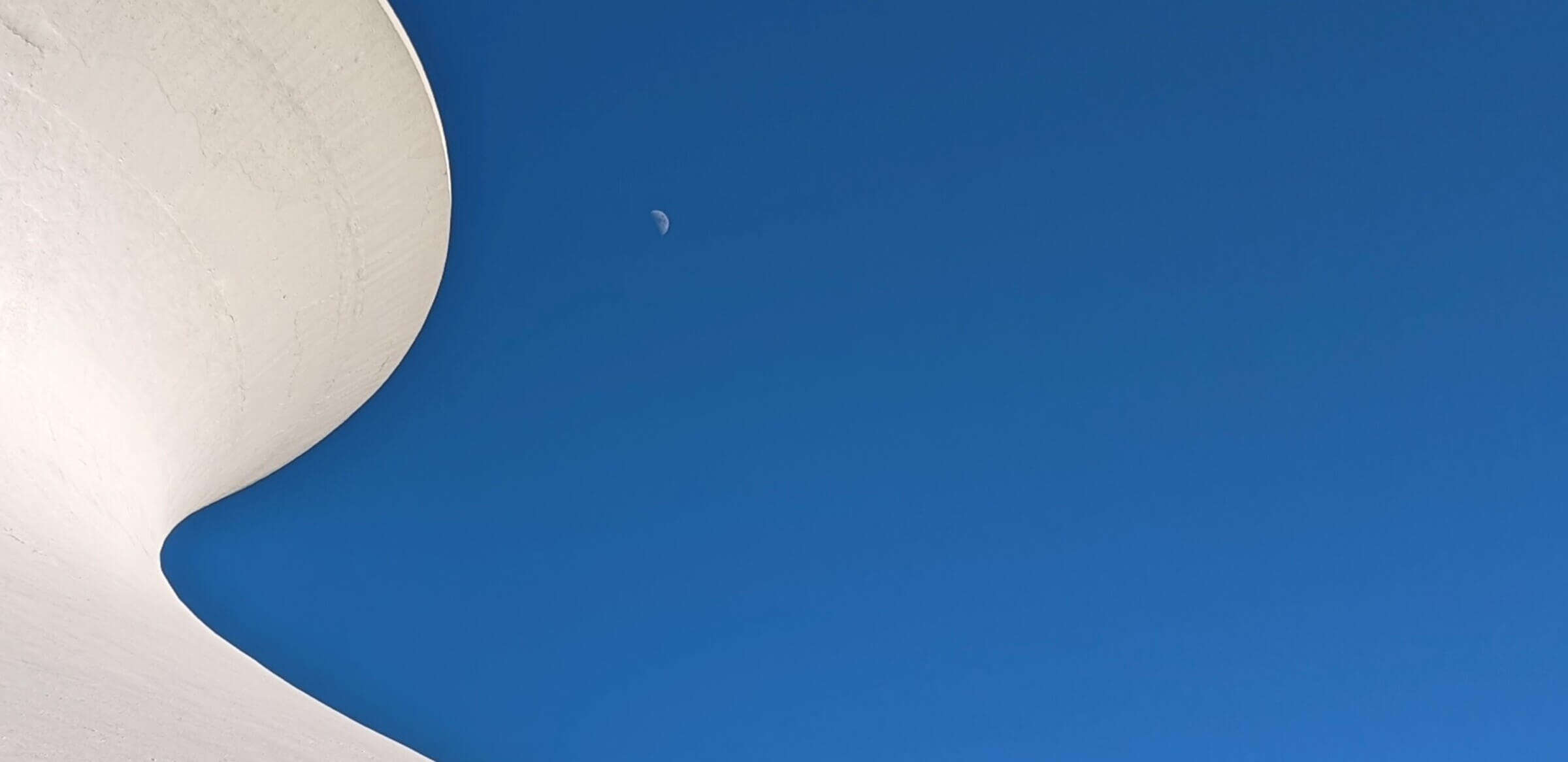
The Moon is one of the best daytime targets. Throughout most of the synodic month, the Moon can be viewed during the day. There are, however, ideal phases during which the Moon is much easier to find and see. There are only two phases of the Moon during which it is not visible in daytime; these are new moon and full moon. During new moon, the Moon is between Earth and the Sun. The side facing us is not reflecting sunlight and will not be visible. The only time we can see the Moon during new moon is when we see its silhouette during a solar eclipse.
During full moon, daytime views are not possible because the Moon is appearing near the anti-solar point in the sky. Because of this position, the Moon rises while the Sun is setting. The closer the moon is to one of these two phases, the more difficult it is to find it in daytime.
The ideal time to look for the Moon during the day is when the Moon is near a quarter phase. During a quarter phase, the contrast between the Moon and the sky will be good making it easier to find. If the Moon is near first quarter, you should look for it in the afternoon. If it is near last quarter, look for it in the morning. The table below will list the main phases of the Moon for the current lunation.
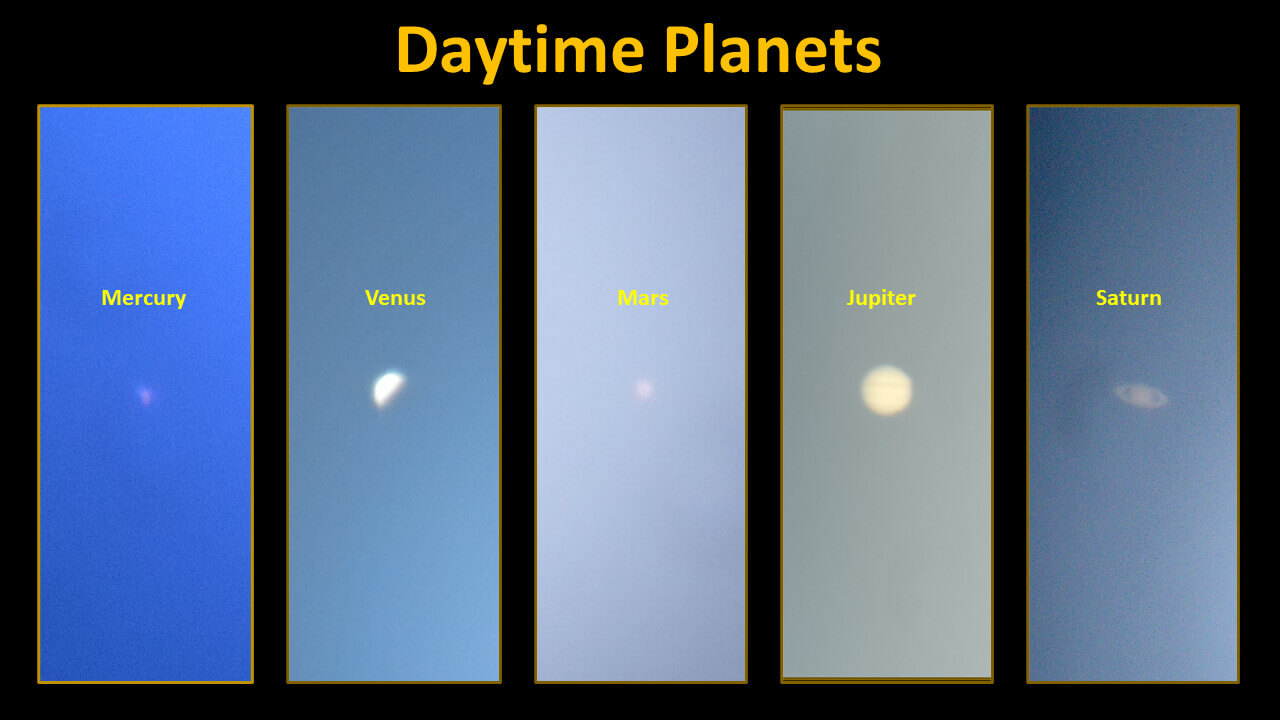
Daytime Planets
Tracking down the planets in the daytime is another great option for daytime astronomy. With the use of a telescope, all five naked planets can be seen in daylight hours. Several factors will impact your success in finding these planets. These include time of day, their elongation from the Sun and viewing conditions. When it is near sunrise or sunset, the contrast between the sky and the planet will be better. Viewing conditions such as seeing or transparency will impact how well you see the planet. And lastly, a planet’s elongation from the Sun is an angular measurement of how far from the Sun we can see the planet. If the planet and Sun appear too close together, the bright glare of the Sun can overwhelm the dimmer planet. Additionally, the closer the planet appears to the Sun, the more dangerous it is to view the planet. As a rule of thumb, many suggest 8° of elongation to be the cutoff. Any closer you risk accidentally looking at the Sun.
I do not recommend attempting to view planets in daytime for someone that is new to telescopes. Due to the inherent dangers in using a telescope during the day, this is an option I suggest reserving for when someone is more experienced in the use of a telescope. Desktop planetarium software can also help you find the position of a planet and what their solar elongation is. I recommend using the free software called Stellarium. Before using telescopes to find daytime planets I recommend using binoculars. Once you figure out the planet’s solar elongation, you can position yourself near a building that blocks the Sun from view. This way there is no chance you will accidentally look at the Sun.
Current planets that are ideal for daytime views this month are Venus and Jupiter.
Venus
Venus is bright enough to easily be seen with binoculars during daytime hours however it will be getting dangerously close to the Sun’s position. Its solar elongation will shift from 30.0° on March 1 to 10.9° on March 18. Anyone new to observing planets in the daytime should not attempt to find Venus after this date. 10° is dangerously close for someone not accustomed to observing in the daytime. If you are planning to observe Venus this month use every precaution to ensure you DO NOT accidentally view the Sun. I highly recommend positioning yourself in a way that the Sun is behind a house or other building. This month Venus will reach inferior conjunction on March 22, 2025, which is when it passes between Earth and the Sun. After this date, Venus will appear west of the Sun eventually becoming visible in the east before sunrise. We only have a few weeks left of the current evening apparition of Venus.
Jupiter
During daylight hours you will need to use a telescope to spot Jupiter. Jupiter rises between 10:50 and 10:05 this month. An ideal time to start looking for Jupiter is after 12:00 (12 pm). The higher Jupiter appears in the sky, the more difficult it will be to find the planet due to contrast.
Our next Solar Sunday will be held on Sunday, March 16, 2025, from 11:00 a.m. until 3:00 p.m. (Weather Dependent)
On the third Sunday of each month, the St. Louis Astronomical Society and the Saint Louis Science Center will set up a number of safe solar telescopes outdoors and be on-hand to answer your questions. Telescope viewing begins at 11:00 a.m.
The St. Louis Astronomical Society helps host the monthly Star Parties at the Saint Louis Science Center. In addition to our daytime viewings, they also help facilitate our nighttime Public Telescope Viewing. These nighttime viewing sessions occur on the 1st Friday each month. Visit SLAS’s website linked above to learn about other telescope events SLAS hosts around the St. Louis area.
The Day Sky Update is compiled by McDonnell Planetarium staff.