This is the Saint Louis Science Center’s DAY SKY UPDATE for the Month of April 2025.
Information updated monthly or as needed.
Times given as local St. Louis time which is Central Daylight Time (CDT). For definitions of terminology used in the night sky update, click the highlighted text. If relying on times posted in Universal Time (UT), St. louis is -5 hours when CDT. Additionally, times will be posted in a 24-hour format.
Join us for our next solar telescope viewing, Sunday, April 20, 2025, held in association with the St. Louis Astronomical Society. For details, see the information at the bottom of this page or visit
Daytime Astronomy Primer
For most, astronomy is a hobby that is left to the darkness of night. While most astronomical objects are only visible at night, the day sky can offer a careful observer several astronomical targets along with a multitude of atmospheric phenomena to enjoy. When posted, the DAY SKY UPDATE will explore these possibilities which may include a highlight of the month, cloud observing, sun rise/set times, daytime Moon information, daytime planets and other topics. As always, when viewing during daytime, you must use caution as the Sun is always near.
Aside from solar filters, there are other safety steps that you should consider. Sunscreen, hats and sunglasses are always advisable. Visible light is how we observe the world around us, however, there is light we cannot see. Ultraviolet (UV) and infrared (IR) light are great examples of this. While both are an issue if you are using an optical system, UV light is an issue through exposure. This can be mitigated by using sunscreen, sunglasses and limiting exposed skin. While sunglasses are not safe instruments to view the Sun with, they do protect your eyes from exposure to ultraviolet light that we are susceptible to during the day. If you would like to learn more about UV and its dangers use the buttons below.
Cloud of the Month
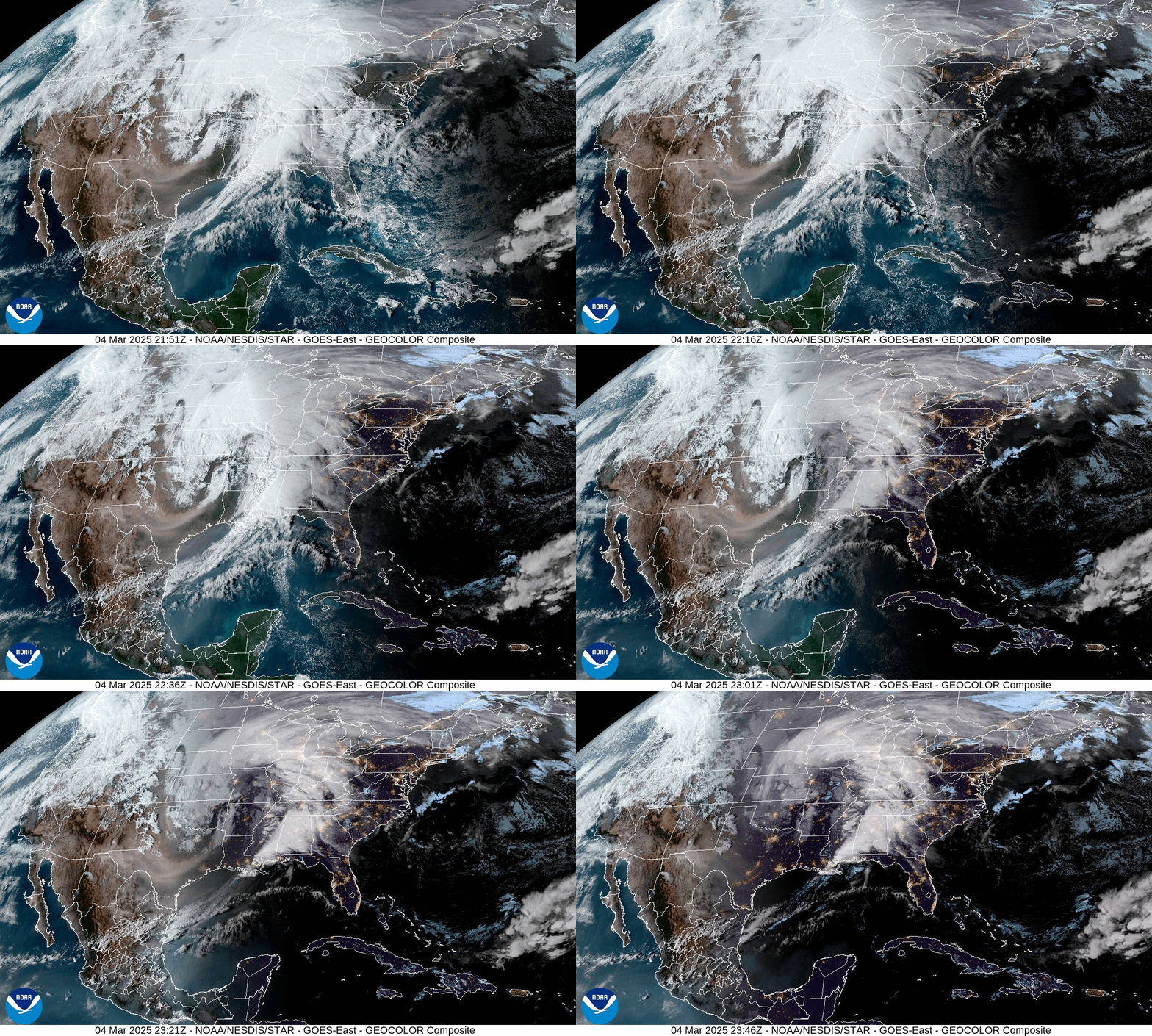
Animated mage showing the March 5th mid-latitude cyclone barreling through the eastern half of the United States. Image credit: NOAA
At the beginning of March, a significant storm came sweeping though the Midwest region. A low-pressure system made its way over Missouri causing many different types of weather phenomena to occur. What are mid-latitude cyclones? How do they form? What kind of weather does it bring into the area? The term low pressure system, mid-latitude cyclone, and extratropical cyclone will be used interchangeably.
A mid-latitude cyclone is a low-pressure storm that forms along a front in middle and high latitudes, outside of the tropics. It is not a tropical storm or hurricane, even though they spin counterclockwise and are known for having that comma-like structure. The entire lifecycle of an extratropical cyclone can span several days to well over a week. They are also very large, ranging from several hundred to a thousand miles across. These storms are nature’s way of balancing the temperature difference between the cold upper troposphere and the warm lower troposphere.
How do they form?
It all started with a group of Scandinavian meteorologists who developed a model that explains the lifecycle of these extratropical storms. This theory is known as the Polar Front Theory. It states that the development of a mid-latitude cyclone begins along a polar front (a semi-continuous global boundary separating cold polar air from warm subtropical air). This model represents a very simplified version of the life cycle of extratropical storms. Even though few storms will follow these exact steps, it still serves as a good foundation for understanding the structure and life cycle of these storms.
Cyclogenesis: The polar front causes temperature differences which will then cause instability in the atmosphere. This instability will cause waves to form and for air to start moving upward and out (divergence). This is where the low pressure will start to form.
Mature Stage: A cyclone has reached peak intensity when it has a well-defined cold front and warm front, with its associated warm sector right at their intersection. This is also when the pressure is at its lowest. Storms can sometimes maintain their peak low pressure up to 2 days.
Occlusion: As the mid-latitude cyclone reaches full maturity, the fast-moving cold front will catch up to the slow-moving warm front, lifting the warm air aloft. This causes an occluded front to form.
Dissipation: Once the system is fully occluded and all the warm air is above the cold air, mass convergence (the pilling of air in a region) will fill in the low. This causes the pressure to start increasing, causing the system to decay and dissipate.
Where do mid-latitude cyclones form?
Colorado Lows – A very intense low-pressure system that forms along the eastern side of the Rocky Mountains. As the low continues to move eastward, it will draw in moisture from the gulf, potentially leading to severe weather events. Colorado Lows are often associated with freezing rain, sleet, snow, and even blizzards.
Alberta Clippers – This is a very fast-moving system that moves southeast out of southwest Canada (especially out of the Canadian Province of Alberta). This system typically tracks through the Great Plains, the Midwest, and Great Lakes region. These storms are usually accompanied by light to moderate snowfall, strong winds, and colder temperatures. It’s not uncommon to see temperatures drop 30 degrees in as little as 12 hours. These drastic temperature changes can last days after the system has moved out.
Nor’easters (bomb cyclones) – These are the most intense systems that form on the East Coast. They form along the thermal boundary between the warm gulf stream and the cold Atlantic coast. They can bring heavy rain along the coast and even several feet of snow further inland. These systems can develop very quickly and can have a pressure drop of 24 mb in a single day, leading to extreme winds. This is what caused the name “bomb” cyclone to become very popular. Any system that drops 24 mb in 24 hours is called a bomb cyclone.
March 5th Storm
This system started as a Colorado Low the day prior. The center of the low hovering over northwest Missouri, while the occluded front took over the St Louis area. With the low in the northwest and a high pressure system forming to the west of the great plains, a very strong pressure gradient produced sustained winds between 20 – 30 mph, with gusts reaching 50 mph. At this point, the low-pressure system had reached its max maturity with St Louis measuring 984.1 mb, almost breaking the record from 1976 at 977.3 mb. In the span of just a couple hours, St Louis witnessed a mix of rain, sleet, and very fluffy snow. Surface temperatures were slightly above freezing, causing the frozen precipitation to melt quickly, not allowing for much accumulation.
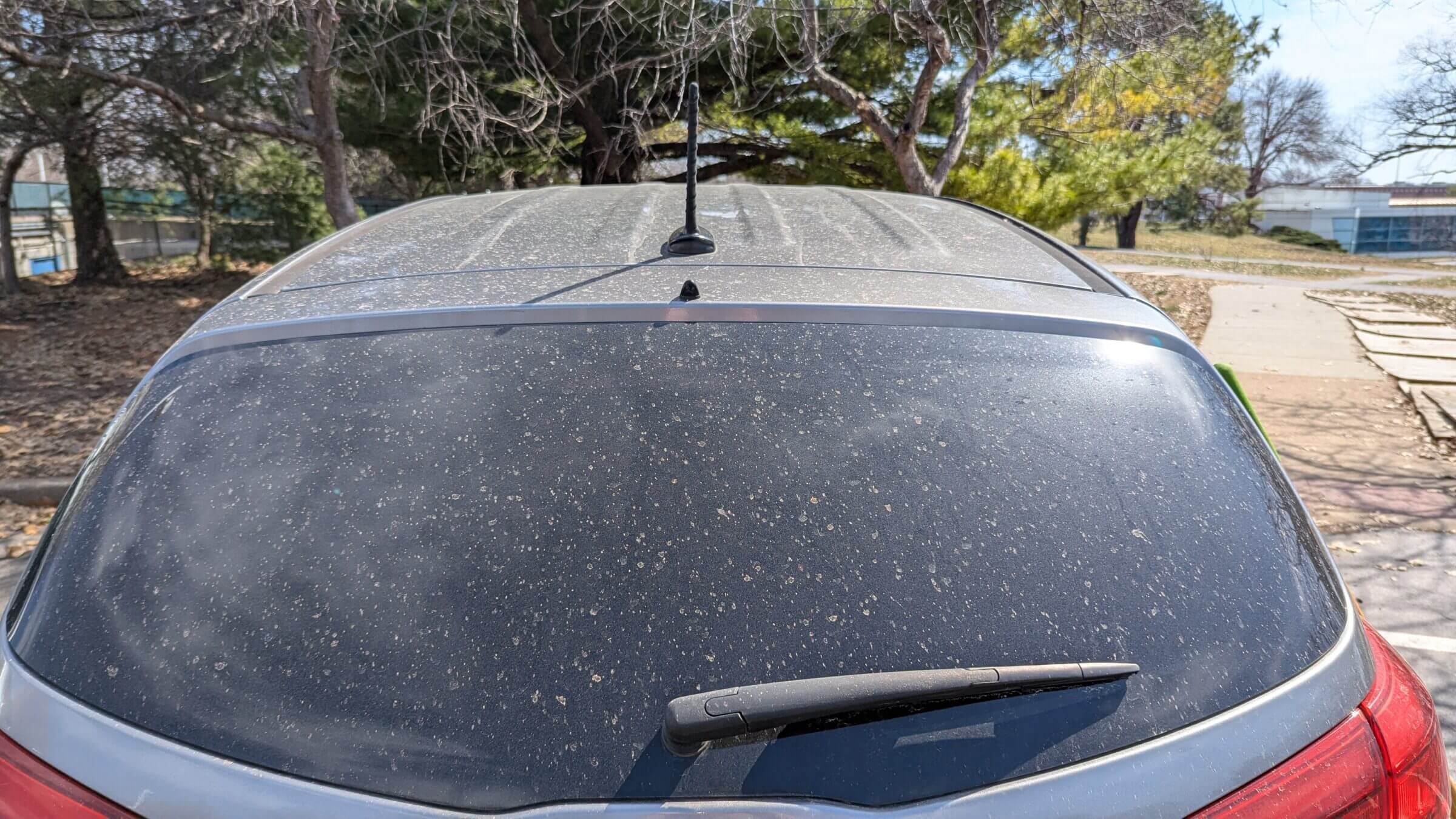
Dust carried aloft from Texas can be seen on this car in St. Louis, Missouri March 2025. Image credit:Eric Gustafson
Many in the Midwest woke up the Friday morning after the storms to an odd sight on their cars. The southwest region has been experiencing some exceptional drought, causing massive dust storms in New Mexico and West Texas. Because of the formation of low pressure in the area, this causes very strong winds to transport dust across the continental US via the jet stream. These dust particles also act as condensation nuclei, helping water vapor condense to form raindrops, this is known as dust rain or dirty rain.
Extratropical cyclones produce much of the severe weather across the United States. These very intense systems contribute to the rebalancing of our atmosphere because of its distribution of cold and warm air. Not one low pressure system is like another, and it’s important to acknowledge and remember that these storms can bring a lot of devastation to an area. Follow your local weather station and always stay weather aware.
The Sun and the Moon
Sun Information
During April 2025, the Sun will continue its journey towards its northern standstill later this year in June. If you track the position of sunrise or sunset this month you will find these positions are shifting to the north. Maximum altitude will also change each day as the Sun reaches higher altitudes each day closer to the June solstice. For April 2025, the Sun’s maximum altitude will shift from 56.2° on April 1st, to 66.4° on April 30th.
The next major position of the Sun occurs on June 20, 2025, as the Sun reaches the June Solstice. For us in the northern hemisphere, this is the Summer Solstice which signals the start of summer. The world around us will continue to bloom. Sever weather will be likely this month. Migratory birds will continue to return to the St. Louis area.
Sunrise and Sunset Times for St. Louis Missouri
The sunrise and sunset times below were calculated by the Earth Systems Research Laboratories for NOAA. These times are calculated using equations for Jean Meeus’s Astronomical Algorithms. The atmosphere complicates these calculations due to the refraction of sunlight as it passes through the atmosphere. For the times listed below, the amount of atmospheric refraction is assumed to be 0.833°. Variations in the atmosphere can change the amount of refraction so the times posted are accurate to within a minute for latitudes between +/- 72°. You can learn more about these calculations and where to generate times for areas outside of St. Louis, Missouri by using the buttons below
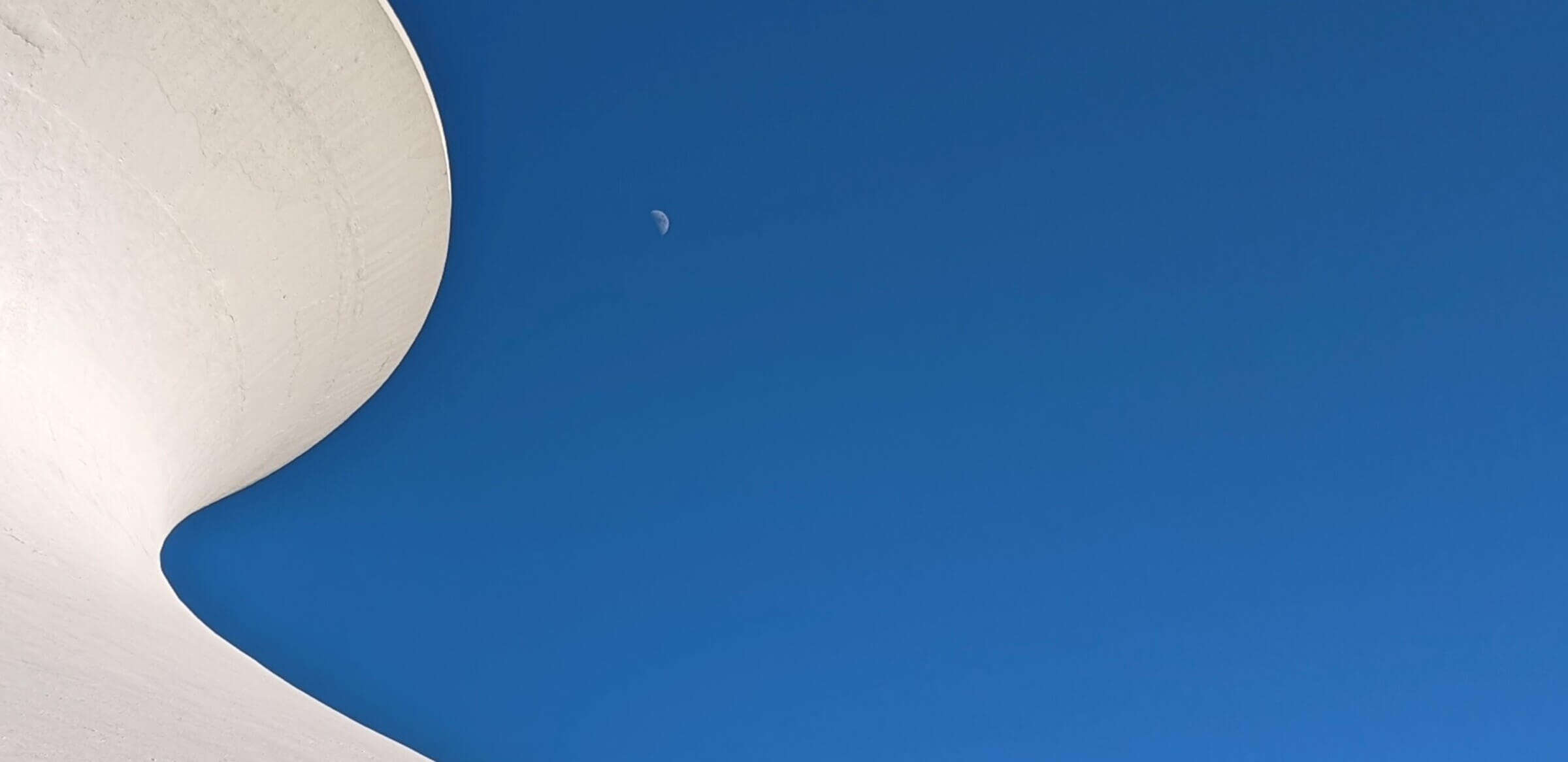
Moon (daytime views)
The Moon is one of the best daytime targets. Throughout most of the synodic month, the Moon can be viewed during the day. There are, however, ideal phases during which the Moon is much easier to find and see. There are only two phases of the Moon during which it is not visible in daytime; these are new moon and full moon. During new moon, the Moon is between Earth and the Sun. The side facing us is not reflecting sunlight and will not be visible. The only time we can see the Moon during new moon is when we see its silhouette during a solar eclipse.
During full moon, daytime views are not possible because the Moon is appearing near the anti-solar point in the sky. Because of this position, the Moon rises while the Sun is setting. The closer the moon is to one of these two phases, the more difficult it is to find it in daytime.
The ideal time to look for the Moon during the day is when the Moon is near a quarter phase. During a quarter phase, the contrast between the Moon and the sky will be good making it easier to find. If the Moon is near first quarter, you should look for it in the afternoon. If it is near last quarter, look for it in the morning. The table below will list the main phases of the Moon for the current lunation.
Our next Solar Sunday will be held on Sunday, April 20, 2025, from 11:00 a.m. until 3:00 p.m. (Weather Dependent)
On the third Sunday of each month, the St. Louis Astronomical Society and the Saint Louis Science Center will set up a number of safe solar telescopes outdoors and be on-hand to answer your questions. Telescope viewing begins at 11:00 a.m.
The St. Louis Astronomical Society helps host the monthly Star Parties at the Saint Louis Science Center. In addition to our daytime viewings, they also help facilitate our nighttime Public Telescope Viewing. These nighttime viewing sessions occur on the 1st Friday each month. Visit SLAS’s website linked above to learn about other telescope events SLAS hosts around the St. Louis area.
The Day Sky Update is compiled by McDonnell Planetarium staff.